The Selangor state government is urging residents to exercise extreme caution against a wave of fraudulent text messages purporting to relate to the KitaSelangor Voucher incentive programme. According to a statement from the State Secretary's Office issued on June 16, authorities have detected suspicious SMS communications and messages being circulated from unauthorised sources, prompting officials to remind the public not to click on embedded links or respond to requests for personal information through these channels.
The timing of this alert reflects growing concerns about online fraud targeting government assistance schemes. As developmental programmes designed to help vulnerable populations, voucher and cash aid initiatives have increasingly become the focus of criminal networks seeking to harvest personal data or financial information from unsuspecting recipients. The Selangor government's proactive warning demonstrates an awareness that fraudsters often capitalise on public anticipation surrounding new benefit announcements to lend credibility to their schemes.
A critical point underscored by the State Secretary's Office is that applications for the KitaSelangor Voucher Programme have not yet commenced. This timing is significant because scammers typically operate during the gap between public announcement and actual programme launch, when confusion about procedures is highest and people are most eager to access benefits. By explicitly stating that the application window remains closed, authorities are attempting to prevent premature actions based on fraudulent messages.
The state government has advised residents to rely exclusively on official channels for information about the initiative. The designated information source will be the Selangor State Government's formal announcement scheduled for June 22, which will clarify procedures and legitimate contact methods. This strategy of creating a single trusted touchpoint aims to reduce the effectiveness of phishing attempts by establishing clear official guidance that residents can reference when evaluating the authenticity of messages received.
According to the State Secretary's Office, the actual notification process will commence on June 23, with eligible recipients being contacted via SMS in staggered batches. These official communications will allow beneficiaries to verify their personal details and complete applications through a dedicated KitaSelangor Voucher Portal. The phased approach is designed to manage administrative load while allowing the state to verify information systematically, though it also creates multiple windows where fraudsters might attempt to intercept or impersonate official processes.
The KitaSelangor Voucher Programme targets specific groups identified through governmental data systems. These beneficiary categories include households registered in the eKasih database for the poor, workers who have been laid off, vulnerable populations enrolled with the Social Welfare Department, and single mothers meeting established eligibility criteria. By focusing on these pre-identified groups, the state aims to prevent the indiscriminate distribution that characterises some programmes and thereby reduce uncertainty about who should receive notifications.
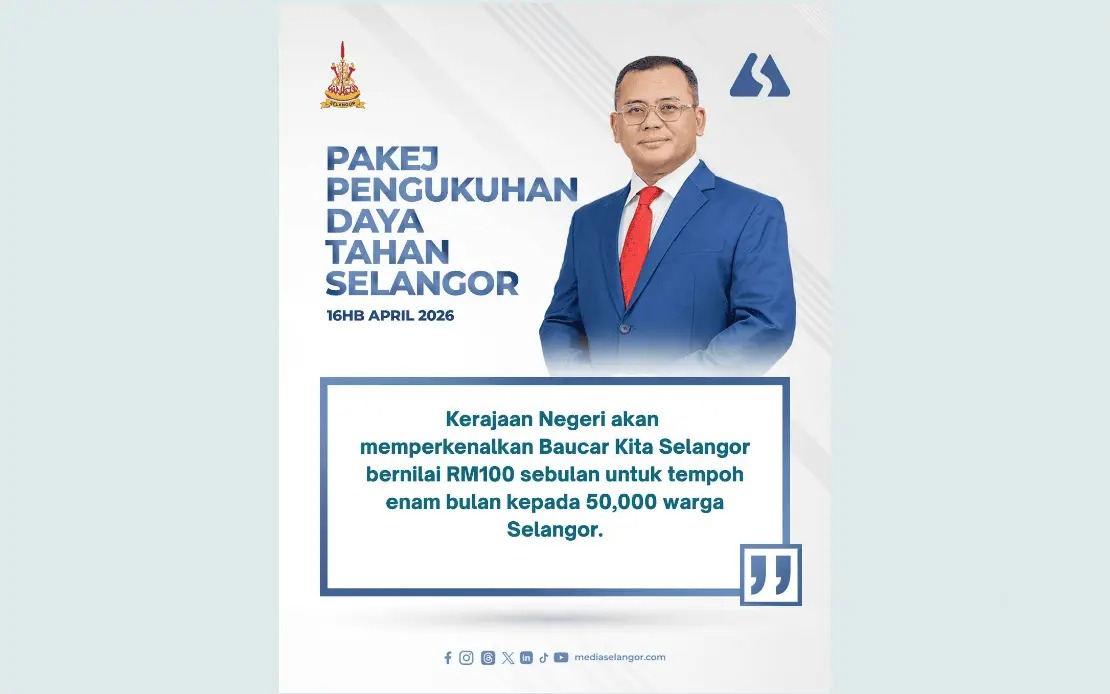
Menteri Besar Datuk Seri Amirudin Shari has indicated that approximately 50,000 low-income families across Selangor will benefit from the programme, each receiving RM100 monthly for a six-month period. This represents a total commitment of RM3 million in direct cash support, positioning the initiative as a meaningful intervention for economically distressed households. The programme is scheduled to commence on June 30, providing recipients with a cushion during the mid-year period when household expenses often peak.
The KitaSelangor Voucher initiative forms a component of the broader RM140 million Selangor Resilience Strengthening Package Phase 1, officially introduced on April 16. This larger assistance framework reflects the state government's recognition that residents face compounded economic pressures stemming from global uncertainty, elevated living costs, and international supply chain disruptions. The voucher scheme therefore exists within a comprehensive policy response rather than as an isolated measure.
For Malaysian readers, particularly those in Selangor, this alert carries immediate practical implications. Residents who receive unexpected SMS messages about government vouchers should verify authenticity by directly contacting state government offices rather than following embedded links. The incident highlights how even beneficial government programmes can be exploited by organised fraud networks, requiring heightened digital literacy and caution from vulnerable populations most likely to benefit from such schemes.
The broader context here extends beyond this single initiative. Scams targeting government assistance programmes have become increasingly sophisticated across Southeast Asia, with criminals leveraging public trust in state institutions. Malaysia's growing digital economy has paradoxically expanded opportunities for cybercriminals who can reach thousands of potential victims rapidly. The Selangor government's early warning approach represents best practice in programme administration, though it underscores the ongoing cat-and-mouse dynamic between authorities and fraudsters.
Residents awaiting notification about the KitaSelangor Voucher should mark June 22 as the date when official announcements will clarify legitimate procedures and contact information. Until then, any SMS or message requesting immediate action, asking for personal financial details, or directing clicks to unknown websites should be treated with suspicion. The State Secretary's Office has effectively communicated that patience is essential: legitimate beneficiaries will receive proper notification through verifiable channels, and premature engagement with suspicious communications serves only to increase fraud risk.