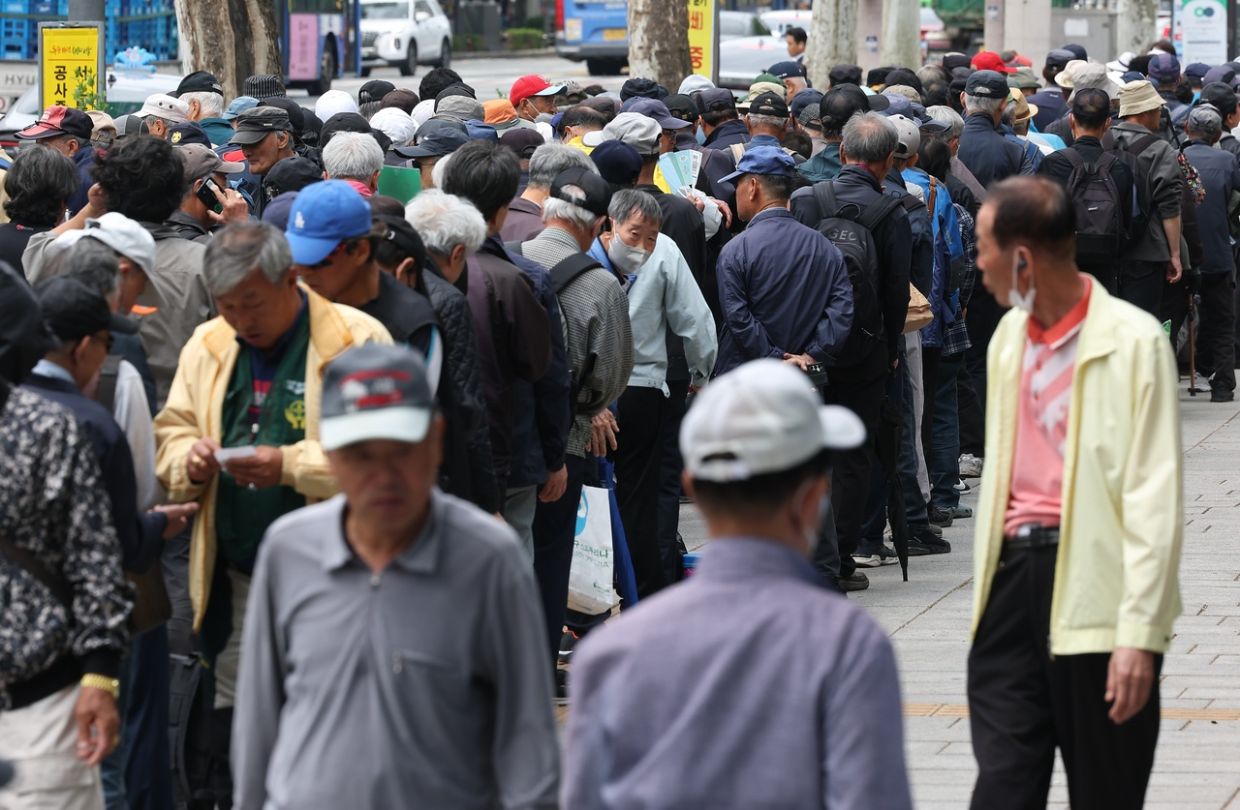
South Korea's capital is wrestling with a familiar policy dilemma: how to balance social welfare obligations against mounting fiscal constraints. Seoul's Metropolitan Council has moved forward with a proposal to grant free or reduced-fare bus travel to senior citizens aged 70 and older, a measure that cleared committee review in mid-June and faced a plenary vote shortly after. The initiative would apply to municipal and neighbourhood bus services while excluding express and intercity routes, building on a decades-old system already providing free subway access to those aged 65 and above.
The proposal originates from Seoul Mayor Oh Se-hoon's election campaign commitments and enjoys backing from Lee Byeong-yoon, the Transportation Committee Chair representing the People Power Party. However, the measure has ignited debate among policymakers and fiscal watchdogs concerned about whether the city can absorb the financial impact, particularly as Seoul's elderly population constitutes 21.2 per cent of the total resident base and continues to expand. Even if the council approves the ordinance, implementation would not commence immediately; city administrators would still need to define qualification criteria, establish subsidy levels, and secure funding sources.
The financial projections paint a sobering picture. According to calculations by the Seoul Metropolitan Council Secretariat, universal free bus fares for all residents aged 70 and above would demand approximately 104.7 billion won—roughly US$68 million—during the programme's initial year, assuming a 2027 launch date. This figure becomes substantially more daunting when projected forward: as the city's population aged 70 and above swells from approximately 1.27 million currently to an estimated 1.63 million by 2031, annual outlays could balloon to 127.5 billion won. Over a five-year period, total expenditure would approach 579 billion won, a sum that must be considered alongside Seoul's existing transportation commitments.
The city already shoulders considerable financial burdens within its transport infrastructure. Seoul operates a semi-public bus system requiring the municipal government to compensate private operators for operating losses, with the city disbursing more than 450 billion won in subsidies to bus companies during the most recent fiscal year. Beyond these established obligations, emerging labour cost pressures threaten further expense increases. Recent court decisions regarding ordinary wage calculations are anticipated to drive up labour costs across Seoul's bus industry, creating additional fiscal headwinds that policymakers must address concurrently with any new benefit expansion.
The existential tension underlying this debate centres on Seoul Metro's persistent financial difficulties. The public transit operator has long contended that complimentary rides provided to seniors, individuals with disabilities, and national merit recipients constitute a primary source of operational losses. Over the past five years, these fare-free provisions generated average annual losses of 364.5 billion won, a figure that escalated to 448.8 billion won in 2025 alone. Seoul Metro has repeatedly appealed to the central government to share responsibility for covering these deficits, yet such requests have yielded limited results. Against this backdrop, introducing another substantial transportation subsidy programme raises legitimate questions about the city's capacity to manage mounting welfare commitments.
Several other South Korean cities have already charted similar paths, providing a reference point for Seoul's considerations. Daegu initiated free bus rides for seniors in 2023 and is systematically lowering the eligibility age from 75 to 70 by 2028, while Daejeon currently provides free bus access to residents aged 70 and older. Incheon has announced plans to launch an equivalent programme for those aged 75 and above during the current year. These regional precedents demonstrate growing momentum toward expanded senior transportation benefits across the country, yet they also underscore the financial strains such policies can impose on municipal budgets already stretched by demographic shifts.
Advocates for the Seoul initiative contend that current transportation arrangements create unintended equity problems. While seniors aged 65 and above enjoy unlimited subway access at no cost, they remain obligated to pay standard fares for bus journeys. This asymmetry produces particular hardship for elderly residents residing distant from subway stations or who depend predominantly on bus networks for mobility. Proponents argue that extending subsidies to bus travel would rectify this imbalance and recognise the essential role public transportation plays in maintaining senior citizens' social participation and access to essential services. The measure, they suggest, represents a natural and necessary extension of existing policy rather than a radical expansion.
Policy analysts, however, sound cautionary notes about the long-term consequences of benefit proliferation. Sohn Jong-pil, a senior researcher at the Fiscal Reform Institute, emphasises that cash-type welfare programmes rarely contract once established, creating permanent budgetary obligations that constrain future fiscal flexibility. He warns that simply expanding support without simultaneously strengthening public oversight of the semi-public bus system addresses only half the underlying problem. This perspective reflects broader concerns that Seoul may be pursuing symptomatic relief rather than systemic reform, potentially mortgaging future municipal capacity to address other pressing urban needs.
Critics further question why Seoul should shoulder escalating senior transportation costs when the central government has declined to assume financial responsibility for existing subsidies. If Seoul cannot persuade national authorities to support free subway rides—a benefit already in place for over two decades—what confidence exists that additional municipal expenditure on bus fares will not simply compound the city's financial pressures? This logic leads some observers to worry that the bus benefit proposal may presage calls to raise eligibility thresholds for other senior programmes, distributing fiscal strain across multiple categories of social support.
Supporters counter that worst-case cost projections may exaggerate the actual financial burden by assuming universal coverage and unlimited access. The ordinance does not mandate immediate implementation of free rides for every senior aged 70 and above; rather, it establishes a legal framework permitting Seoul to calibrate the programme according to fiscal circumstances. The city could initially target low-income seniors, cap the number of subsidised journeys per person, restrict benefits to specific hours of operation, or provide partial fare discounts rather than complete exemption. A Seoul municipal official characterised the ordinance as institutional groundwork rather than an immediate spending commitment, affording policymakers discretion in determining actual programme scope and cost.
This flexibility suggests that the proposal's true significance lies in its creation of legal authority rather than in any specific implementation modality. Once the ordinance passes, Seoul gains the institutional capacity to initiate and adjust a senior bus benefit programme without requiring additional legislative action. The city could begin with limited eligibility criteria or partial subsidies, observe actual uptake and fiscal impact, and gradually expand coverage if circumstances permit. This incremental approach potentially allows Seoul to honour campaign commitments and address legitimate inequities in the current transportation subsidy structure while maintaining some control over expenditure trajectories.
Yet this measured perspective does not dispel underlying concerns about accumulated welfare obligations in an ageing society. South Korea faces demographic realities that Malaysia and other Southeast Asian nations will soon confront as their own populations mature. Seoul's experience demonstrates how cumulative policy decisions—each individually defensible—can collectively create substantial fiscal burdens that constrain governmental capacity for innovation or adjustment. The bus benefit debate thus extends beyond Seoul's immediate circumstances to encompass broader questions about how densely urbanised, rapidly ageing societies can sustain comprehensive social protection systems without compromising long-term economic dynamism or intergenerational equity.

