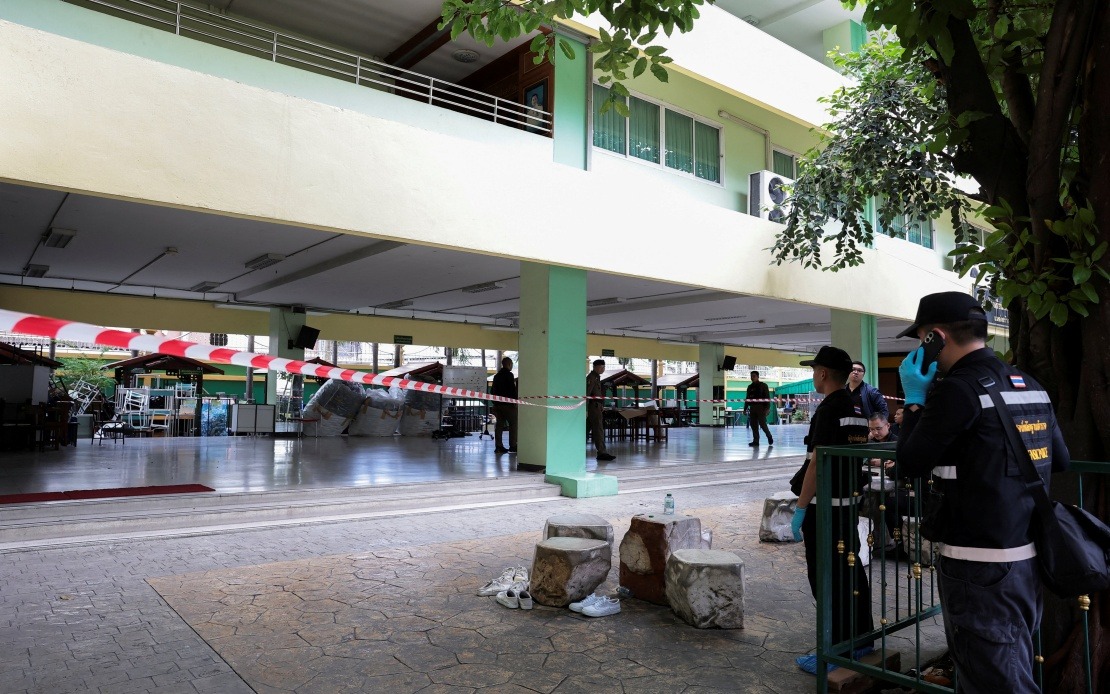
A devastating shooting at a school in Nonthaburi province, located northwest of Bangkok, claimed seven lives and left 15 others injured when a student opened fire during morning classes on Friday. The incident at Debsirin Nonthaburi School in Bang Kruai district marks another tragedy in Thailand's ongoing struggle with firearm violence, adding urgency to the government's push to tighten gun ownership regulations.
The attack unfolded around 10 am at the school premises, with police quickly identifying the shooter as a student enrolled at the institution. According to Lieutenant General Trairong Piwpan, the Royal Thai Police's deputy inspector-general and spokesperson, the seven fatalities included three members of the teaching staff, three students, and the suspect himself. All seven died at the scene, while emergency responders transported the 15 injured individuals to nearby medical facilities, with two cases classified as serious.
Investigations into the incident revealed that the weapon used was a 9mm handgun accompanied by 34 rounds of ammunition found outside the magazine. Critically, police determined that the firearm belonged to the suspect's grandfather, raising questions about gun storage practices and family supervision in Thai households. This detail underscores a recurring challenge in Thailand regarding inadequate safeguards around privately owned weapons, particularly when stored in homes with young residents who may have unsupervised access.
Authorities moved swiftly to secure the school environment by evacuating both teachers and students to the adjacent Chanrat Wittaya School, while simultaneously calling upon parents and guardians to collect their children. The evacuation process reflects standard crisis protocols employed by Thai educational institutions during active threats, though such procedures remain uncommon in many Southeast Asian schools. Beyond immediate safety measures, the national police chief ordered Police General Hospital to dispatch psychologists to provide mental health support and trauma counselling to survivors and witnesses affected by the morning's violence.
Prime Minister Anutin Charnvirakul, who also holds the interior ministry portfolio, responded to the tragedy by expressing profound sorrow and ordering authorities to prioritise urgent medical assistance for the injured. His administration quickly deployed relevant officials to the school site to coordinate the government's response and gather information. In his public statements, Anutin characterised the incident as a stark illustration of why Thailand's government has adopted a restrictive stance on firearm permits, particularly regarding the renewal of existing licenses for civilian gun ownership.
The prime minister explicitly framed the shooting as validation for the government's decision to discontinue permit renewals for carrying and possessing firearms, signalling that Thailand's leadership views tighter weapons regulations as essential to public safety. This policy position reflects a growing consensus among Thai policymakers that civilian access to firearms presents significant risks to school security and public wellbeing. For regional observers, Thailand's experience demonstrates the complex relationship between gun ownership policies and school safety in developing democracies.
Placing this incident within a broader context reveals an alarming trend. The Nonthaburi shooting occurs less than six months after another school shooting in February 2024, when an 18-year-old gunman opened fire at a school in Hat Yai, Songkhla province, killing the school director and injuring others before law enforcement apprehended him. The proximity of these two major incidents within a single academic year suggests that school shootings, previously less common in Thailand compared to some other nations, may be emerging as a recurring concern requiring systemic intervention.
The recurring nature of these attacks raises important questions for Malaysia and other Southeast Asian nations regarding the adequacy of current gun control measures and school security protocols. While Malaysia maintains relatively strict regulations on firearm ownership through its Arms Act, the Thai experience provides instructive lessons about the importance of comprehensive enforcement and community awareness. Additionally, mental health support systems and early intervention programmes targeting at-risk youth deserve greater investment across the region.
Thailand's government faces mounting pressure to address not only firearm accessibility but also the underlying social, psychological, and educational factors that may contribute to such incidents. Psychologists and security experts have increasingly emphasised the importance of threat assessment programmes, mental health screening in schools, and training staff to recognise warning signs of potential violence. The involvement of a student as the perpetrator suggests that peer-to-peer intervention and counselling services may play crucial roles in prevention.
For Malaysia, the Thai developments reinforce the rationale behind maintaining comprehensive controls on gun ownership and continuing to strengthen security measures at educational institutions. Malaysian schools have implemented various safety protocols, including controlled access points, security personnel, and coordination with local police, but the Nonthaburi tragedy underscores the ongoing need for vigilance and regular updates to security frameworks. Regional cooperation on threat intelligence and best practices in school safety could enhance collective resilience.
The incident also raises broader questions about social cohesion, youth alienation, and access to mental health services in Thai society. Experts suggest that addressing root causes of violence requires multifaceted approaches involving education reform, improved mental health infrastructure, and community-based prevention programmes. Thailand's policy response to discontinue firearm permit renewals represents one component of a necessary comprehensive strategy, but sustained effort across multiple sectors will be essential to prevent future tragedies.

