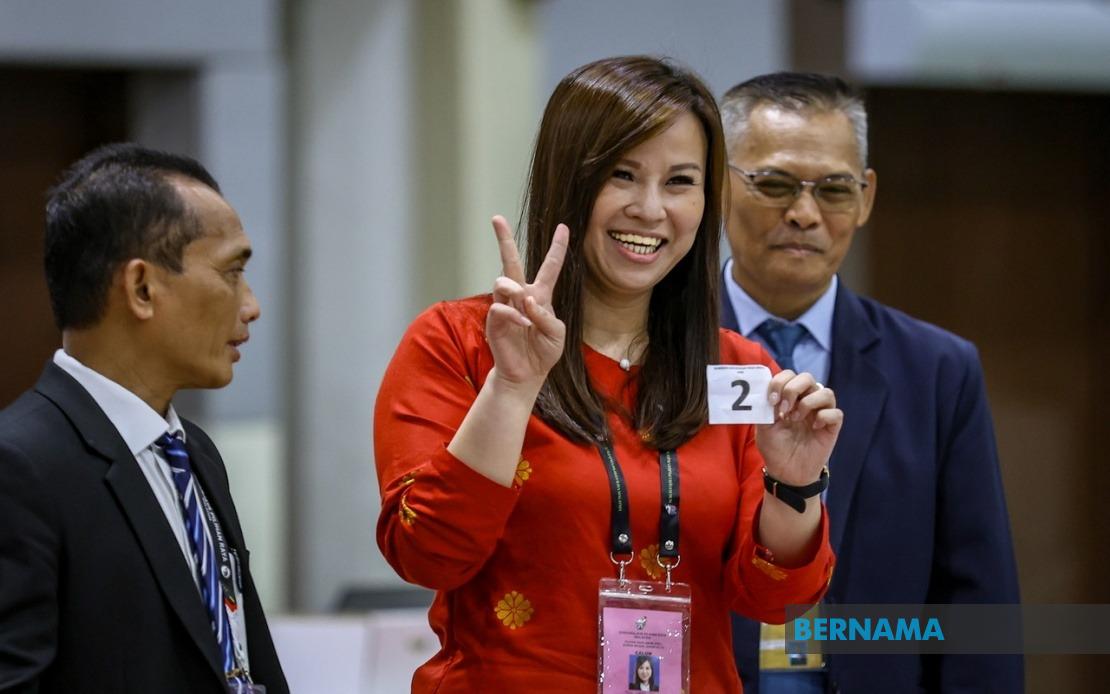
Sharon Teo, the Pakatan Harapan candidate contesting the Permas state seat in the 16th Johor state election, has positioned infrastructure improvements and public welfare at the centre of her campaign strategy. Speaking after the nomination process at Dewan Muafakat in Taman Mawar, the Johor Amanah Women's Youth chief outlined her commitment to addressing persistent concerns raised by constituents during ground visits, signalling a grassroots-oriented approach to her candidacy.
Road conditions within the Permas constituency represent a critical focus area for Teo, who emphasises the direct correlation between road quality and public safety. Her pledge to prioritise infrastructure maintenance reflects a practical approach to governance, recognising that deteriorating road conditions affect daily commutes, emergency response times, and overall quality of life for residents. This emphasis on tangible, visible improvements distinguishes her campaign from purely rhetorical platforms, appealing to voters who have repeatedly flagged such concerns during community engagement.
Teo brings relevant political experience to her candidacy, having previously worked as an aide within the Pulai parliamentary constituency under the late Amanah deputy president Salahuddin Ayub. This background provides her with insights into constituency management and policy advocacy, though her parliamentary exposure at the federal level will need careful calibration for state-level concerns specific to Permas. She has committed to unveiling a detailed manifesto outlining her comprehensive vision and mission for Permas voters in the coming days, suggesting a more expansive policy platform beyond the infrastructure and welfare themes she has already articulated.
Defending the seat for Barisan Nasional is Baharudin Mohamed Taib, who successfully captured the Permas mandate in the 2022 Johor election. Baharudin has adopted a more cautious tone during the campaign launch, acknowledging the competitive nature of the contest and the individual strengths each opponent brings to the race. His candid assessment that he cannot take his challengers lightly reflects the shifting electoral dynamics in Johor, where Barisan Nasional's traditional dominance has faced increasing pressure from opposition coalitions and newer political formations.
Barudin's strategy diverges notably from Teo's approach in its presentation to voters. Rather than launching a personal manifesto that might be seen as duplicating or competing with party messaging, he has signalled his intention to operate within the broader Barisan Nasional framework and established policies. This approach carries both advantages and risks: it positions him as a loyal party member committed to collective objectives, but potentially limits his ability to articulate distinctive solutions tailored specifically to Permas residents' concerns.
The Permas contest represents a four-cornered battle that reflects the fragmented opposition landscape in Johor state politics. Beyond the principal contest between Teo and Baharudin, T. Vela represents Perikatan Nasional, while Dr Zamil Najwah campaigns for Parti Bersama Malaysia, a newer political entity seeking to establish itself in the electoral arena. This four-way split presents both opportunities and challenges: while it potentially dilutes opposition votes, it also indicates that Barisan Nasional's hold on constituencies can no longer be assumed automatic.
Permas, located within the Pasir Gudang parliamentary constituency, encompasses 113,963 eligible voters, providing a substantial electorate that any winning candidate must galvanise. The constituency's demographic composition and socioeconomic characteristics would significantly influence which campaign messages resonate most effectively. Urban voters may prioritise different infrastructure and welfare considerations than their rural counterparts, requiring nuanced campaign strategies that address localised concerns whilst maintaining broader policy coherence.
The timing of the Johor state election, scheduled for July 11 with early voting on July 7, compresses the campaign period substantially. This condensed timeframe means candidates must immediately execute voter engagement strategies and ensure their messaging reaches target demographics efficiently. For a challenger like Teo, the shorter campaign window requires rapid name recognition building and credible communication of policy commitments. For incumbent Baharudin, it allows him to lean on existing recognition and incumbent advantages, though these traditional strengths have diminished across multiple election cycles in Johor.
For Malaysian voters and observers, the Permas contest encapsulates broader trends reshaping Johor politics. The emergence of multi-cornered contests, the mobilisation of younger candidates from younger political movements like Amanah, and the focus on concrete local issues rather than abstract national narratives all point toward increasingly sophisticated and locally-attuned electoral behaviour among Johor voters. The willingness of candidates to differentiate themselves through specific policy commitments—whether roads, welfare, or other constituencies—suggests that the era of automatic Barisan Nasional victories has genuinely ended, replaced by competitive elections where ground-level performance and responsiveness to resident concerns genuinely influence outcomes.

