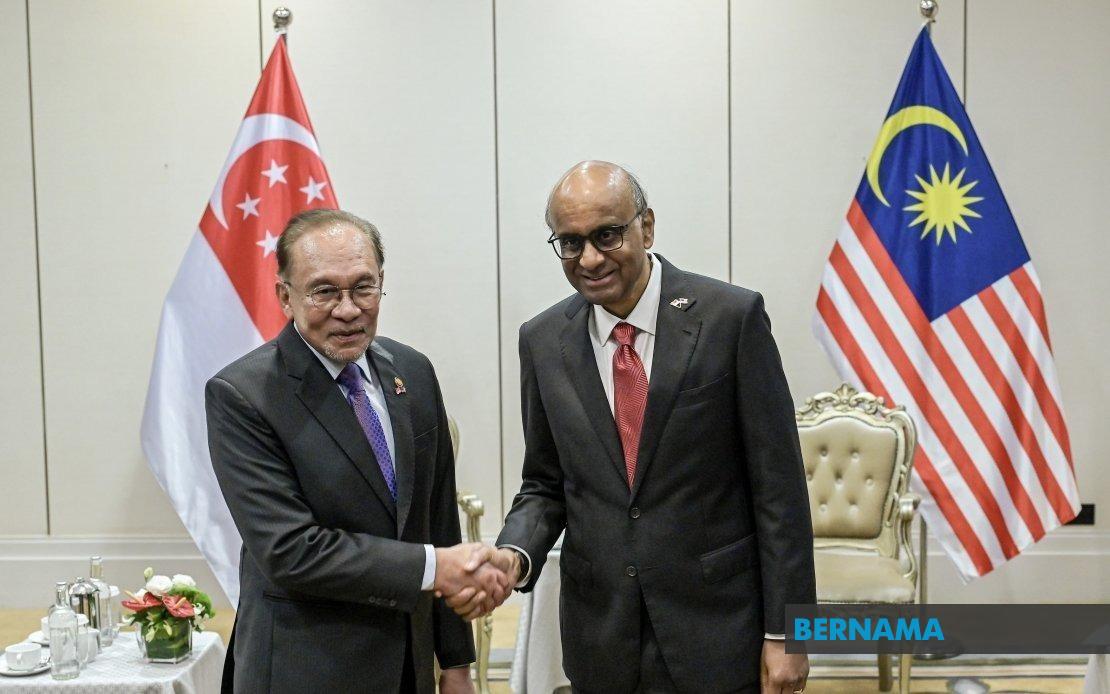
Singapore and Malaysia are moving to fortify their bilateral partnership across multiple strategic domains, signalling a desire to tackle shared regional challenges through coordinated action. The commitment emerged during President Tharman Shanmugaratnam's courtesy meeting with Prime Minister Datuk Seri Anwar Ibrahim on Monday, a high-level encounter that underscores the significance both governments place on their interconnected futures. President Tharman is undertaking his inaugural state visit to Malaysia from July 12 to 15, a formal diplomatic gesture that reflects the deepening engagement between these two neighbouring economies.
Food security and energy security have become central focal points in the two nations' strategic dialogue, reflecting broader anxieties across Southeast Asia about supply chain vulnerabilities and resource scarcity. For Malaysia, whose agricultural sector remains crucial to employment and rural livelihoods, securing long-term food production partnerships with its densely populated neighbour offers practical economic benefits. Singapore, reliant on food imports for roughly ninety percent of its consumption, has consistently prioritised establishing resilient supply channels with trusted regional partners. The explicit elevation of these sectors in bilateral discussions indicates both governments recognise that prosperity and stability depend fundamentally on managing essentials like food and power generation.
The two leaders also took the opportunity to assess unfolding geopolitical developments, particularly circumstances unfolding across West Asia. This conversation carries particular weight given Southeast Asia's exposure to global shipping routes and its substantial Muslim populations, which take keen interest in Middle Eastern affairs. Malaysia and Singapore, despite their differences, share fundamental interests in maintaining regional stability and preventing external powers from exploiting tensions to reshape the strategic landscape. By discussing these matters directly, the leaders are ensuring their respective nations can coordinate responses and avoid becoming dragged into conflicts not of their making.
Both governments placed considerable emphasis on the importance of adhering to international maritime law, specifically invoking the United Nations Convention on the Law of the Sea (UNCLOS). This principle holds particular relevance in a region crisscrossed by vital shipping lanes and dotted with contested territorial claims. For Malaysia and Singapore, upholding UNCLOS represents a commitment to rules-based resolution of disputes and freedom of navigation—cornerstones of regional peace and commercial prosperity. By reiterating this stance during high-level meetings, both nations signal their resistance to unilateral actions or aggressive posturing that might destabilise the maritime environment on which Southeast Asian economies fundamentally depend.
President Tharman's state visit has encompassed a full ceremonial programme demonstrating the formal nature of Singapore-Malaysia relations. He and his wife Jane Ittogi Shanmugaratnam received a state welcoming ceremony at Istana Negara, where they were received by His Majesty Sultan Ibrahim, King of Malaysia, and Her Majesty Raja Zarith Sofiah, Queen of Malaysia. The inclusion of the Yang di-Pertuan Agong in welcoming ceremonies signals that this engagement operates at the highest levels of state protocol, elevating the visit beyond routine diplomatic exchange to a carefully choreographed expression of bilateral importance.
On the second day of his visit, President Tharman expanded the dialogue beyond the federal level by meeting Sultan Sharafuddin Idris Shah, Sultan of Selangor, and Selangor Menteri Besar Datuk Seri Amirudin Shari. These encounters reflect an understanding that Malaysia's federal structure means state governments wield significant influence over economic development and implementation of joint initiatives. Selangor, as Malaysia's most economically developed and populous state, represents a particularly valuable partner for Singapore seeking to establish regional collaborations. The decision to engage Selangor leadership directly suggests both nations are thinking concretely about where cooperative projects might materialize on the ground.
The discussions in Selangor identified several promising avenues for collaboration that extend beyond traditional trade and investment frameworks. Technical and vocational education emerged as a priority area, reflecting the reality that both economies face skills shortages in critical sectors and can benefit from sharing expertise and institutional knowledge. Such educational partnerships typically generate long-term benefits by building human capital and fostering personal networks across borders. Climate adaptation and flood mitigation, meanwhile, address shared environmental vulnerabilities. Both nations face increasing climate-related risks, from rising sea levels threatening coastal communities to intensifying rainfall triggering severe flooding, making collaborative research and infrastructure development mutually beneficial.
The growth of start-ups and entrepreneurial ecosystems represents another dimension of their emerging partnership. Singapore has established itself as Southeast Asia's primary technology and innovation hub, while Malaysia possesses a substantial pool of technical talent and entrepreneurial ambition. Facilitating linkages between Singaporean venture capital and Malaysian entrepreneurs, or encouraging knowledge transfer between established Singapore tech firms and emerging Malaysian ventures, could catalyse innovation across both economies and create employment opportunities. President Tharman's explicit welcome of enhanced exchanges between Singapore and Selangor specifically suggests this state may become a focal point for such entrepreneurial collaboration.
The breadth of topics covered during these high-level visits indicates that Singapore-Malaysia cooperation has matured beyond traditional diplomatic courtesies into substantive partnership addressing contemporary challenges. Neither nation can solve food security, energy demands, climate adaptation, or technological innovation in isolation. By framing these issues as shared concerns requiring coordinated responses, both governments acknowledge the interdependence that characterises modern Southeast Asia. The visit also arrives at a moment when regional stability faces pressures from external actors with competing interests, making the renewal of bilateral commitment valuable symbolically and practically.
For Malaysian observers, the emphasis on sovereignty and international law reflects their nation's longstanding commitment to protecting its interests within an established rules-based order. Malaysia has consistently advocated for respect of UNCLOS and rejection of unilateral actions in disputed waters, positions that shape its approach to territorial issues and regional tensions. Singapore's parallel emphasis on these principles during President Tharman's visit reinforces that this remains a shared foundation for bilateral relations despite occasional historical friction. Both nations understand that their long-term prosperity depends on a stable, predictable regional environment governed by agreed principles rather than power politics.
Looking forward, the substantive agenda emerging from these discussions suggests Singapore and Malaysia will likely announce specific collaborative initiatives in coming months. The fact that senior leadership is personally engaged, rather than delegating to ministerial teams, indicates these partners view such cooperation as important enough to command their time and political capital. For Malaysia, deepening ties with Singapore presents opportunities to leverage its neighbour's financial expertise, technical capabilities, and market access. For Singapore, stronger partnerships across Selangor and Malaysia generally provide stable access to resources, talent, and a growing consumer market. The success of these initiatives will depend on translating diplomatic commitments into concrete projects that deliver tangible benefits to citizens of both nations.

