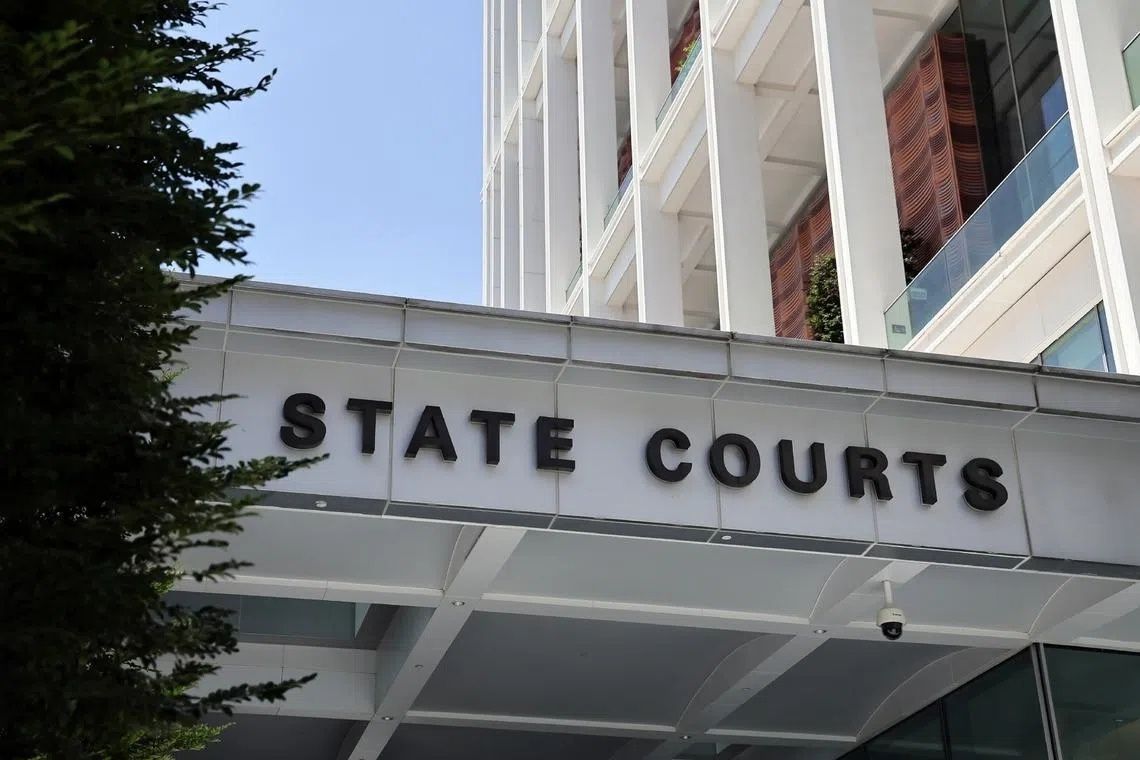
In a stark illustration of Singapore's persistent drink-driving problem, courts processed 41 cases of driving under the influence in a single day on June 25, with three men facing particularly serious allegations involving unconsciousness at the wheel. The rapid-fire prosecutions underscore how widespread impaired driving remains despite sustained police enforcement and public awareness campaigns across the city-state.
The three drivers at the centre of the most alarming incidents—Tho Yu Wei Ronald, aged 34, Zhong Pengzhi, 38, and Dharuman Killivalavan, 29—allegedly succumbed to sleep while operating vehicles after consuming alcohol. Their cases reveal the compounded dangers when fatigue combines with intoxication, a combination that drastically reduces reaction time and situational awareness on busy urban roads. Each was charged with drink driving and with leaving a vehicle in a position causing undue inconvenience to others, a secondary offence that reflects the broader public safety impact of their conduct.
Tho's incident occurred on April 30 at approximately 11.05pm when he abandoned his car at the entrance of a multi-storey carpark at Block 176 Hougang Street 13. Breath analysis conducted after his apprehension revealed alcohol content of at least 51 micrograms per 100 millilitres—significantly exceeding Singapore's legal threshold of 35 micrograms per 100 millilitres. The margin of breach, representing nearly 46 per cent above the legal limit, suggests substantial alcohol consumption before attempting to drive through a residential area.
Zhong's case unfolded differently but with similar severity. In the early hours of May 9, at approximately 1.40am, he left his vehicle stranded in the second lane of a two-lane road along Clementi Avenue 5. His breath test indicated at least 48 micrograms of alcohol per 100 millilitres of breath, placing him well above permitted levels. The location—a major arterial road—heightened the danger posed to other road users who might encounter his parked vehicle unexpectedly.
Dharuman, an Indian national, faced the most damaging readings of the three. Operating a lorry along Loyang Avenue on June 15 at 7.45pm, he left the vehicle positioned in the extreme right lane while intoxicated with at least 87 micrograms of alcohol per 100 millilitres of breath—nearly two and a half times the legal limit. The size and weight of a lorry amplifies the potential consequences of impaired operation. Dharuman pleaded guilty on June 25 and received a fine of $7,100 together with a 36-month driving disqualification, among the harsher penalties imposed that day.
Two of the 41 prosecuted drivers compounded their offences by being repeat offenders, a factor that triggered more severe sentencing. Cheng Woon Siong, aged 44, had previously been convicted of drink driving in December 2019. When stopped by police for routine checks, his breath reading registered at least 52 micrograms per 100 millilitres. This recidivism resulted in a one-month custodial sentence, a $5,500 fine, and a 60-month driving prohibition—substantially harsher than first-time offenders typically receive. The jail time reflects Singapore's increasingly stringent approach to habitual road safety violations.
Koh Choon Lye, 48 years old, represented the other repeat case. Stopped along Tyrwhitt Road on April 16 for police checks, his breath analysis showed at least 51 micrograms of alcohol per 100 millilitres. His 2018 conviction for the same offence placed him squarely within Singapore's enhanced penalty framework. The gap between his 2018 offence and this 2025 apprehension demonstrates that initial consequences, while significant, did not deter a subset of offenders from returning to the behaviour.
The bulk processing of 41 cases in a single court sitting reflects the consistent volume of drink-driving enforcement across Singapore. The offences span diverse times and locations—from late-night residential areas to early-morning arterial roads to evening industrial zones—indicating that impaired driving occurs across temporal and geographic patterns rather than concentrating in particular circumstances. This diffusion of incidents across the city complicates prevention efforts that might otherwise target specific high-risk hours or locations.
Statistical context reveals the magnitude of the underlying problem. Singapore's Traffic Police recorded 1,716 arrests for drink driving during 2025, a figure that translates to nearly five arrests daily across the entire year. More alarmingly, drink-driving accidents resulted in 12 fatalities in 2025 alone, each representing a family disrupted and a community affected. While the fatality figure may seem modest in absolute terms, the preventability of each death through simple abstinence from driving creates a stark ethical calculus that authorities emphasise repeatedly.
For Malaysian readers, Singapore's aggressive enforcement approach offers instructive comparisons to drink-driving frameworks in this region. The systematic prosecution of bulk cases, the enhancement of penalties for repeat offenders, and the explicit connection between impaired driving and fatalities reflect strategic choices about road safety prioritisation. Malaysia's own drink-driving problem—though incompletely quantified in comparable terms—remains significant, and the mechanisms employed by Singapore's courts and police merit consideration as alternative enforcement models.
Authorities in Singapore have employed a multi-faceted communication strategy emphasising both the legal consequences and the personal responsibility dimensions of the issue. The police statement accompanying the prosecutions urged the public to abstain from driving if consuming alcohol, promoting alternative transport options including taxis and private-hire vehicles. This framing shifts emphasis from individual enforcement actions to systemic prevention, acknowledging that legal penalties alone have proven insufficient to eliminate the behaviour entirely.
The concentration of 41 cases in a single day also reflects how a single initiative or enforcement sweep can reveal the underlying prevalence of the conduct. When police dedicate resources to systematic drink-driving detection—through roadside breath-testing operations, checkpoint programs, or targeted weekend enforcement—the resulting caseload illuminates an enforcement pattern rather than necessarily a spike in actual offending behaviour. This distinction matters for understanding whether drink-driving is increasing or whether detection and prosecution intensity fluctuate.
Moving forward, the cases processed on June 25 signal continued resolve within Singapore's criminal justice system to treat drink-driving as a serious road safety threat warranting consistent prosecution and meaningful penalties. The range of sentences—from fines and disqualification for first offenders to custodial time for repeat offenders—demonstrates calibrated proportionality within a framework oriented toward both punishment and deterrence. For the region's other jurisdictions grappling with similar challenges, the sustained enforcement approach merits careful study.

