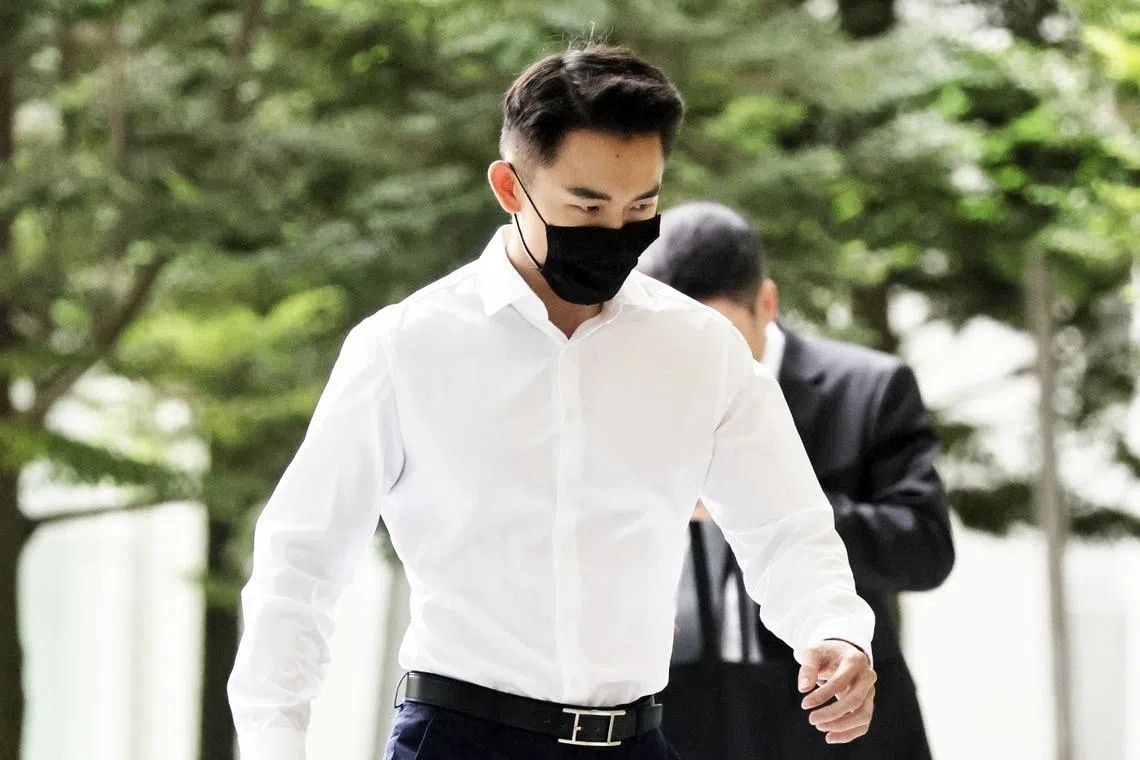
A 36-year-old medical doctor in Singapore has been convicted of consuming MDMA after being arrested during a large-scale police operation at a luxury hotel in Sentosa last year. Rayson Lee Rui Sheng was among 49 men detained following a raid on a villa party at the Sofitel Singapore Sentosa on August 9, 2023, in the early morning hours. On Tuesday, June 30, the District Court found him guilty of one count of drug consumption, dismissing his defence that his drink had been tampered with by unidentified party guests.
The case centred on forensic evidence obtained from the accused. Both Lee and his 29-year-old co-accused Tan Li Ming provided urine and hair samples to the authorities, which were subsequently analysed by the Health Sciences Authority. The HSA detected traces of MDMA in their urine, while their hair samples revealed evidence of both ecstasy and ketamine consumption. Hair analysis is a more reliable indicator of sustained or repeated drug use, as it captures a longer historical window than urine testing. Neither man disputed the laboratory findings themselves, instead mounting a defence that hinged on the claim that their beverages had been spiked without their knowledge or consent at the party.
District Judge A Sangeetha delivered a scathing assessment of the defendants' credibility during her ruling. The judge noted a critical inconsistency in their accounts: if they had genuinely believed their drinks had been contaminated, they would logically have ceased consuming further alcohol at the party. Instead, evidence presented at trial showed that both men continued drinking throughout the evening. The judge also relied heavily on the hair sample results, which indicated not merely one-off drug exposure but a pattern of prior consumption. This forensic finding undermined the narrative that they were unsuspecting victims of a single incident of drink tampering, suggesting instead a familiarity with these substances.
The prosecution's case was constructed around detailed witness statements and a methodical deconstruction of the defence narrative. Deputy public prosecutors Jocelyn Teo and Dhiraj G Chainani presented arguments that the two men had relied on vague, hypothetical scenarios rather than substantive evidence. The DPPs highlighted that Tan claimed to have witnessed unidentified foreign nationals using a syringe to inject substances into plastic cups at a pantry area, yet could provide no meaningful identifying details about these alleged perpetrators. Similarly, Lee stated that he had consumed three drinks offered by strangers, but offered no concrete information about who these individuals were or what they looked like. The prosecutors contended that genuine victims of such an incident would retain at least some recollection of salient details about the people responsible.
Tan's account contained an additional implausibility that the court found telling. He claimed to have observed the spiking operation and even asked an unidentified person what substance was being injected into the drinks. According to his version of events, he was told the liquid was "G-water" intended to produce a "drunk feeling." Yet Tan further claimed he did not know what G-water was—a substance that is relatively well-known in certain social circles in Southeast Asia and beyond. The DPPs seized on this inconsistency as evidence of fabrication, arguing that if Tan had truly witnessed the tampering and enquired about it, his professed ignorance of the substance strains credibility. Furthermore, the prosecutors argued that even if the defence could demonstrate the existence of drug residue in cups, this would merely confirm that the men had consumed adulterated beverages, not that such consumption was wholly unknowing and involuntary.
The raid itself was a coordinated operation involving multiple agencies. Police, acting on intelligence, conducted initial checks at the Sofitel Sentosa shortly after 5:30 am on the morning of August 9, 2023. Officers discovered substances believed to be controlled drugs within the villa, prompting them to request assistance from the Central Narcotics Bureau. The CNB subsequently recovered additional suspected controlled substances, including tablets and powder consistent with ecstasy and ketamine, along with drug paraphernalia such as grinders and other equipment used in drug preparation and consumption. The systematic nature of the discovery and the range of items recovered suggested an organised gathering rather than an impromptu social event.
Lee's account of his presence at the party provided context for understanding the social dynamics at play. He had arrived at the villa around 8 pm on August 8, 2023, intending to attend a birthday celebration for an acquaintance. After mingling with friends, he subsequently visited a nightclub in Clarke Quay where he met Tan for the first time. The two men then travelled separately to the villa during the early morning hours, where the party had evolved and additional guests, many unfamiliar to Lee, had arrived. This trajectory is significant because it indicates that the venue had transformed from a controlled birthday gathering into a larger, more loosely supervised event with participants unknown to the original guests. Lee's claim that he consumed three drinks proffered by strangers must be understood within this context of a increasingly crowded and less intimate environment.
Tan's narrative painted a picture of deliberate, methodical drug-spiking, though his account similarly lacked specificity. He described witnessing what he characterised as a small group of unknown men at a pantry area extracting liquid from a bottle using a syringe and then injecting this substance into plastic cups. After drinking from one such cup, Tan noticed white residue at the bottom. This detail might have seemed incriminating to the prosecution's case, yet the DPPs countered that Tan's failure to immediately report the tampering, remove himself from the venue, or provide identifying information about the perpetrators contradicted a claim of being an unwitting victim. Moreover, the DPPs emphasised that Tan's claimed confusion about the nature of "G-water" weakened rather than strengthened his position, as it suggested either dishonesty or a fundamental lack of awareness incompatible with his detailed observations of the spiking process.
The broader implications of the conviction extend beyond the immediate parties involved. The case illustrates how Singapore's drug enforcement agencies, particularly the CNB, operate with sophistication in detecting and prosecuting drug-related offences. The reliance on scientific evidence, combined with judicial scepticism toward unsubstantiated alibis, reflects a rigorous approach to drug crime. For individuals across the region attending social gatherings in Singapore, the decision serves as a cautionary reminder that proximity to drug use, combined with forensic evidence of consumption, can result in serious legal consequences regardless of claims of involuntary exposure. The rejection of the spiking defence is particularly noteworthy given its invocation by multiple defendants in drug cases globally; Singapore's courts have demonstrated a consistent pattern of requiring substantial corroborating evidence rather than accepting such claims at face value.
The court also considered Lee's own prior conduct, which had surfaced during the trial. Lee disclosed that he had consumed a pill on two separate occasions while travelling in Thailand in June 2023, just two months before the Sentosa incident. This admission was significant because it established a pattern of drug experimentation and directly contradicted any implication that Lee was a cautious, substance-naive individual who would never knowingly engage with illicit drugs. The judge incorporated this information into her assessment of Lee's overall credibility, noting that neither defendant could claim to be unfamiliar with drug use. The distinction between a first-time, unwitting exposure to drugs and consumption by someone with prior experience carries considerable weight in sentencing and culpability determinations within Singapore's legal framework.
The defence's arguments regarding unseized evidence—specifically the "plastic silver cups" that might have contained residual drugs—represented a final attempt to redirect attention toward evidentiary gaps. However, the prosecution effectively countered this line of reasoning by explaining that even a positive result from such cups would merely confirm that adulterated beverages were consumed, not that the consumption occurred without knowledge. This logical rebuttal dismantled what the DPPs characterised as a strategy of presenting "hypothetical scenarios and unexplored possibilities" rather than tangible facts. The court's acceptance of this reasoning reflects a judicial preference for evidence-based legal argument over speculative counterfactuals. Importantly, the DPPs noted that the defence had produced no credible evidence identifying any specific individual responsible for the alleged spiking, a failure that distinguished the case from scenarios in which victims could at least identify perpetrators, even if other details remained unclear.

