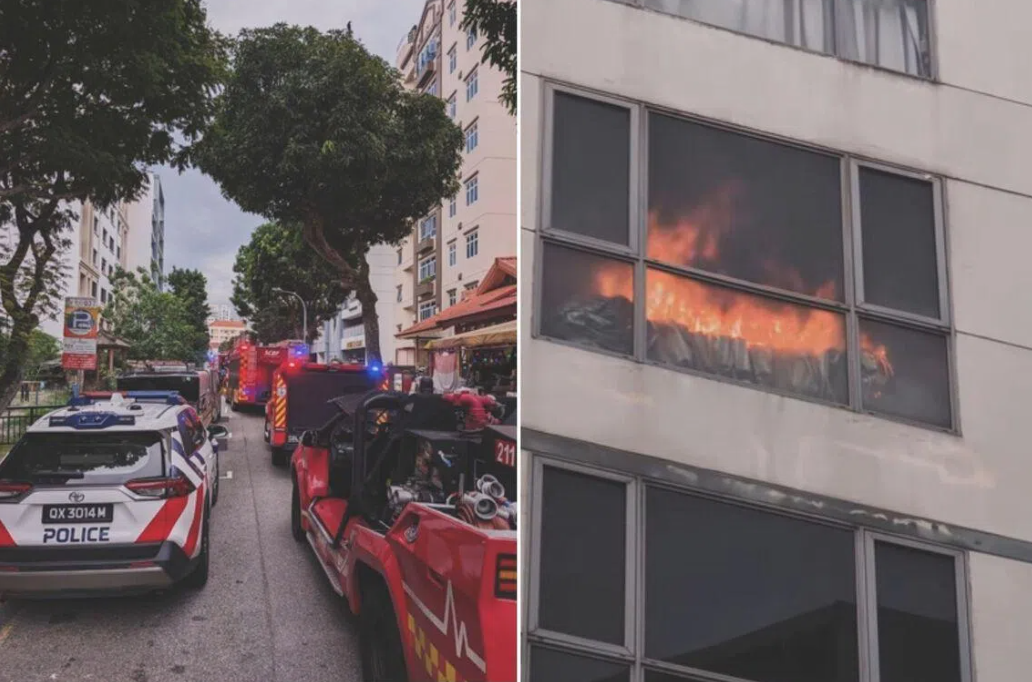
An unattended power-assisted bicycle charging in a seventh-floor residential unit triggered a significant fire incident in Singapore's Geylang district on Sunday, June 21, forcing emergency responders to evacuate neighbouring residents as a precaution. The Singapore Civil Defence Force received the alert at 5.35pm after the battery ignited in a living room at 9 Lorong 26 Geylang, the address of condominium Casa Aerata. The quick response from both police and SCDF personnel meant five occupants from adjacent units were removed from the building safely, though no injuries were sustained during the evacuation.
The incident underscores a growing concern across Singapore's dense residential landscape, where the adoption of active mobility devices has expanded rapidly. Power-assisted bicycles represent a convenient commuting solution for many urban dwellers, yet their charging practices within apartment buildings and condominiums present distinctive fire risks that differ markedly from traditional household appliances. The fact that the bicycle was left unattended while charging suggests a common oversight among users who may not fully appreciate the potential hazards associated with these lithium-ion battery systems, particularly when housed within confined living spaces where fire can spread rapidly.
Emergency responders extinguished the blaze using standard equipment including a hosereel and compressed air foam backpack, bringing the situation under control relatively quickly. Nevertheless, the intensity of the fire was sufficient to cause structural damage—the heat from the burning unit eventually fractured a window, prompting local Member of Parliament Cai Yinzhou to clear the area below in anticipation of falling glass. The MP's presence at the scene and subsequent intervention demonstrated how such incidents can rapidly escalate from a single-unit problem to a multi-unit emergency requiring coordinated neighbourhood management.
Preliminary investigation determined that the fire originated from electrical failure within the PAB's battery system. This finding aligns with a troubling pattern emerging across Singapore's residential sector. According to the SCDF's own data, active mobility device fires have become an identifiable subcategory within electrical fire statistics, with 34 out of 304 residential electrical fires in 2025 involving these devices. Although the total number of AMD-related fires declined from 67 cases in 2024 to 49 in 2025, personal mobility device fires specifically increased from 25 to 31 cases during the same period, suggesting a shifting risk profile within the broader category of consumer mobility technology.
The safety warnings issued by the SCDF following the incident carry particular relevance for Malaysia's own growing market in personal mobility solutions. The authority's explicit guidance against purchasing or using non-original batteries for active mobility devices addresses what appears to be a widespread consumer practice of seeking cheaper aftermarket alternatives. In markets across Southeast Asia, including Malaysia, counterfeit or substandard battery packs represent a persistent problem, often lacking the safety circuit protections and quality control standards built into original equipment. These inferior products frequently exhibit higher failure rates and increased propensity for thermal runaway incidents, the catastrophic failure mode responsible for battery fires.
Equally significant is the SCDF's recommendation against extended or overnight charging of PAB and PMD batteries. This guidance reflects the technical reality that lithium-ion batteries, when continuously supplied with power beyond their full charge point, experience degradation and heating that can eventually trigger combustion. Many users, particularly those charging devices in shared residential environments, may not be aware that leaving batteries connected to chargers for extended periods—whether deliberate or through simple forgetfulness—substantially elevates fire risk. The incident at Casa Aerata occurred during a Sunday evening, potentially suggesting weekend charging practices that extended beyond safe parameters.
For Malaysian residents and regulators, the Singapore incident offers crucial lessons as the nation's own adoption of electric bicycles, e-scooters, and personal mobility devices accelerates. Malaysia's Building Code and fire safety regulations have not yet developed comprehensive standards specifically addressing the unique hazards of charging lithium-ion battery systems in residential apartments and condominiums. Unlike traditional electrical appliances designed with built-in safety features and manufacturer guidelines refined over decades, many active mobility devices remain relatively new products with inconsistent charging protocols and limited user education.
The density of residential living in major Malaysian cities mirrors Singapore's conditions, meaning that fires originating in single units can rapidly threaten neighbouring properties and occupants. High-rise condominiums in Kuala Lumpur, Penang, and other urban centres house thousands of residents who increasingly rely on personal mobility devices for the last-mile commute. Without coordinated safety standards and public education, the risk of repeating Singapore's Casa Aerata incident exists across the region. Fire prevention authorities in Malaysia should consider establishing dedicated guidance for residents and building management regarding safe battery storage, charging protocols, and appropriate placement of these devices within residential units.
The incident also highlights the broader challenge of consumer safety in a rapidly evolving technology landscape. Many purchasers of power-assisted bicycles and personal mobility devices acquire them through online marketplaces or third-party retailers who may not provide adequate safety documentation or usage guidelines. The proliferation of non-original batteries, often sold at substantial discounts to original equipment batteries, creates a dangerous incentive structure where price-conscious consumers unknowingly expose themselves and their neighbours to fire risk. Without transparent certification systems and enforcement mechanisms, distinguishing between safe and unsafe battery products remains difficult for ordinary users.
Building management companies and residential associations throughout Malaysia should proactively establish policies governing where and how active mobility device batteries can be charged within their properties. Many condominiums currently lack specific provisions addressing these emerging hazards, despite their increasing prevalence. Best practice approaches might include designating specific charging areas outside residential units, requiring use of fire-rated charging cabinets, and implementing restrictions on overnight charging. These measures, combined with public education campaigns explaining the risks of non-original batteries and extended charging periods, could substantially reduce the likelihood of similar incidents in Malaysian residential buildings.
The regulatory response to such incidents typically lags behind technology adoption by several years, creating a window of vulnerability during which users operate without formal safety frameworks. Singapore's proactive warnings following the Geylang fire demonstrate how government bodies can rapidly communicate risk information to the public. Malaysian authorities, including the Fire and Rescue Department, might consider similar public information campaigns targeting the growing user base of active mobility devices. Clear, accessible guidance about battery safety, recognizing warning signs of battery degradation, and proper disposal of damaged batteries could substantially enhance community resilience against these emerging fire hazards.
Ultimately, the Casa Aerata incident serves as a cautionary reminder that innovation in urban mobility, while offering genuine transportation benefits, introduces novel risks that societies must actively manage. Neither blanket prohibition of these devices nor laissez-faire acceptance represents an adequate response. Instead, evidence-based regulation, manufacturer accountability, consumer education, and building-level safety protocols must evolve in parallel with technology adoption. For Malaysia, learning from Singapore's experience now—before similar incidents occur in local residential buildings—offers the opportunity to establish comprehensive safety frameworks that protect residents while preserving the mobility benefits these devices provide to urban commuters.

