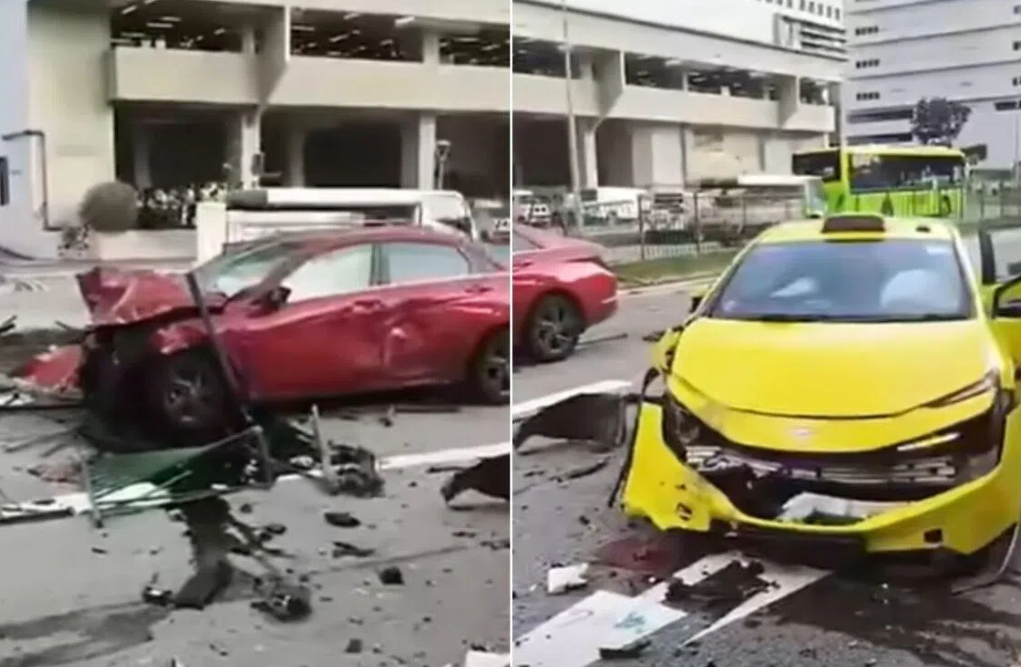
A 36-year-old Singapore man faces a string of serious charges after police allege he drove recklessly under the influence of methamphetamine while lacking a valid driving licence, resulting in a collision that left two people injured in the Kallang area. Mohamed Firdouz Mohamed Akram was formally charged on June 19 with dangerous driving causing injury, unlicensed operation of a motor vehicle, driving while impaired by the drug Ice, and possession of weapons.
According to court documents, the incident unfolded on the morning of June 17 when Firdouz allegedly consumed Ice before operating a vehicle along Kallang Bahru around 8 o'clock. Authorities say he failed to maintain proper control of his car, leading to a collision with a taxi. The taxi driver, aged 60, and his passenger, 43, sustained injuries in the impact. Medical records presented to the court indicate the cab driver experienced chest pain following the accident, while the female passenger complained of pain in her tailbone area.
The circumstances surrounding the incident paint a concerning picture of drug-impaired driving. Rather than remaining at the scene or cooperating with emergency responders, Firdouz abandoned his vehicle and fled the area before police units could arrive. This decision to leave the crash site proved consequential, as it triggered an immediate manhunt that saw law enforcement identify and apprehend him within five hours of receiving the initial report.
Investigators discovered a troubling cache of items inside the abandoned vehicle. Police seized suspected drugs, various paraphernalia associated with drug consumption, electronic vaporisers, and a knuckleduster—a potentially lethal weapon. The discovery of these items suggested a pattern of behaviour that extended beyond the immediate traffic incident. According to court filings, officers subsequently located Firdouz at the Village Hotel Katong on Marine Parade Road approximately one hour after the crash, where they alleged he possessed two knives in his hotel room.
The charges Firdouz faces carry substantial legal consequences that reflect the severity of his alleged conduct. Singapore's traffic laws treat driving under the influence of controlled substances with particular severity. Should he be convicted of operating a motor vehicle while under the influence of drugs, he faces potential imprisonment of up to one year and a fine not exceeding S$10,000, or both penalties applied concurrently. The dangerous driving causing injury charges carry similarly serious implications, with convicted offenders liable to imprisonment of up to a year and fines ranging between S$2,000 and S$10,000.
This incident highlights an ongoing concern across the region regarding substance-related traffic offences. The combination of methamphetamine use—a powerful stimulant that can severely impair judgment and motor coordination—with the operation of a vehicle in an urban environment created genuine danger for innocent road users. The injuries sustained by the taxi driver and passenger underscore how drug-impaired driving extends its consequences beyond the operator to affect other people sharing the road.
The lack of a valid Class 3 driving licence compounds the gravity of the situation, suggesting Firdouz had no legal authorisation to operate the vehicle in the first place. This detail raises questions about how an unlicensed, potentially impaired driver came to be behind the wheel in the first place, and whether additional safeguards might be warranted in preventing such occurrences.
The presence of weapons found at the hotel room adds another dimension to the overall picture of the suspect's circumstances. Police did not provide specific details about the knives or circumstances suggesting they were connected to the traffic incident, but the discovery contributed to the range of charges brought before the court. The weapon charges reflect Singapore's strict stance on carrying instruments that could be used to cause harm.
For Malaysian and broader Southeast Asian readers, this case illustrates how regional jurisdictions continue to grapple with drug-related traffic offences. The rapid apprehension and progression through the legal system demonstrates Singapore's enforcement capabilities, though similar challenges persist across the region. Drug driving remains a significant public safety concern, particularly given the increasing availability and use of methamphetamine and synthetic drugs throughout Southeast Asia.
The case also underscores the unpredictable consequences of substance impairment in high-consequence environments. The taxi driver and passenger in this incident became victims of another's choices, sustaining injuries that required medical attention and potentially ongoing treatment. Their experience represents a broader social cost of drug misuse that extends to innocent bystanders.
Firdouz's case will return to court on July 17 for further proceedings. The trajectory of his case may provide additional insights into how Singapore courts treat the combination of drug-impaired driving, dangerous operation of vehicles, and weapon possession. The outcome will likely have relevance for understanding enforcement priorities and judicial approaches to such complex criminal profiles across the region.
The incident serves as a reminder of the multiple layers of risk presented when substance misuse intersects with vehicle operation. Beyond individual criminal responsibility, it raises systemic questions about preventing access to vehicles by individuals with active substance dependencies or recent drug consumption, and broader public health responses to methamphetamine use in urban centres.

