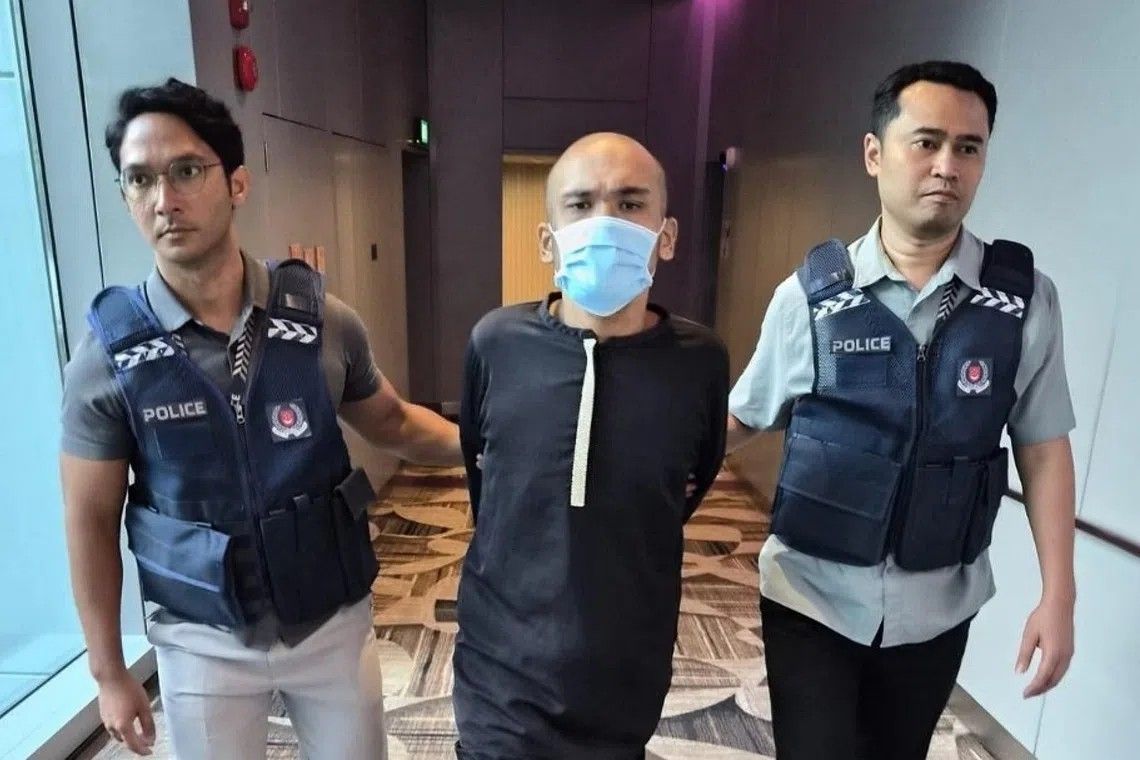
A 27-year-old Singaporean man made his first court appearance on August 7 after being charged with making insulting and offensive statements targeting the Muslim community, marking another test of Singapore's efforts to maintain religious and social harmony through its legal framework. Elvin John Baptist faces a single charge under the Maintenance of Religious Harmony Act, legislation designed to protect religious minorities and prevent communal violence in the multiethnic city-state.
According to court documents, Baptist allegedly uploaded two videos on the TikTok platform on March 1 in which he uttered remarks in Malay that he knew would be demeaning to the Muslim faith. The nature of these statements was deliberate, with authorities suggesting he understood the inflammatory potential of his actions and the likelihood they would disturb public peace in a nation where religious sensitivities remain a paramount concern for governance and social stability.
The timeline of events reveals a notable delay in the police response. Although the videos were posted on March 1, the Royal Singapore Police did not receive a report about Baptist's conduct until August 6—more than five months later. By the time the complaint was lodged, Baptist had already departed from Singapore, complicating immediate apprehension and prompting a transnational law enforcement response.
In a demonstration of cross-border cooperation, the Royal Malaysia Police played an instrumental role in locating and apprehending Baptist, who had apparently sought refuge across the causeway. Malaysian authorities deported him back to Singapore on August 6, the same day the police report was filed. Baptist was taken into custody immediately upon his arrival at Singapore's border, allowing authorities to proceed with formal charges without further delay.
The case carries particular significance for Malaysia and the broader Southeast Asian region, as it underscores the serious consequences individuals face when they deliberately target religious communities through social media platforms. The transnational nature of the incident—involving actions posted online, flights across international borders, and coordination between two neighbouring police forces—illustrates how digital-age offences transcend traditional jurisdictional boundaries and require diplomatic cooperation to resolve.
Beyond the primary charge, Baptist is also assisting investigators in an unrelated matter that has garnered serious attention from authorities. Police are examining another video that has circulated across social media platforms, allegedly depicting an individual stepping on a Quran—one of Islam's holiest texts. This separate video is believed to have been recorded aboard a public bus within Singapore, though authorities have not yet confirmed Baptist's involvement or whether he created this content.
The investigation into the Quran video demonstrates the severity with which Singapore treats acts perceived as desecrating religious objects. Such incidents carry the potential to inflame communal tensions in a nation with a significant Muslim population comprising roughly 15 percent of the total population. Religious tensions, while historically managed through law and social norms, remain a latent concern that officials actively work to prevent from escalating.
Singapore's Maintenance of Religious Harmony Act, under which Baptist has been charged, represents one of Asia's more proactive legislative approaches to preventing religiously motivated conflict. The law criminalises acts that deliberately insult another person's religion or are likely to promote ill-will between religious groups. Penalties can include imprisonment and fines, reflecting the seriousness with which the city-state treats religious harmony as essential infrastructure for social cohesion.
The case arrives amid ongoing concerns about online hate speech and radicalisation in Southeast Asia. Social media platforms have become vectors for spreading inflammatory content that targets minority communities, and law enforcement agencies across the region are increasingly allocating resources to monitoring and prosecuting such conduct. The significant time lag between Baptist's initial posts and police action may prompt discussions about the adequacy of monitoring mechanisms and reporting channels for religious harassment.
For Malaysian readers and policymakers, the incident serves as a reminder of the cross-border implications of social media conduct. Citizens who migrate temporarily or permanently to neighbouring countries remain subject to local laws, and actions that might be tolerated in one jurisdiction can carry severe legal consequences in another. The cooperation between Singapore and Malaysia in this case also highlights how law enforcement coordination operates effectively when religious or communal harmony is at stake.
The broader context of this case reflects a regional pattern where governments are taking increasingly firm stances on online speech targeting religious groups. While free speech advocates raise concerns about the breadth of such laws, governments in Malaysia, Singapore, and elsewhere argue that protecting religious minorities and maintaining communal peace justifies certain restrictions on expression, particularly when statements are demonstrably intended to provoke or demean.
As Baptist's case progresses through Singapore's courts, the outcomes will likely influence how authorities and digital platforms approach similar incidents in future. The investigation into the separate Quran video may produce additional charges or clarify the extent of organised activity intended to provoke religious communities. These developments will be closely watched by religious leaders, civil society organisations, and policymakers throughout Southeast Asia seeking to balance free expression with communal stability.

