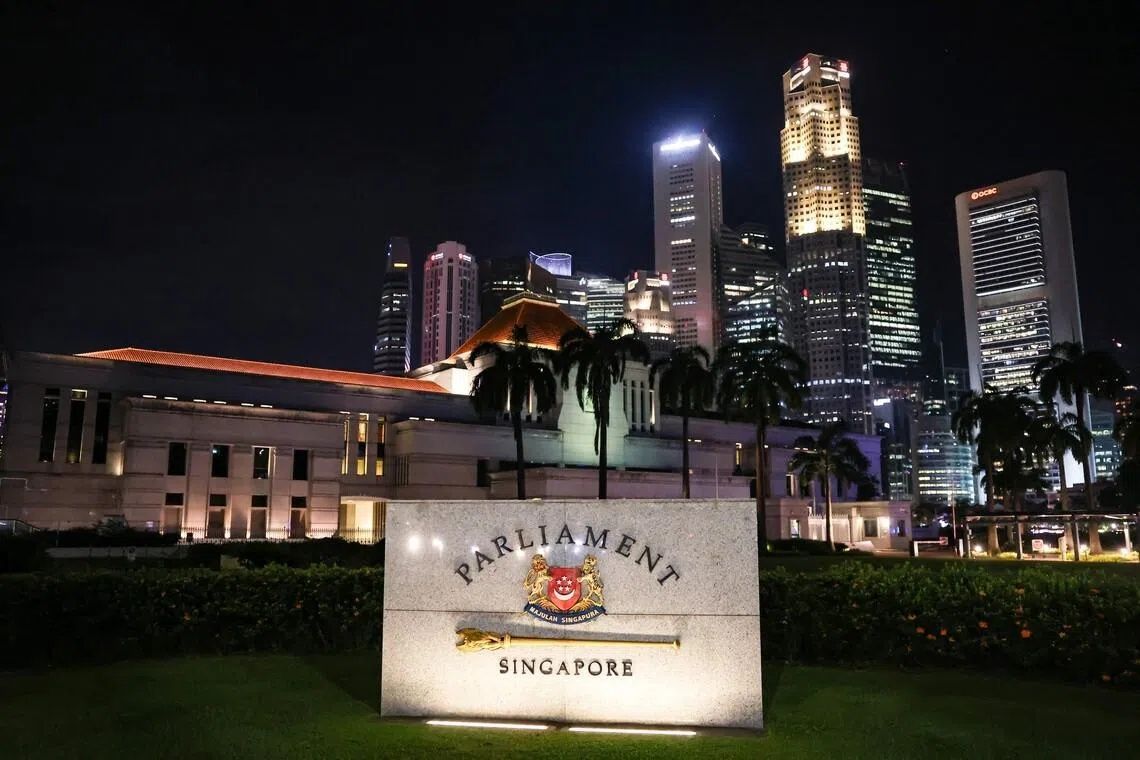
Singapore police have charged a 40-year-old man with making fraudulent bomb threats targeting two high-security government premises, including the national Parliament House, in what authorities say was a serious attempt to create public alarm and strain law enforcement resources. The suspect was arrested on July 7 after investigators traced both threats to the same individual within a span of four days, culminating in charges being filed on July 9.
The first incident occurred when the Home Team Science and Technology Agency, located at the One North precinct, received an online form submission on July 3 claiming that an explosive device had been placed inside the building. The report prompted immediate security protocols and a thorough sweep of the facility and surrounding areas. Just as authorities were managing the fallout from that incident, a second threat materialized on July 7 when the Prime Minister's Office received an anonymous email alleging that a bomb had been planted at the Parliament House, one of the nation's most sensitive and heavily protected locations.
Security personnel and bomb detection units responded swiftly to both locations, conducting extensive and systematic checks of the buildings and their immediate surroundings. Officers found no items of security concern at either site, establishing conclusively that both threats were hoaxes. However, the rapid succession of threats and their targeting of critical government institutions raised alarm bells within the law enforcement community and prompted an urgent investigation to determine whether the incidents were connected.
Detectives from the Criminal Investigation Department and Central Police Division worked to trace the origin of both communications. Their analysis of the submission patterns, timing, and content led them to conclude that the same person had orchestrated both false reports. This determination proved crucial in narrowing the investigation and accelerating the apprehension of the suspect. Police arrested the man on July 7, the same day the Parliament House threat was received, suggesting that investigators had already begun zeroing in on him before the second incident was fully processed.
During the arrest and subsequent searches of the suspect's premises and possessions, officers seized several electronic devices that police believe were used to execute the threats. These devices are expected to form key evidence in the prosecution case, helping establish the digital trail that connects the man to both communications. The technological nature of the hoaxes—using online submission forms and email—underscores how modern communication channels have become vectors for such serious offences.
The charges against the man fall under the offence of communicating false information of a harmful thing, a provision in Singapore's criminal code designed to penalise individuals who spread alarming but fictitious claims about dangerous items or situations. The potential penalties are severe, reflecting the gravity with which authorities treat such conduct. If convicted, he faces imprisonment of up to seven years, a financial penalty not exceeding S$50,000 (approximately RM165,000), or a combination of both sanctions.
Singapore's law enforcement has been increasingly vocal about the societal costs of such hoaxes. Officials emphasize that fake bomb threats generate unnecessary panic among the general public and consume substantial police and emergency response resources that could otherwise be directed towards genuine threats or other public safety priorities. In a densely populated city-state where government buildings attract constant scrutiny and serve as symbols of national stability, threats to Parliament House or other executive institutions carry particular weight and potential to create widespread anxiety.
The incident reflects broader regional concerns about false security threats in Southeast Asia. Malaysia and other countries in the region have also grappled with occasional hoax threats targeting government buildings, airports, and public venues. Such hoaxes can tie up security personnel, disrupt normal operations at critical institutions, and erode public confidence in safety assurances. The speed with which Singapore's authorities identified and apprehended the suspect demonstrates the sophistication of the city-state's investigative capabilities and cybersecurity infrastructure.
For Malaysian readers and regional observers, the case underscores the importance of robust cybersecurity protocols at government institutions and the need for swift inter-agency coordination when threats emerge. As digital communication becomes ever more prevalent, security agencies across Southeast Asia face the challenge of distinguishing genuine threats from malicious hoaxes while maintaining rapid response capabilities. The resources expended on investigating and securing these two locations highlight how a single individual with access to basic technology can create disproportionate disruption to government operations and public confidence.
The prosecution of this case will likely be watched closely within security and law enforcement circles across the region, as it demonstrates both the vulnerabilities that exist in institutional reporting systems and the investigative techniques that can be deployed to identify perpetrators. The severity of potential penalties—up to seven years imprisonment—sends a clear deterrent message to would-be perpetrators that such hoaxes will be treated as serious criminal matters rather than pranks or minor infractions. This approach aligns with international best practices in many developed nations that have similarly stiffened penalties for false bomb threats in recent years.

