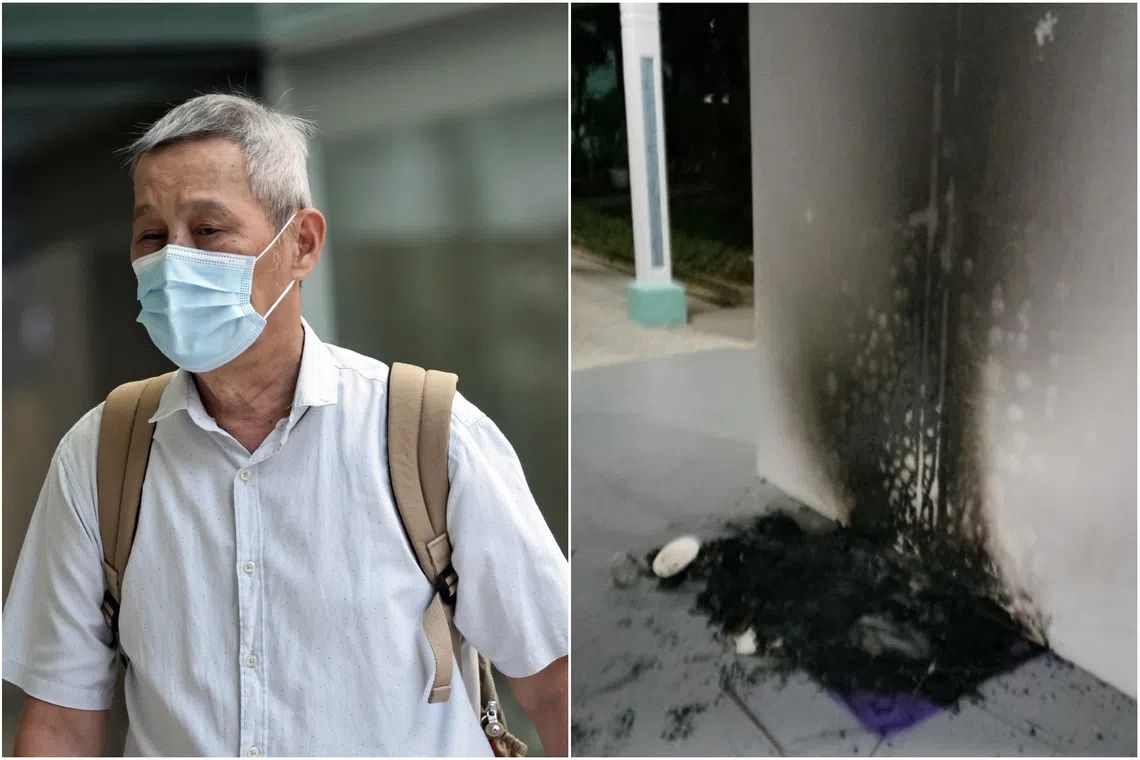
A 68-year-old Singapore retiree has been sentenced to three months in jail for setting fire to cardboard cat houses positioned at a void deck near his residence in Bukit Batok East Avenue 4. Koh Teng Boo, who pleaded guilty to committing mischief by fire, caused damage exceeding S$900 to flooring and walls around the pavilion where the structures were located. The case highlights a tension between animal welfare initiatives and resident concerns over urban living conditions in public housing estates.
The dispute began when Koh first observed the makeshift shelters erected around a void deck pavilion adjacent to his block in September 2025. These cardboard structures, stocked with food and water supplies, were designed to provide refuge for stray cats in the neighbourhood. However, Koh viewed them as problematic, believing they would attract unwanted pests and birds to the area. Rather than accept this development, he took his grievances through official channels, raising the matter with his Member of Parliament.
Koh's initial concerns centred on what he perceived as hygiene risks. He observed that the presence of the cat houses appeared to draw birds to the vicinity, and he worried about pest infestations that might follow. Beyond these practical objections, he also noted that residents were discarding litter into the shelters, suggesting that the structures were becoming focal points for general rubbish accumulation rather than dedicated animal welfare facilities. These observations informed his decision to escalate the issue politically.
When his initial appeal to his MP appeared to yield no visible results, Koh took matters into his own hands. In October 2025, he removed three cat houses and placed them in an incense burner bin, then set them on fire. Rather than deterring further installations, this action prompted the community—presumably animal welfare advocates or fellow residents with different priorities—to erect additional shelters around the block.
Undeterred by this rebuff, Koh visited his MP again on November 17, reiterating his concerns and emphasizing that he bore no personal animosity toward cats themselves, but rather objected to what he characterized as an unhygienic practice. He stressed that the situation had worsened, with litter accumulation in and around the structures becoming more pronounced. His formal complaints, however, continued to go unaddressed in any manner he found satisfactory.
The situation escalated dramatically in the early hours of November 19, when Koh, returning home after consuming alcohol, encountered another cat house. Acting on impulse, he used a lighter to ignite the structure and walked away, leaving the fire burning unattended. There is no record of when or how this fire was eventually extinguished, nor any indication of whether nearby residents or building management intervened.
Far from being chastened by this incident, Koh set fire to yet another cat house the following day. On this occasion, two passers-by witnessed the flames and managed to extinguish the fire before it could spread or cause serious damage. Police arrested Koh later that day after identifying him as responsible for the acts of arson. The Jurong-Clementi-Bukit Batok Town Council subsequently submitted a repair bill of S$913 covering damage to the flooring and walls in the vicinity of the burnt structures.
The Deputy Public Prosecutor's case against Koh emphasized that his actions, while motivated by frustration over what he viewed as neglect of his concerns, constituted deliberate destruction of property. The prosecutor noted that despite Koh's claim that no action had been taken on his parliamentary petition, his resort to arson represented an unacceptable escalation that could have endangered lives and destroyed property valued far beyond the actual costs incurred. The law recognizes that those who commit mischief by fire with intent to cause property damage face sentences of up to seven years' imprisonment and substantial fines.
Koh has since made full restitution to the town council for the S$913 in damages, demonstrating at least partial acknowledgment of his wrongdoing. His three-month jail sentence sits well below the maximum penalty available, suggesting the court took into account his age, his guilty plea, and his restitution. However, the case underscores a broader challenge in densely populated residential estates: balancing compassion for animal welfare with resident quality-of-life concerns, and ensuring that grievances are resolved through proper channels rather than vigilantism.
For Malaysian observers, the case offers cautionary lessons about community management in high-density housing. Similar disputes over stray animal populations, street feeding programmes, and shared amenities have occasionally surfaced in Malaysian residential areas, though they have not typically escalated to criminal destruction. The incident demonstrates how unresponsive governance at ground level—whether in addressing concerns or communicating decisions—can breed frustration that ultimately harms both community welfare and individuals involved. It also illustrates that in Singapore's legal framework, intentional property destruction motivated by personal grievance, regardless of underlying concerns about hygiene or pest control, is treated as a serious criminal matter.

