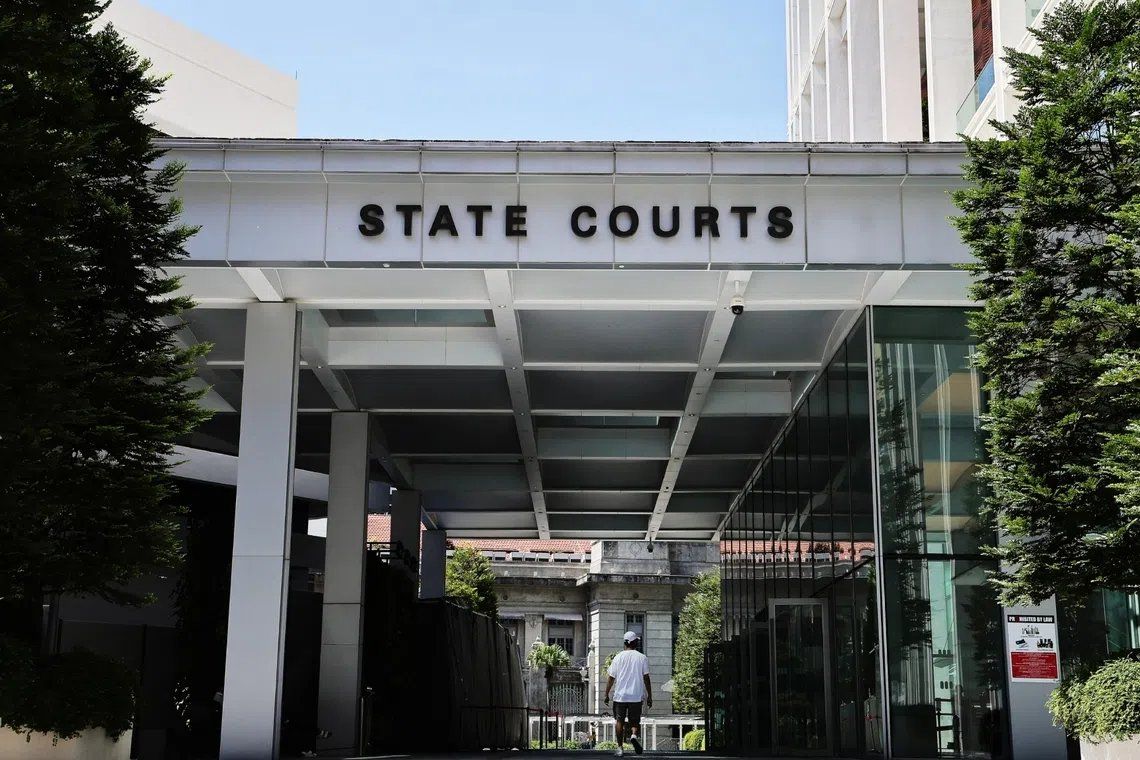
A 35-year-old Singaporean man has received a custodial sentence of two years and three weeks for his involvement in a brutal assault at a nightclub that spiralled into a weapons-fuelled attack in March 2021. Marcus Yeo Zhen Wei's conviction arrived after a protracted legal journey spanning four years, during which he evaded justice by crossing into Malaysia before being ensnared by authorities there on separate criminal charges and subsequently returned to Singapore in November 2025.
The incident that triggered this chain of events unfolded late on the evening of March 21, 2021, at a club located near Magazine Road close to Havelock Road. Yeo and three male companions, all intoxicated, initiated a confrontation with other patrons in the venue after accusing them of staring. The situation rapidly deteriorated when the group began hurling glasses and bottles at the other club-goers, prompting staff bouncers to remove the four men from the establishment.
What followed demonstrated a disturbing escalation in violence. Rather than dispersing as instructed, one member of Yeo's group retrieved a baton from a nearby vehicle and returned to the club entrance, while another armed himself with a knife. The two Vietnamese men who became victims of this organised attack were ambushed outside the club, with one suffering repeated blows from the baton wielded by Yeo's associate. The ferocity of the assault left one victim with catastrophic injuries, including a collapsed lung that necessitated his admission to Singapore General Hospital and 21 days of medical leave to recover.
In court, Deputy Public Prosecutor Mark Chia laid out the severity of the physical toll inflicted on the victims, establishing the premeditated nature of the assault by detailing how weapons were deliberately retrieved and deployed. The 30-year-old victim's collapsed lung represented a serious, life-threatening injury that underscored the brutal character of the attack and justified the substantial sentence ultimately imposed.
Yeo's initial response to his arrest on March 26, 2021, appeared compliant. He was held in custody for six days before being released on bail while awaiting his court appearance scheduled for November that year. However, instead of facing the judicial process, Yeo made the decision to abscond. In October 2021, he travelled to Pulau Ubin and subsequently arranged passage by boat into Malaysian waters, effectively placing himself beyond Singapore's immediate reach.
The fugitive's time in Malaysia proved to be his undoing. Within a year of entering the country, in 2022, Malaysian authorities apprehended Yeo on charges related to drug offences. Though the specific details of these offences remain undisclosed by the Immigration and Checkpoints Authority prosecutor, Deputy Superintendent Wong Wai Yuen indicated to the court that Malaysian authorities cooperated with Singapore in returning the fugitive. This cooperation between the two neighbouring countries' law enforcement agencies culminated in Yeo's extradition back to Singapore in November 2025.
The complexity of cross-border criminal cases between Singapore and Malaysia reflects ongoing challenges in regional law enforcement cooperation. While extradition mechanisms between the two nations exist, they are not always swift or straightforward, and the four-year interval between the original incident and Yeo's return to custody demonstrates the protracted nature of pursuing fugitives across international boundaries. The involvement of Malaysian drug offences added an additional layer of legal complexity to what was originally a straightforward assault case.
Yeo's guilty pleas to multiple charges—including assault, performing a rash act, and illegally departing Singapore—streamlined his sentencing process. The plea of guilty to the charge of unlawfully leaving Singapore reflected the gravity with which authorities treat bail-jumping and flight to evade prosecution. This particular charge carries significant weight in Singapore's criminal justice system, as it undermines the bail system itself and demonstrates contempt for court authority.
The sentence imposed reflects both the violent nature of the March 2021 assault and the subsequent failure to appear in court. The two years and three weeks in custody represents a proportionate response to the constellation of offences, though the passage of four years between the violent act and final sentencing has drawn considerable elapsed time in the case management cycle.
Significantly, Yeo's three companions who participated in the nightclub brawl have already been adjudicated separately in court, indicating that the group's culpability was distributed across multiple individuals with varying degrees of responsibility. The fact that multiple perpetrators have now faced judicial consequences suggests that authorities pursued a comprehensive approach to holding all those involved in the violence accountable.
For Malaysian and Southeast Asian observers, this case underscores the practical reality that fleeing jurisdictions to escape criminal prosecution offers only temporary refuge. The increasing coordination between regional law enforcement agencies, particularly on serious crimes like assault and drug offences, means that individuals cannot indefinitely escape consequences by crossing borders. The case also illustrates how secondary offences committed abroad—in this instance, the drug-related charge in Malaysia—can further complicate and extend the legal fallout from one's original crime.
The resolution of Yeo's case after such an extended timeline may provide some closure to the Vietnamese victims, though the four-year delay represents a significant gap between the traumatic incident and final accountability. As Singapore continues to grapple with violent nightlife-related incidents, cases like this one demonstrate the commitment of the criminal justice system to pursue offenders regardless of how far they flee or how much time passes.

