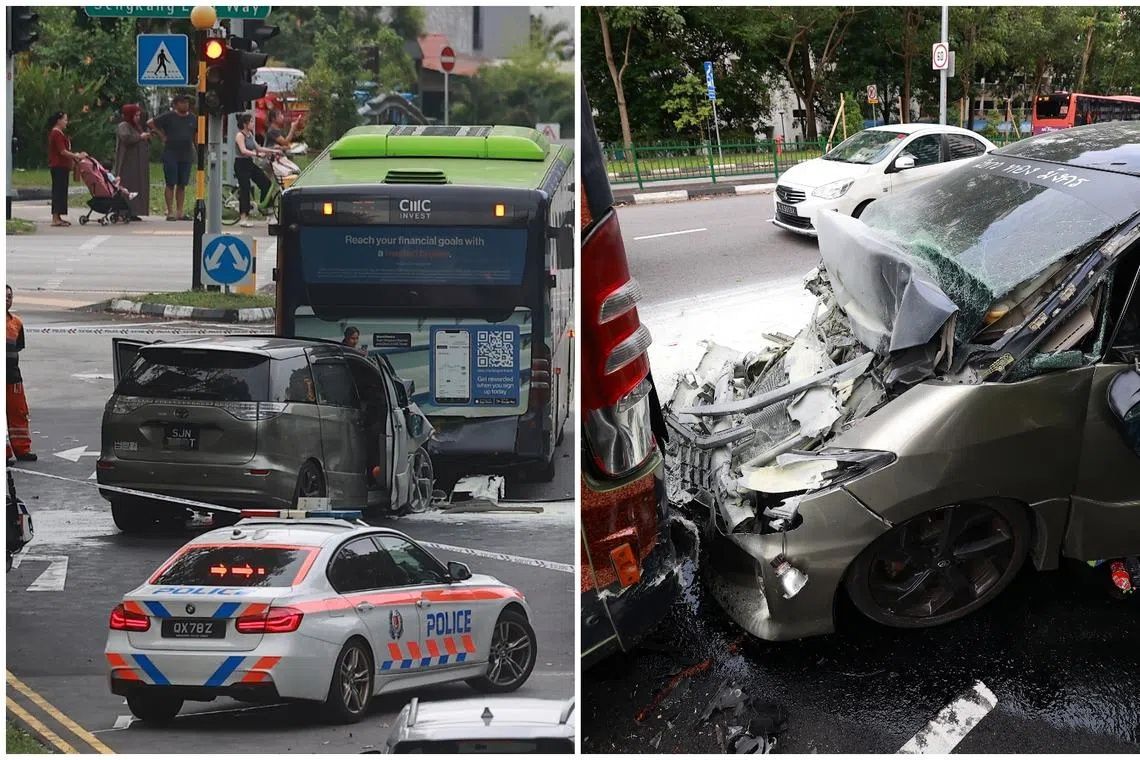
Singapore's emergency medicine specialists are sounding an urgent alarm about impaired driving caused by illicit drug use, following a cluster of serious incidents in June involving motorists under the influence of both methamphetamine and etomidate, a synthetic anaesthetic increasingly appearing in vaping products. Within just twelve days last month, three separate men faced charges for operating vehicles while intoxicated—offences discovered only after they caused collisions that injured and in some cases killed innocent road users. The pattern reflects a troubling trend that has escalated dramatically across the island state.
The most pressing concern centres on etomidate, a pharmaceutical-grade sedative that has begun circulating through the illicit drug market in vaporiser form, marketed in devices colloquially known as Kpods. Unlike more familiar narcotics, etomidate presents a deceptive danger: users may underestimate its potency and the severity of impairment it produces. Jonathan Tang, a clinical toxicologist based at the National University Hospital's Emergency Medicine Department, has treated patients suffering traumatic injuries sustained in collisions where the drivers had consumed etomidate-laced vapes. Tang emphasises that the pharmacological effects mirror alcohol intoxication in critical ways—specifically impairing judgment, coordination, and reaction time—yet the substance remains less recognisable to the public as a driving hazard.
The medical consequences of operating a vehicle while under etomidate's influence are severe and multifaceted. Tang explains that impairment manifests as delayed reaction times, deteriorated ability to perceive hazards, and substantially compromised vehicle control. The risks extend far beyond the driver themselves; passengers, pedestrians, and other motorists face elevated danger from unpredictable or erratic vehicle movements. Compounding these physical dangers, etomidate consumption has been documented to trigger psychiatric disturbances including depressed mood, heightened aggression, and impulsive behaviour—symptoms that can precipitate suicidal ideation. Such psychological effects fundamentally undermine safe vehicle operation, transforming the driver into a danger not only on the road but potentially to themselves.
Parliamentary scrutiny brought this crisis into sharp relief in February when Member of Parliament Valerie Lee, representing Pasir Ris-Changi GRC, questioned whether traffic police routinely screened motorists involved in accidents for evidence of substance use. Coordinating Minister for National Security K. Shanmugam responded that the Traffic Police do assess drivers for impairment at accident scenes, and when drug or etomidate use is suspected, mandatory blood testing follows. However, Shanmugam's disclosure of underlying statistics revealed the true scope of the problem: between 2023 and 2025, authorities documented 38 traffic accidents directly linked to drug and etomidate consumption, resulting in 19 deaths. Of these fatalities, ten involved conventional drugs whilst nine involved etomidate specifically.
The acceleration of this phenomenon in 2025 is particularly alarming. Of the 38 substance-related accidents recorded over the 28-month period, 29 occurred within 2025 alone—representing an explosion of incidents in a single year. Within those 2025 cases, eighteen involved etomidate and seven involved combinations of both drugs and etomidate, indicating that etomidate-laced vapes have become a dominant factor in impaired driving incidents. This concentration of cases in the most recent year suggests either a surge in etomidate availability and consumption, or increased detection and enforcement by authorities—or both.
A particularly tragic case illustrates the deadly consequences. On May 13, 2025, a vehicle collided with a bus in Punggol while being driven by a man whose passenger was a 28-year-old woman. Police recovered 42 vapes and over 1,200 pods from the vehicle, with several containing etomidate. Both the driver and the woman tested positive for etomidate in blood samples taken after the collision. The woman died from injuries sustained in the accident, her death added to the growing toll of victims whose only misfortune was being in proximity to an impaired driver.
Other prosecuted cases from June further document the scope of danger. Mohamed Firdouz Mohamed Akram, aged 36, faced multiple charges after crashing into a taxi in Kallang while under the influence of methamphetamine, injuring both the taxi driver and a passenger before abandoning his vehicle and fleeing the scene. Police located drugs, vaporisers, and weapons inside his car. Puah Zhe Cong, 34, allegedly consumed etomidate before his vehicle caused one death and two injuries; he subsequently fled without providing assistance to victims. Sivakandesh, 32, drove his Mercedes-Benz into a rubbish chute in Yishun Street after consuming methamphetamine, causing the car to strike bollards and other parked vehicles in sequence. Each case represents not merely a criminal breach but a cascade of trauma affecting multiple individuals and families.
Singapore's broader road safety statistics contextualise the gravity of substance-impaired driving within the larger traffic fatality picture. During 2025, a ten-year high of 149 road deaths was recorded, compared with 141 deaths in 2016 and 142 in 2024. Injury numbers also climbed, rising from 9,342 injured persons in 2024 to 9,955 in 2025. While substance-impaired driving accounts for a portion of this toll rather than its entirety, it represents an especially preventable category of collision—one where intervention could eliminate risk entirely.
Legal penalties for impaired driving exist within Singapore's Road Traffic Act framework, though enforcement depends on detection. A first-time offender convicted of operating a vehicle while under the influence of an intoxicating substance faces imprisonment up to one year, a fine reaching S$10,000, or both. Repeat offenders face harsher terms: up to two years' imprisonment and fines up to S$20,000. The Traffic Police explicitly characterised substance-impaired driving as extremely dangerous and irresponsible in a June 18 statement, emphasising the deliberate recklessness inherent in such behaviour.
For neighbouring Malaysia and other Southeast Asian nations observing Singapore's experience, the emergence of etomidate as a vape-delivered substance represents a fresh regulatory challenge. The substance's pharmaceutical origins and the relative novelty of its illicit application in vaping devices mean many enforcement and medical personnel may lack familiarity with its effects and detection. Singapore's parliament, media institutions, and medical community have begun raising public awareness, yet the question of whether education and enforcement can outpace the proliferation of novel psychoactive substances remains unresolved. The intersection of pharmaceutical access, vaping technology, and substance abuse creates regulatory gaps across the region that demand urgent attention from public health authorities, law enforcement, and legislators.

