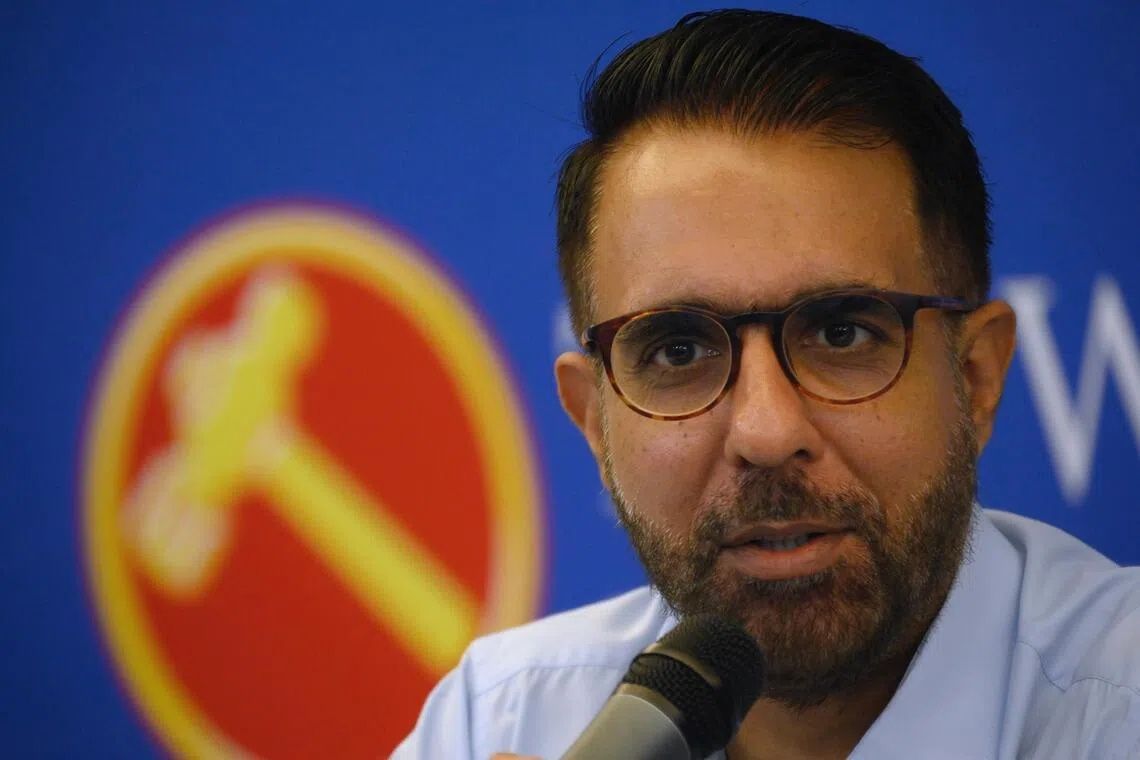
A significant power struggle is looming within Singapore's Workers' Party as internal factions mobilise ahead of crucial leadership elections scheduled for June 28. The party's roughly 100-strong cadre base, which forms its governing inner circle, will decide whether Pritam Singh remains as secretary-general or whether challengers can unseat him after eight years in the position. What began as murmurs of discontent has now crystallised into organised efforts to find a replacement, with multiple senior party figures being approached as potential rivals.
The immediate catalyst for this upheaval traces back to December 2025, when Singapore's High Court upheld Pritam Singh's conviction for lying to a parliamentary committee. This legal verdict provided the focal point for simmering frustrations that had accumulated over his handling of previous controversies and the party's recent electoral performance. For many party veterans and cadres, the conviction struck at the heart of the Workers' Party's political identity, which has long rested on a reputation for integrity and trustworthiness in a political landscape where opposition parties operate under considerable constraints.
The dissent crystallised formally when 25 cadres requested a special conference in December 2025, a gathering that will now precede the party's ordinary biennial elections. This group, which includes former central executive committee members and election candidates, has explicitly called for Pritam to step down and demanded that a secret ballot determine his fate should he refuse. The insistence on secrecy reflects the charged atmosphere within the party, where members fear potential disciplinary action for public criticism of leadership, according to party insiders who requested anonymity.
Several senior MPs have emerged as potential challengers being discussed within party circles, though none has publicly committed to running. These names include Gerald Giam from Aljunied GRC, Dennis Tan from Hougang, and Sengkang GRC members He Ting Ru and Jamus Lim. Notably, both He and Lim served on the disciplinary panel that determined Pritam had violated the party's constitution through his conviction. The fact that these serving MPs are being seriously considered as alternatives underscores the gravity of the internal discontent and suggests the challenge extends beyond a narrow faction.
The underlying grievance centres on how Pritam managed the earlier crisis involving former Sengkang GRC MP Raeesah Khan. Khan had delivered a false anecdote during a parliamentary speech in August 2021 and only admitted to the fabrication in November of that year. Parliament's committee of privileges and subsequently the courts found that Pritam had guided Khan in perpetuating her lie rather than immediately insisting she clarify the record. For cadres invested in the party's brand of clean politics, this failure represented a fundamental betrayal of what makes the Workers' Party distinct from other political actors in Singapore's system.
A particularly intriguing element involves former party chief Low Thia Khiang, who served as secretary-general from 2001 to 2018 and remains on the central executive committee. According to party rumours, Low has withdrawn his support for Pritam and may have voted against him during recent disciplinary proceedings. Low's potential backing of an alternative candidate carries outsized significance because of his towering reputation within the party—he led the Workers' Party to its historic first GRC victory in 2011. Insiders suggest that Low's endorsement of a challenger, combined with the approximately 30 already disgruntled cadres, could provide sufficient votes to unseat Pritam. Notably, Low himself faced a leadership challenge in 2016 from former Aljunied MP Chen Show Mao, and many of the current dissenters participated in that earlier contest.
Yet the arithmetic of party politics remains uncertain. The special conference convened on June 28 will first ask Pritam to account for his actions leading to his conviction, providing an opportunity for him to address cadre concerns directly. Only if he loses that vote or chooses to resign would the position become open. Should he survive the first meeting, he remains eligible to contest the subsequent ordinary cadres' conference. Multiple party insiders have noted that the situation remains fluid, with the outcome of the special conference potentially determining whether momentum exists for a challenger at the second gathering. A candidate emerging with only a narrow victory margin, or being voted out entirely, would likely encourage someone to mount a challenge in the subsequent election.
Beyond the conviction itself, Pritam has absorbed criticism on multiple fronts that have compounded his vulnerability. The Workers' Party's performance at the 2025 general election disappointed cadres who believed the party's strengthened roster warranted additional constituency gains. The decision to retreat from Marine Parade-Braddell Heights GRC on nomination day has also drawn private questioning from some members about strategic judgment. Additionally, the party's decision to decline Prime Minister Lawrence Wong's invitation to nominate another MP to replace Pritam as Leader of the Opposition in January 2026 raised eyebrows among those who wondered whether closing ranks served the broader opposition cause or simply protected an embattled leader.
For Malaysian observers and Southeast Asian watchers of Singapore's political scene, this internal Workers' Party turbulence offers insight into how opposition politics functions within Singapore's constrained democratic environment. Unlike Malaysia's more fractious and volatile party systems, Singapore's Workers' Party has long prided itself on organisational discipline and internal coherence. The emergence of organised internal dissent, even channelled through formal party procedures, represents a notable departure from the party's recent history. The cadres' emphasis on integrity as a political asset reflects the particular vulnerabilities opposition parties face in the city-state, where the ruling People's Action Party has long emphasised clean government as a legitimating claim.
The conviction-driven crisis also highlights the different calculus opposition parties must navigate in systems where institutional constraints limit their operational space. In Malaysia, opposition parties regularly survive leadership scandals and internal divisions through factional realignment and coalition adjustments. Singapore's Workers' Party operates in a far more circumscribed context, where every leadership failure potentially affects the opposition's ability to mount credible electoral and parliamentary challenges. The conviction of the party chief for misleading Parliament strikes directly at the narrative the party needs to construct to maintain voter confidence in a system where the government monopolises state media and institutional advantages.
Looking ahead, the June 28 gatherings will likely determine whether the Workers' Party can navigate this crisis through internal renewal or whether the party faces a prolonged period of instability. The outcome will test whether Singapore's most established opposition organisation can reconcile demands for accountability with the need for unified leadership. The precedent set by how this challenge unfolds may also influence whether other internal dissidents within the party feel emboldened to voice criticism. For now, the party's cadres appear willing to engage in the kind of internal contestation that healthy organisations require, even if the party's particular constraints make such contests relatively rare and consequently more fraught with significance.

