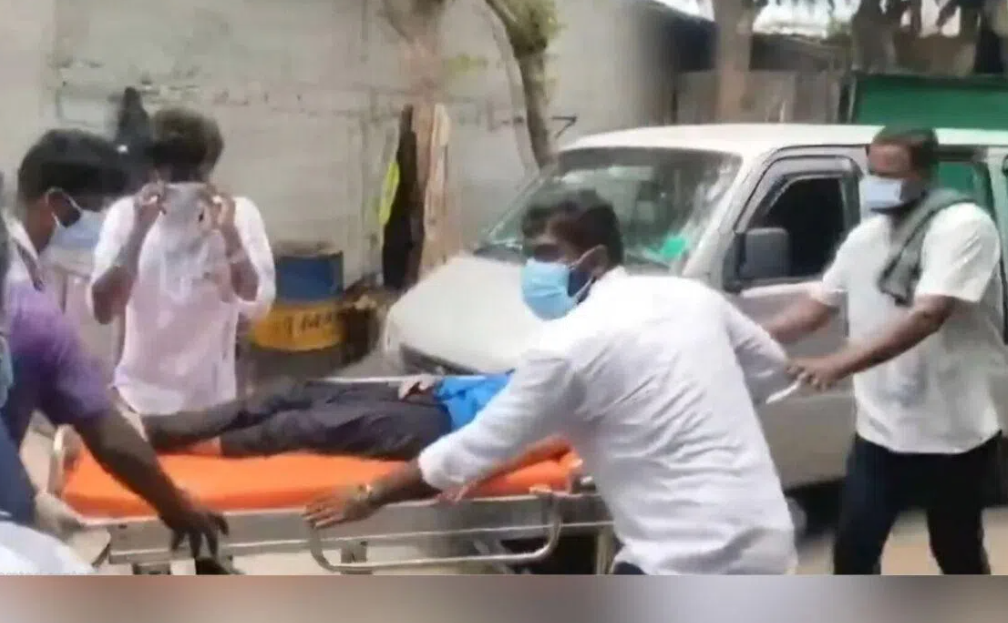
A seafood processing plant in Tamil Nadu's Thiruvallur district became the site of an industrial tragedy on Sunday when a suspected ammonia leak claimed at least six lives and sent dozens of workers to hospitals, raising fresh concerns about workplace safety across India's export-oriented manufacturing sector. The incident unfolded at the facility near Periyapalayam village, where approximately 120 migrant labourers, predominantly women hailing from northeastern and eastern states including Assam, Odisha and Jharkhand, were employed when the emergency struck without warning.
The suspected ammonia discharge emerged from either the unit's refrigeration system or processing equipment, officials believe, and rapidly permeated through various sections of the plant with little time for an organised evacuation. Workers caught in the toxic cloud experienced immediate and severe physiological effects, with reports of acute respiratory distress, vertigo and chemical irritation affecting their eyes, throat and lungs. Some of the most severely exposed workers exhibited alarming symptoms including haemorrhaging from the mouth and nasal passages—manifestations that underscore the dangerous concentration levels to which they were subjected within minutes of the leak's initiation.
The chaotic scenes that followed reflected the terror gripping the facility as labourers, many gasping for air and unable to see clearly due to irritation, stampeded towards exits in desperate attempts to escape the contaminated environment. Several workers collapsed before reaching safety, requiring immediate assistance from colleagues or emergency responders. The panic was compounded by the reality facing many migrant labourers: unfamiliar with the facility's layout, uncertain of proper emergency procedures and often lacking understanding of hazard protocols conducted in regional languages they may not fully comprehend.
Emergency personnel, police units and local administrators mobilised swiftly upon receiving distress calls, initiating rescue operations that prioritised evacuating workers still within the affected zones and providing preliminary medical intervention. The most critically affected individuals were transported urgently to nearby medical facilities where they remain under intensive care. Medical teams report that several patients continue to experience respiratory complications and require ongoing monitoring, with the full extent of long-term health consequences still uncertain as many absorb corrosive gases into their systems.
Chief Minister C. Joseph Vijay's prompt public response acknowledged the gravity of the incident and signalled state-level intervention. His directive to supply comprehensive medical support to all affected workers represents an essential first step, though critics argue such reactive measures underscore systemic failures in preventive workplace oversight. More significantly, Vijay constituted a three-member investigative committee tasked with determining the root causes of the leak and identifying any administrative or operational negligence that contributed to the catastrophe.
The inquiry committee faces an aggressive timeline, required to complete preliminary inspections and submit detailed findings within twenty-four hours—a demanding schedule that reflects both the political imperative to demonstrate responsive governance and the severity authorities assign to this incident. Investigators will examine whether the facility maintained adequate safety protocols aligned with statutory requirements, scrutinise maintenance schedules for refrigeration and processing equipment, and assess whether cost-cutting measures or deferred maintenance created conditions enabling the leak. The examination will likely reveal whether workers received proper hazard training, whether emergency response systems functioned effectively, and whether adequate medical countermeasures were available onsite.
Police have already initiated formal legal proceedings, registering charges related to the incident as investigations advance. Authorities are simultaneously evaluating potential violations of industrial safety legislation and regulations governing hazardous substance handling, suggesting prosecutions may follow if negligence is substantiated. The police investigation will complement the administrative inquiry, with authorities seeking to establish criminal liability alongside determining operational failures.
This tragedy reflects broader challenges confronting India's seafood export industry, which generates substantial foreign revenue but frequently relies upon migrant workforces with limited bargaining power and minimal regulatory protection. The concentration of workers from economically disadvantaged backgrounds in hazardous roles—without adequate safety infrastructure or emergency preparedness—mirrors patterns observed across multiple industrial sectors from chemicals to textiles to manufacturing. Tamil Nadu's prominence as an export hub makes the incident particularly significant, as the state supplies substantial quantities of processed seafood to international markets, often under tight production schedules that may incentivise corners-cutting on safety investments.
For Malaysian readers, the incident carries particular resonance given the regional labour movement patterns, with migrant workers from South Asian nations frequently employed across Southeast Asian manufacturing and processing facilities. The case demonstrates the vulnerability of temporary workers navigating industrial environments in jurisdictions where regulatory enforcement remains inconsistent and worker advocacy resources are limited. Malaysian occupational safety standards, while generally more developed than some regional neighbours, remain an area requiring continuous vigilance, particularly in labour-intensive sectors.
The incident also underscores the interconnected nature of supply chains. Companies sourcing seafood products from South Asian processors, including Malaysian importers and distributors, may face questions about their supply chain due diligence regarding worker safety standards. International buyers increasingly face pressure to verify that products reaching their markets were manufactured under conditions meeting international labour and safety norms, creating potential commercial implications for facilities where incidents occur.
As investigations proceed, industry observers anticipate recommendations for mandatory safety equipment upgrades, enhanced worker training protocols and stricter regulatory oversight of ammonia-handling facilities. Whether Tamil Nadu authorities implement comprehensive reforms or allow the incident to fade into bureaucratic files will likely influence industrial safety trajectories across the region, signalling whether states prioritise worker protection or maintain permissive regulatory environments that facilitate rapid profit extraction at human cost.

