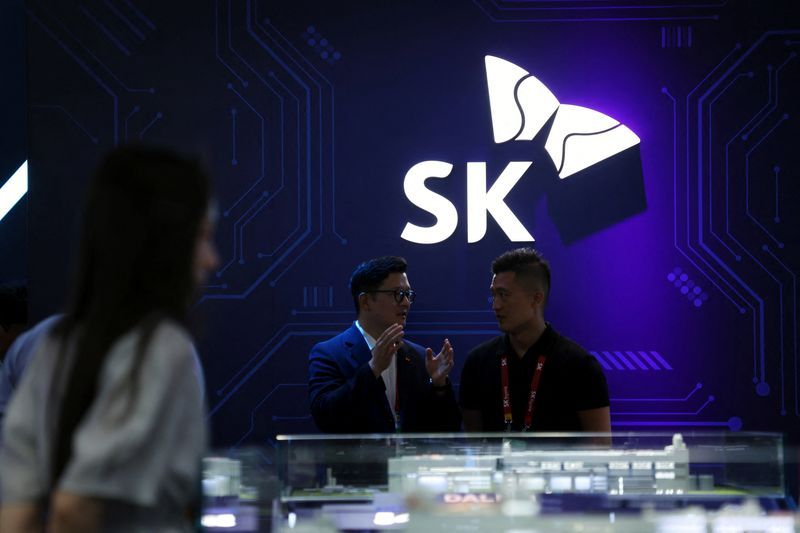
South Korea's SK Hynix, the world's second-largest memory chipmaker, announced plans on Wednesday to raise approximately 45.45 trillion won ($29.43 billion) through a listing of American Depositary Receipts on the Nasdaq exchange, marking an ambitious push to strengthen its foothold in the artificial intelligence semiconductor sector. The company intends to issue 17.79 million new shares to support the ADR offering, scheduled for July 10, with the final amount subject to adjustment following the bookbuilding process. The scale of this capital raise underscores the fierce competition among chipmakers to secure funding for next-generation production facilities as demand for AI-related semiconductors accelerates globally.
The proceeds will be deployed across multiple strategic infrastructure projects designed to bolster SK Hynix's manufacturing capabilities. The company plans to construct a new chip factory in Yongin, establish an advanced packaging facility in Cheongju, and acquire cutting-edge chipmaking equipment including Extreme Ultraviolet Scanners—technology essential for producing the most densely packed and powerful semiconductors. These investments reflect the capital-intensive nature of modern chip manufacturing, where billions of dollars are routinely committed to maintain competitiveness in rapidly evolving technology standards. For SK Hynix, the timing is crucial, as delays in capacity expansion could cede market share to rivals during the current surge in AI adoption.
If the offering succeeds at the upper end of its price range, SK Hynix would establish a record for the largest ADR issuance ever undertaken, surpassing the $21.8 billion raised by Chinese e-commerce company Alibaba during its debut on the New York Stock Exchange in 2014. This milestone would represent not only a personal achievement for SK Hynix but also a reflection of the immense investor appetite for exposure to artificial intelligence and semiconductor supply chains. The four-bank syndicate managing the offering—BofA Securities, Citigroup Global Markets, Goldman Sachs, and JP Morgan Securities—demonstrates the international dimension of this capital-raising effort and the coordinated effort required to move such a substantial volume of shares.
SK Hynix has positioned itself as one of the primary beneficiaries of the global artificial intelligence boom, earning particular prominence as a dominant supplier of high-bandwidth memory chips that power AI systems operated by technology giants including Nvidia and Alphabet's Google. These specialised memory components are fundamental to AI infrastructure, enabling the high-speed data processing required for machine learning and large language models. The company's strategic positioning in this supply chain has transformed its valuation and market standing within South Korea's industrial landscape. Notably, SK Hynix ascended to become South Korea's most valuable company on Monday, eclipsing Samsung Electronics—a historic shift that underscores the shifting dynamics of the nation's technology sector and the growing centrality of AI-related semiconductors to corporate valuations.
The ADR structure, where ten depositary receipts equal one common share, provides international investors with a convenient mechanism to trade SK Hynix securities on American exchanges without navigating the complexities of direct foreign ownership in South Korean markets. This accessibility is critical for attracting the diverse global investor base that the company seeks to cultivate, particularly large institutional investors and technology-focused funds. The Nasdaq listing will enhance SK Hynix's visibility among Western investors and analysts who have increasingly focused attention on semiconductor supply chain resilience and the concentration of advanced chip production among a handful of South Korean and Taiwanese manufacturers.
The capital raise occurs within a broader context of geopolitical and economic pressures on global semiconductor supply chains. Concerns about supply chain concentration, particularly following recent disruptions, have prompted governments and corporations to evaluate their dependencies on specific regions and manufacturers. SK Hynix's expansion in South Korea through facilities in Yongin and Cheongju aligns with both national industrial policy objectives and international efforts to diversify production beyond Taiwan. The company's investment signals confidence in South Korea's technological ecosystem and regulatory environment, while also acknowledging the strategic importance of maintaining manufacturing proximity to major markets and technology partners.
The Extreme Ultraviolet Scanner acquisition highlights the technological arms race within semiconductor manufacturing. EUV scanners, primarily manufactured by Dutch company ASML, represent the frontier technology enabling the production of chips at the most advanced nodes. Access to sufficient EUV capacity has become a critical bottleneck in the industry, with manufacturers competing fiercely to secure production slots and the latest equipment generations. By leveraging ADR proceeds to acquire this equipment, SK Hynix ensures it can sustain its technological parity with competitors and meet anticipated demand surge from AI applications.
For Malaysian and Southeast Asian investors and technology sector observers, the SK Hynix listing carries implications extending beyond the immediate capital raise. The company's expansion and strengthened financial position affects regional semiconductor supply chains, technology partnerships, and competitive dynamics within the broader Indo-Pacific technology ecosystem. Southeast Asian nations, including Malaysia, which hosts significant semiconductor assembly and testing operations, benefit from robust demand for advanced chips and may see increased investment flows from companies seeking to strengthen supply chain resilience. Additionally, the successful capital raise provides a template for other Asian technology champions seeking to access Western capital markets and investor bases.
The regulatory filing confirming the ADR listing demonstrates SK Hynix's confidence in market conditions and investor appetite for semiconductor sector exposure despite macroeconomic uncertainties. Market volatility and potential shifts in technology spending patterns could still affect final pricing, hence the company's disclosure that the amount could change after bookbuilding. Nevertheless, the decision to proceed with one of the largest capital raises in recent technology sector history reflects management's conviction regarding long-term AI demand trajectories and the necessity of substantial capacity investments to capture market opportunities.
Looking forward, the successful completion of this ADR offering would provide SK Hynix with financial resources to execute an ambitious multi-year expansion strategy. The company's emergence as South Korea's most valuable enterprise reflects not only current profitability but also market expectations regarding future earnings potential as artificial intelligence technologies proliferate across consumer and enterprise applications. The Nasdaq listing enhances the company's international profile and facilitates future capital-raising activities, establishing it as a cornerstone holding for investors seeking exposure to the semiconductor and AI hardware sectors during what many analysts characterise as an inflection point in technology adoption cycles.

