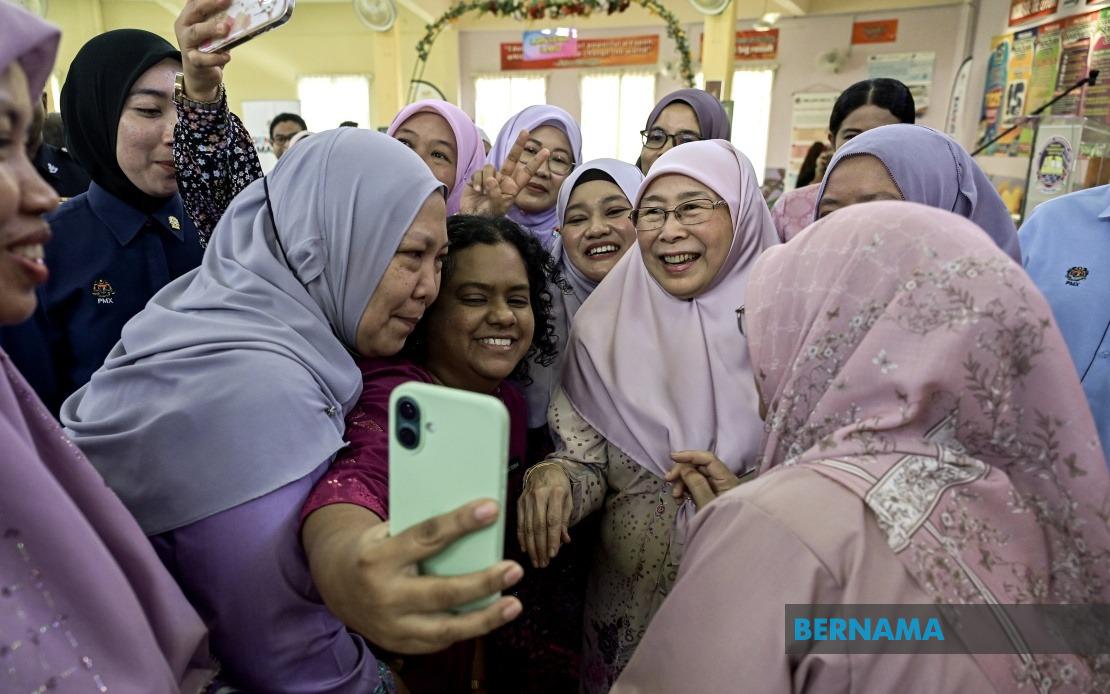
SMK Seri Mulia in Kuala Lumpur is set to undergo its most significant infrastructure renewal in more than two decades after securing RM300,000 in funding from parliamentary allocations channelled through the Bandar Tun Razak constituency. The substantial grant represents a concerted effort to address long-standing maintenance backlogs and introduce modern safety features that reflect current best practices in school environments across Malaysia.
The funding announcement came during an Academic Excellence Awards ceremony held at the institution, where Bandar Tun Razak Member of Parliament Datuk Seri Dr Wan Azizah Wan Ismail outlined the allocation's strategic priorities. The emphasis placed on student wellbeing signals a broader shift in how educational institutions approach facility investment, moving beyond basic maintenance towards comprehensive safeguarding frameworks that address both physical security and mental health considerations.
Dr Wan Azizah highlighted that the allocation would facilitate extensive maintenance and upgrading operations throughout the school's premises. The timeframe matters considerably—SMK Seri Mulia had not received comprehensive facility upgrades for 23 years, suggesting that deferred maintenance issues had likely accumulated across multiple building systems and educational spaces. This extended interval between major improvements underscores the challenge many Malaysian secondary schools face in maintaining aging infrastructure under budget constraints.
Among the planned improvements, the installation of safety grills represents a particularly noteworthy component requiring additional financial outlay. Such protective infrastructure has become increasingly commonplace in Malaysian schools, reflecting heightened awareness of campus security and accident prevention. The decision to prioritise these installations demonstrates recognition that student safety encompasses both external security threats and internal accident prevention, particularly around vulnerable areas such as stairwells, windows, and elevated spaces within school buildings.
The emphasis on mental health provisions within the funding framework indicates a nuanced understanding of contemporary educational challenges. Beyond physical infrastructure, schools increasingly grapple with student psychological wellbeing, and allocation of resources specifically designated for supporting mental health outcomes suggests SMK Seri Mulia is positioning itself to address these dimensions holistically. This approach aligns with Malaysia's broader education sector evolution, where mental health support has moved from peripheral concern to core educational responsibility.
Dr Wan Azizah, who also serves as the spouse of Prime Minister Datuk Seri Anwar Ibrahim, positioned the investment as recognition of SMK Seri Mulia's institutional worth and potential. Political engagement with school facility funding carries particular significance in Malaysian governance, as parliamentary allocations often reflect both constituent needs and political prioritisation. The presence of high-level officials including Prime Minister's political secretary Datuk Azman Abidin at the ceremony underscored the political importance attached to the initiative.
The Academic Excellence Awards ceremony functioned as the official platform for announcing this investment, creating a symbolic connection between institutional achievement and facility support. By honouring students who had demonstrated academic excellence, discipline, and commitment, the occasion reinforced the message that infrastructure investment was designed to support and sustain the pursuit of educational quality. This ceremonial framework helped position facility upgrades not as merely administrative necessity but as tangible support for student aspirations.
The involvement of Kuala Lumpur Federal Territory Education Department personnel, specifically School Management Sector deputy director Aziah Amir, ensured that the initiative aligned with broader educational administration frameworks and regulatory requirements. Federal Territory schools operate within specific governance structures that differ from state-administered institutions, requiring coordination across multiple administrative levels to implement substantial facility projects successfully.
For Malaysian secondary schools generally, the SMK Seri Mulia allocation exemplifies both the needs and opportunities within the education sector. Many institutions nationwide face similar infrastructure backlogs, and the prioritisation of safety enhancements reflects a national conversation about how schools should evolve in response to contemporary risk environments and student welfare expectations. The RM300,000 allocation, while significant for a single institution, also highlights the substantial aggregate investment required across Malaysia's entire secondary school network to achieve comprehensive modernisation.
The decision to specifically approve all applications for safety grill installation suggests a systematic approach to identifying and addressing facility vulnerabilities. Rather than implementing generic improvements, the school appears to have conducted assessments to determine precisely where such protective infrastructure would provide greatest benefit. This targeted methodology increases the likelihood that funds will be deployed efficiently to address genuine safety concerns.
Looking forward, the completion of these upgrades should enhance SMK Seri Mulia's capacity to support both academic achievement and student wellbeing. Schools with modern facilities and robust safety systems typically experience improved enrolment stability and parental confidence. The investment may therefore generate returns beyond immediate physical improvements, potentially strengthening the institution's position within the local education landscape and supporting recruitment of both teachers and students.
The allocation also carries broader implications for how Malaysian parliamentary representatives utilise constituency development funds. By directing resources toward substantive educational infrastructure rather than dispersing funds across numerous smaller initiatives, the approach demonstrates recognition that meaningful educational improvement often requires concentrated investment in specific institutions. This strategy may influence how other constituencies approach educational funding decisions and prioritise among competing infrastructure needs within their constituencies.

