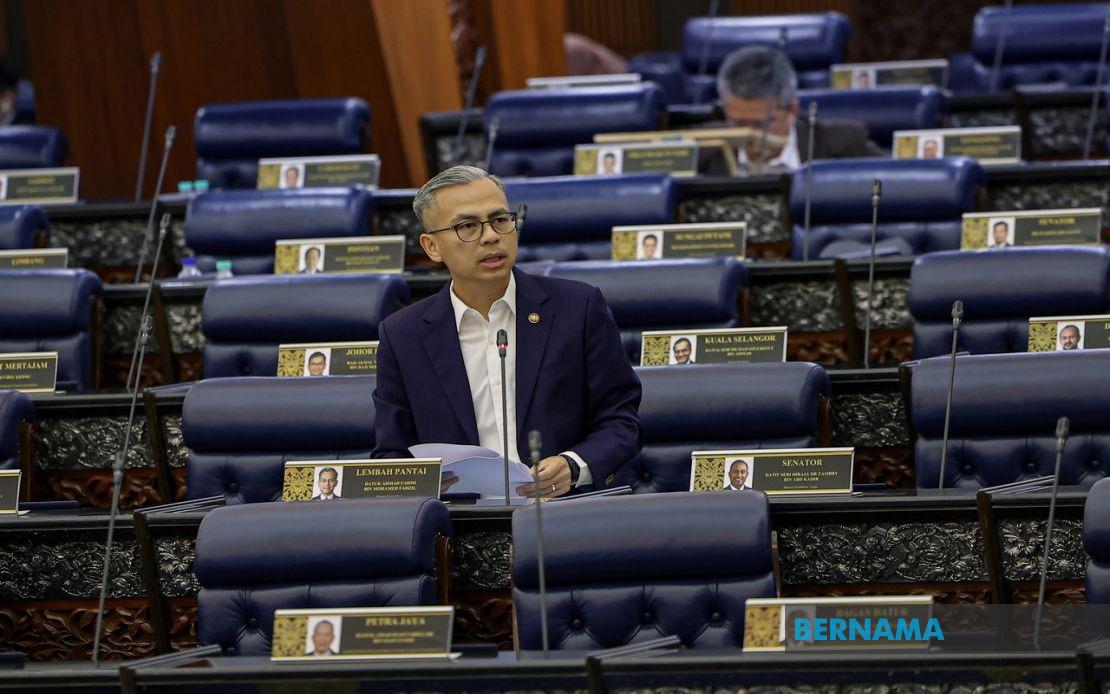
Malaysia is moving to enforce strict compliance with age-verification requirements for social media platforms, with penalties reaching as high as RM10 million for those that fail to meet their obligations. Communications Minister Datuk Fahmi Fadzil disclosed during parliamentary Question Time that the Malaysian Communications and Multimedia Commission (MCMC) possesses the statutory authority to take action against application service providers that breach provisions under Part III of the Online Safety Act 2025 (Act 866), which came into force earlier this year.
The enforcement framework operates through a tiered penalty structure designed to ensure rapid compliance. Licensed service providers who receive notices of non-compliance from the MCMC must either pay the prescribed financial penalty or formally submit representations to the commission requesting a review of their circumstances. This dual pathway acknowledges the varying technical and operational challenges different platforms face while maintaining a firm stance on regulatory adherence.
Beyond the RM10 million maximum penalty for Part III non-compliance, the legislation contains additional deterrent provisions that compound the financial consequences of continued violations. The Act grants MCMC the power to issue binding written directives to licensed service providers regarding implementation of any legislative requirement. Failure to obey such directives constitutes a criminal offence that can result in fines reaching RM1 million, coupled with a daily penalty of up to RM100,000 for each day the violation persists after an initial conviction. This escalating penalty structure effectively creates exponential costs for prolonged non-compliance, particularly for larger platforms operating across multiple regulatory jurisdictions.
The government's approach to implementation reflects a measured engagement process that has been unfolding since January 2025. Rather than imposing requirements unilaterally without consultation, the MCMC has conducted more than 30 structured engagement sessions involving both collective discussions with multiple platforms and individual meetings tailored to each company's specific operational context. These sessions have provided opportunities for platforms to understand regulatory expectations, discuss technical feasibility, and identify potential implementation challenges before formal compliance deadlines arrive.
Minister Fahmi acknowledged during his parliamentary response that each social media company operates within distinct business models and technical constraints that affect how they can realistically implement age-verification systems. Some platforms rely on algorithmic content moderation, others on community-driven verification, and still others on integration with third-party identity providers. Rather than mandate a single approach, the government has instead prescribed the outcome—ensuring minors cannot access age-restricted content—while allowing flexibility in the methodology for achieving that goal. This pragmatic regulatory stance aims to strike a balance between protecting children and allowing platforms operational latitude.
The government's commitment to age verification reflects international regulatory trends, with Minister Fahmi noting that more than 25 countries worldwide have already adopted comparable requirements. Markets including the United Kingdom, Australia, and the European Union have implemented various age-assurance mechanisms ranging from document verification to age-estimation algorithms. Malaysia's approach positions the country within a global consensus on child online safety, suggesting that compliance is becoming an international standard rather than a uniquely Malaysian burden. For multinational platforms already operating in these jurisdictions, implementing Malaysia's requirements alongside existing compliance measures may present fewer technical barriers than for companies new to age-verification systems.
The Online Safety Act 2025 represents a significant evolution in Malaysia's digital regulation framework, moving beyond content moderation toward structural protections for vulnerable users. Age verification requirements serve as gatekeeping mechanisms preventing minors from exposure to content designated for adults, including violent material, sexually explicit content, and gambling or substance-related promotions. This reflects growing international concern about the psychological and developmental impacts of unregulated exposure, particularly during critical developmental periods.
For Malaysian technology companies and digital entrepreneurs, the regulatory requirements present both compliance obligations and potential competitive considerations. Indigenous platforms must meet identical standards to international giants, potentially requiring investment in verification infrastructure that smaller companies may struggle to afford. Conversely, this regulatory baseline may create a level playing field by imposing uniform costs across competitors and potentially reducing the capacity of foreign platforms to undercut local alternatives through lax moderation practices.
The engagement process undertaken since January suggests the government is committed to achieving compliance through cooperation rather than immediate punitive action. However, the existence of substantial penalties indicates a firm deadline approach—platforms that have participated in 30 engagement sessions have received clear guidance on expectations and now face the prospect that continued non-compliance will trigger enforcement action. This positions the coming months as critical for major social media operators to demonstrate concrete progress toward implementing verification systems.
For Malaysian users and parents, the age-verification initiative addresses longstanding concerns about children accessing inappropriate content on mainstream platforms. The mechanism should theoretically prevent underage users from viewing adult-oriented material, though implementation effectiveness depends significantly on how platforms design and execute their verification processes. Depending on the approach chosen, users may encounter additional friction when accessing certain features, including requirements to upload identification documents or undergo biometric verification.
The regulatory framework also has implications for Malaysia's positioning within Southeast Asia's digital governance landscape. As the region's most digitally advanced economy and a hub for regional tech operations, Malaysia's regulatory choices often influence standards adopted by neighboring countries. By establishing enforceable age-verification requirements with substantial penalties, Malaysia may set precedents that other ASEAN members consider adopting, potentially creating a bloc of countries with comparable digital safety standards.
Looking ahead, the effectiveness of this regulatory initiative will depend on MCMC's capacity to monitor compliance across dozens of platforms with millions of users. Detection and enforcement require sophisticated technical auditing capabilities and potentially cooperation from platforms themselves in reporting compliance metrics. The coming months will reveal whether the engagement sessions have yielded concrete commitments and whether platforms begin implementing visible changes to their age-gating systems. Minister Fahmi's parliamentary statement serves as formal notice that Malaysia's regulatory patience is finite and that enforcement actions should be anticipated if tangible progress does not materialize.

