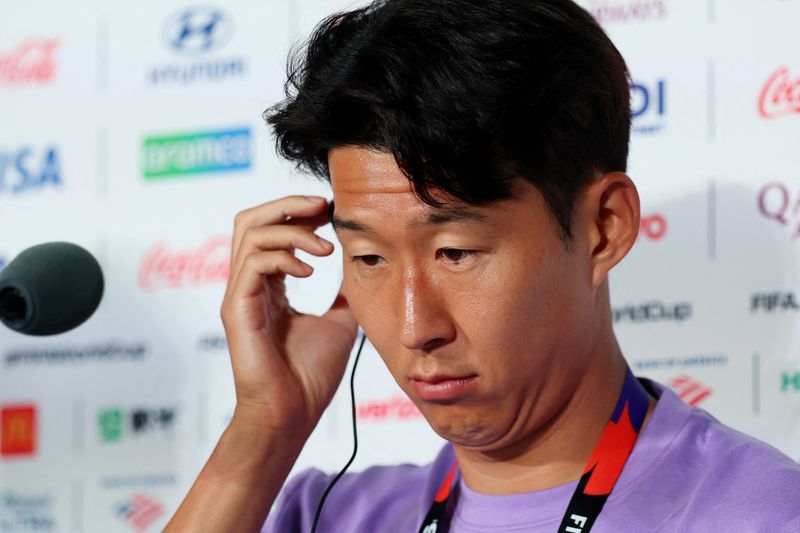
South Korea's national football squad has withdrawn from voluntary media engagements at the World Cup following an incident in which domestic journalists were allegedly caught on an open microphone deriding captain Son Heung-min over his completion of mandatory military service, according to reports from the tournament venue in Miami. The controversy erupted at the team's Guadalajara base camp when the 33-year-old Tottenham Hotspur forward was training separately from his teammates, prompting the inappropriate commentary from media personnel that eventually reached team officials.
The incident touches on a deeply sensitive subject within South Korean society. Military service remains one of the most fundamental civic obligations for able-bodied South Korean men, requiring approximately 21 months of service to maintain national security and deterrence against North Korea. The commitment represents significant personal sacrifice for athletes, particularly those at the peak of their professional careers, as it interrupts club and international commitments during crucial years of their sporting lives. Public perception of military service is complex, with some viewing it as an essential national duty while others see it as a burden that disrupts promising athletic careers at their zenith.
Son and his teammates gained exemption from these obligations through their gold medal victory at the 2018 Asian Games, a path made available to athletes who achieve excellence at the continental level or win Olympic medals. This exemption system, established to encourage sporting achievement and national pride, provides relief to elite performers while maintaining the principle that service remains obligatory for the broader population. Son's achievement in 2018 therefore represented not merely a sporting triumph but also a gateway to continued uninterrupted professional development at European club level.
The South Korean captain nonetheless undertook a condensed three-week basic military training programme in 2020, timing his participation during the COVID-19 pandemic when Premier League operations were suspended. This stint exposed him to the rigours expected of all conscripts, including tear gas exposure, live-fire combat drills, and gruelling 30-kilometre marches. Even with exemption status, Son chose to complete this supplementary training, suggesting personal commitment to honouring the military tradition despite his official exemption eligibility.
The Korea Football Association responded swiftly with a formal statement expressing deep regret over what it characterised as inappropriate remarks from certain media representatives. Officials emphasised that the squad bears the responsibility of representing the nation on world football's grandest stage and has committed itself to repaying the faith and expectations invested by the South Korean public. The KFA framed the team's dedication as inseparable from broader national aspirations, positioning international football success as a matter of collective pride rather than purely sporting achievement.
The association highlighted the shock and profound disappointment experienced by players following disclosure of the private conversations between media officials at the training facility. This breach of trust between athletes and journalists has created friction in an already sensitive relationship between sports media and professional teams. The KFA specifically called upon media outlets to exercise greater restraint and adopt more conscientious standards when engaging with the national squad, signalling that the federation views media responsibility as integral to creating a supportive environment for athletes.
Despite the team's withdrawal from voluntary media commitments, FIFA's regulatory framework mandates certain press obligations that cannot be circumvented. Professional football's world governing body requires teams to provide designated media access at prescribed moments, ensuring consistent coverage of international tournaments for global audiences. The South Korean squad therefore faces the practical reality that while it can restrict discretionary interactions with domestic journalists, it must ultimately comply with the federation's mandatory media requirements during the competition.
The controversy raises broader questions about the relationship between athletes and media in societies where military service remains culturally and politically charged. South Korean sports journalism operates within a unique context where national identity, military tradition, and athletic achievement intersect in ways unfamiliar to many Western sports media environments. The mockery of Son's military service completion, rather than recognising his additional commitment beyond exemption requirements, reflects potential misalignment between certain segments of the media and the values athletes themselves prioritise.
For Malaysian and Southeast Asian observers, this episode illustrates how national institutions can shape sports narratives in unexpected ways. While Malaysia's military service is voluntary rather than mandatory, the incident demonstrates that athlete welfare and media conduct remain universal concerns across the region. The Korea Football Association's firm stance in defending its players against inappropriate commentary sets a precedent for how sports organisations can actively protect squad morale and player dignity when media boundaries are violated.
The practical impact on team dynamics remains unclear, though tensions between athletes and domestic media can affect preparation and morale during critical tournament phases. South Korea's decision to limit non-mandatory media access represents a measured response that neither entirely capitulates to nor completely defies journalistic access. The squad must navigate the difficult terrain of maintaining professional relationships with domestic media while protecting players' psychological wellbeing during an intensive international competition where focus and unity prove essential to on-field performance.