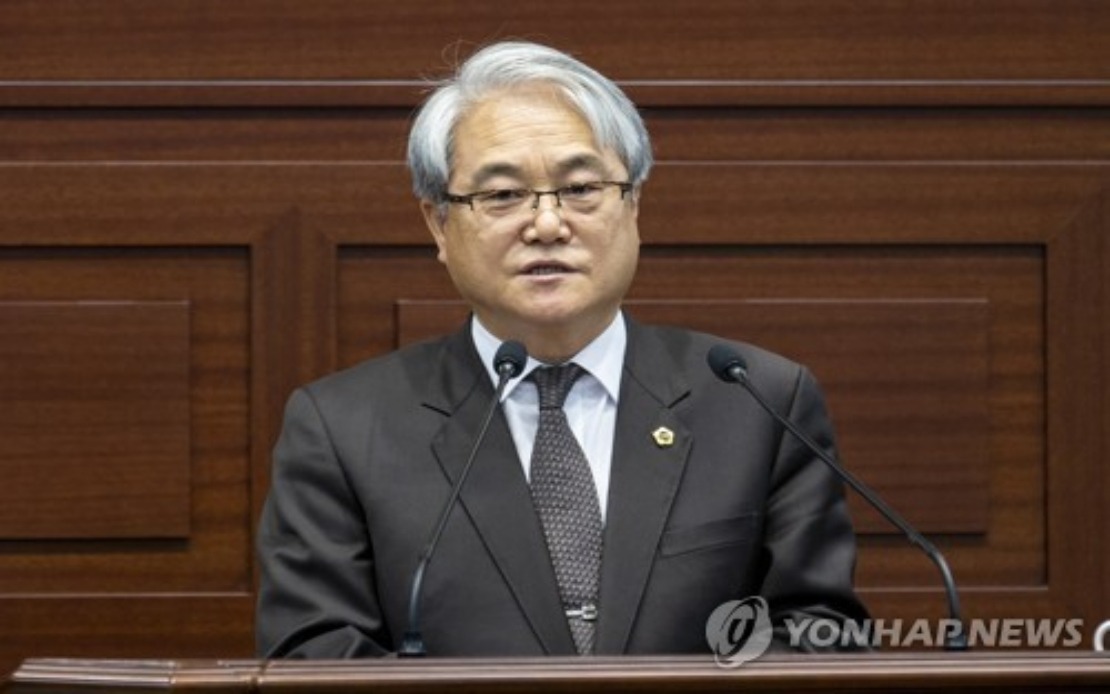
South Korean authorities have discovered the body of Kim Ha-soo, a former county chief in the southeastern region of Cheongdo, on a mountainside early Monday morning, marking a tragic development in an ongoing corruption inquiry. The 67-year-old's remains were recovered by rescue workers at approximately 7 a.m., with police indicating that a handwritten note was found alongside the body. While the precise contents of the note remain undisclosed by investigating officials, its discovery has prompted authorities to treat the incident with particular sensitivity given the circumstances surrounding his death.
Kim had held the position of Cheongdo county chief from 2022 until his departure earlier this year, a tenure that became increasingly clouded by serious allegations of improper conduct. The investigation into his conduct centred on accusations that he had solicited and received illicit financial payments from a public servant in exchange for facilitating a career promotion while serving in his official capacity. This type of quid pro quo arrangement represents one of South Korea's persistent governance challenges, where networking and personal relationships continue to influence bureaucratic advancement despite decades of anti-corruption reforms.
The bribery allegations themselves took on a darker dimension when the individual suspected of serving as the intermediary for the illegal funds was found dead prior to Kim's discovery. The circumstances surrounding that death have not been fully disclosed, but the sequence of events has raised questions among Korean legal observers about potential connections between the cases and whether additional individuals may have felt threatened by the unfolding investigation.
Beyond the bribery allegations, Kim was also facing a separate and distinct criminal referral to prosecutors. He had been accused of forcibly entering the residence of a nursing home director in January, an incident that suggested escalating behaviour and potential desperation as scrutiny of his actions intensified. This charge indicated that the investigation extended well beyond financial impropriety to encompass personal conduct that violated basic legal boundaries, painting a portrait of an official whose actions had spiralled beyond conventional corruption.
The discovery of Kim's body comes at a particularly sensitive time in South Korea's ongoing struggle with high-level corruption. The nation has invested considerable resources in institutional reforms aimed at curbing abuse of power among government officials and elected representatives. However, cases such as this demonstrate the persistent vulnerability of these systems and the deeply rooted nature of institutional corruption that continues to undermine public trust in government structures.
For Malaysian readers and Southeast Asian observers, the Cheongdo case offers instructive parallels with regional governance challenges. Corruption involving public servants facilitating advancement in exchange for payment remains a persistent issue across the region, despite similar institutional reforms and anti-corruption initiatives. The manner in which the investigation unfolded—beginning with suspicions about financial irregularities and expanding to encompass additional criminal conduct—mirrors patterns seen in Malaysian cases involving officials who have faced multiple charges spanning different categories of offences.
The death of the alleged intermediary prior to Kim's discovery raises uncomfortable questions about whether witnesses and implicated parties experience pressure or danger when investigations proceed. This dynamic, while not unique to South Korea, reflects a broader regional concern about the safety of individuals caught within corruption probes and their potential vulnerability to intimidation or coercion from those with resources and motivation to silence investigations.
South Korea's approach to addressing such incidents typically involves rigorous forensic investigation and careful documentation of circumstances, reflecting the nation's generally robust institutional capacity for inquiry. However, the tragic conclusion of this case prevents the judicial process from running its complete course, denying victims and the public the full accounting that prosecution and trial proceedings would ordinarily provide. The handwritten note may eventually illuminate Kim's state of mind, but fundamental questions about his alleged conduct and the broader network that may have enabled it will likely remain only partially answered.
The incident also highlights the psychological and emotional toll that corruption investigations can impose on those under scrutiny. While accountability mechanisms are essential for maintaining institutional integrity, the case illustrates how intense public exposure and prospect of imprisonment can push individuals toward drastic measures. For regional policymakers considering reforms to anti-corruption frameworks, the balance between vigorous investigation and support systems for those facing accusations remains an ongoing challenge.
As South Korean authorities continue their investigation into the circumstances surrounding Kim's death, regional observers will watch closely to determine whether the inquiry uncovers evidence of broader corruption networks within Cheongdo's administrative structure. The findings may influence how other regional governments approach similar cases and what protections or support systems they establish for officials and witnesses involved in corruption proceedings.

