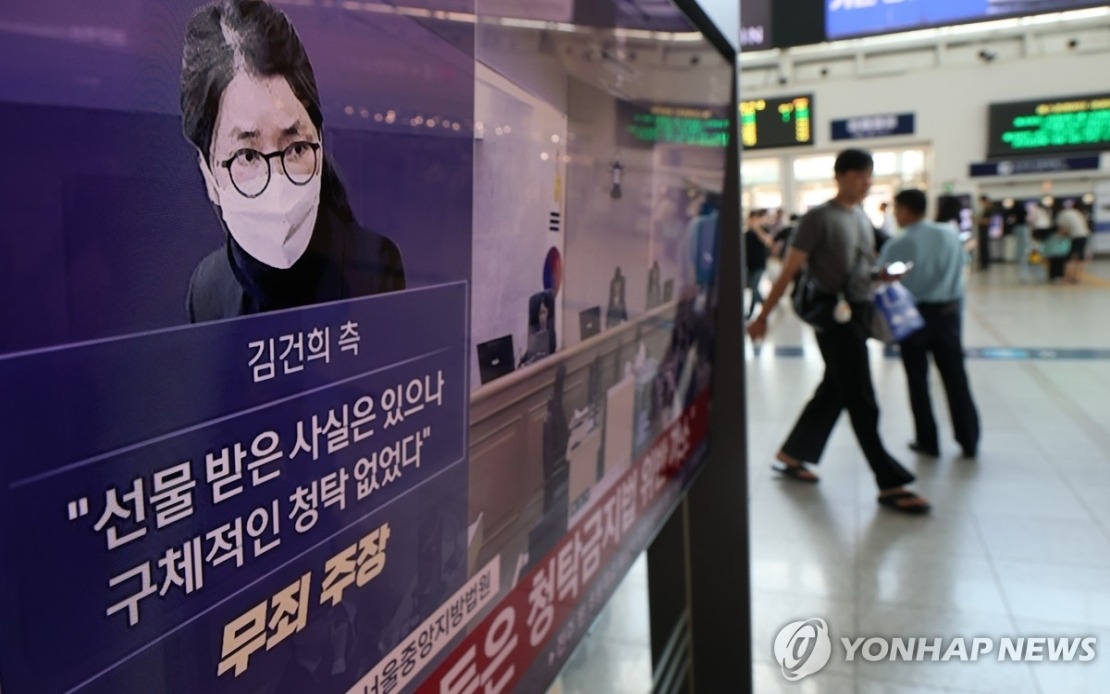
A Seoul court has handed down a substantial prison sentence to Kim Keon Hee, the wife of ousted former President Yoon Suk Yeol, marking a significant moment in South Korea's ongoing reckoning with high-level political corruption. The Seoul Central District Court on Friday convicted the former first lady of seven years imprisonment after establishing that she had systematically accepted expensive gifts in return for securing government positions and other political favours for wealthy businesspeople and their associates.
The court's findings represent a comprehensive indictment of Kim's conduct during her husband's tenure in office, which extended from May 2022 until his removal from power in April 2025. Presiding Judge Cho Sun-pyo delivered a particularly damning assessment of her behaviour, stating that Kim had fundamentally betrayed the public trust by treating her position as first lady not as a civic responsibility but as a personal tool for financial gain. This characterisation underscores how South Korean courts view the highest offices of state and the expectations placed upon those who occupy them.
The specific gifts accepted by Kim painted a picture of systematic bribery conducted with considerable sophistication. Among the items prosecutors proved she received were a Van Cleef & Arpels necklace and additional jewellery from a construction company chairman, totalling more than 100 million won, in exchange for arranging a government position for the chairman's son-in-law. She also accepted a golden turtle ornament from Lee Bae-yong, the former head of the National Education Commission, who received his appointment following the gift. A Dior handbag valued at 5.4 million won came from a pastor, while a Vacheron Constantin timepiece was presented by a businessperson in September 2022. In February 2023, she was separately accused of receiving a painting by celebrated artist Lee Ufan from a former prosecutor in return for assisting him in securing an election nomination.
The cumulative value of gifts Kim accepted amounted to approximately 300 million won, all of which the court determined had been offered with clear corrupt intent. What particularly troubled the judge was evidence suggesting Kim had been acutely aware of the illegality surrounding these transactions. When investigations began, she attempted to return certain items and falsely claimed she had purchased some of them herself—actions the court interpreted as deliberate concealment of criminal conduct rather than innocent misunderstanding.
This conviction does not exist in isolation within Kim's legal troubles. She had already been sentenced by an appeals court to four years imprisonment in a separate corruption matter, meaning she now faces multiple substantial prison sentences. Additionally, she remains scheduled to stand trial regarding her alleged involvement in a case involving members of the Unification Church, who were reportedly pressured to join the People Power Party ahead of the 2022 presidential election. That case centres on whether Kim and others manipulated the party's primary selection process that ultimately led to her husband's nomination as the party's presidential candidate.
The broader implications of these cases extend beyond one individual's criminal conduct. They reflect deep structural vulnerabilities within South Korean politics, where proximity to presidential power has historically created opportunities for corruption at the highest levels. The fact that a former first lady has been convicted of accepting bribes suggests that anti-corruption efforts have become more robust, yet it also demonstrates how pervasive such practises may have been during previous administrations.
Other defendants connected to Kim's schemes received more lenient treatment. The construction company chairman was sentenced to one year imprisonment suspended for two years; the businessman who gifted the watch received a ten-month sentence also suspended for two years; and the pastor was fined 8 million won. These disparities reflect the court's assessment that Kim, as the recipient holding political power, bore primary responsibility for the corrupt exchanges.
The special counsel's office, led by Min Joong-ki, had originally sought a seven-and-a-half-year sentence, meaning the court imposed a slightly more lenient but still severe punishment. Kim's legal team has signalled their intention to appeal, suggesting the case will likely continue through higher courts. Such appeals are common in high-profile Korean cases and could potentially result in sentence reductions or other modifications.
For Southeast Asian observers, this case offers instructive lessons about judicial independence and anti-corruption enforcement. South Korea's willingness to prosecute and convict former first ladies and presidents, despite their continued political influence, demonstrates institutional resilience. Over recent decades, multiple former South Korean presidents have faced criminal prosecution—a pattern both evidence of serious governance failures and proof that checks on executive power can function even for the highest-ranking individuals.
The Kim Keon Hee verdict also illuminates how modern corruption often manifests through seemingly discrete transactions involving luxury goods rather than crude cash payments. The sophisticated nature of the exchanges—designer jewellery, fine art, and expensive accessories—reflects how contemporary political bribery frequently operates within networks of wealthy elites who understand the risks and attempt to obscure improper dealings through the veneer of gift-giving between acquaintances.
Looking forward, this case will likely influence discussions about presidential accountability and ethical standards within South Korea's political establishment. The stringent court language criticising Kim's betrayal of her position suggests growing intolerance for such conduct, even among the nation's highest officials. Whether this sentiment persists and produces systemic reforms or remains limited to individual prosecutions will largely determine the lasting impact of these convictions on South Korean governance.
The international dimension also warrants consideration. As South Korea continues navigating complex geopolitical challenges in Northeast Asia, domestic political stability remains crucial. High-profile corruption cases involving presidential families can undermine public confidence in state institutions precisely when strong, unified governance becomes most essential. The court's decision to pursue conviction rather than clemency suggests prioritisation of rule of law over political expediency—a choice that ultimately strengthens democratic institutions despite short-term turbulence.

