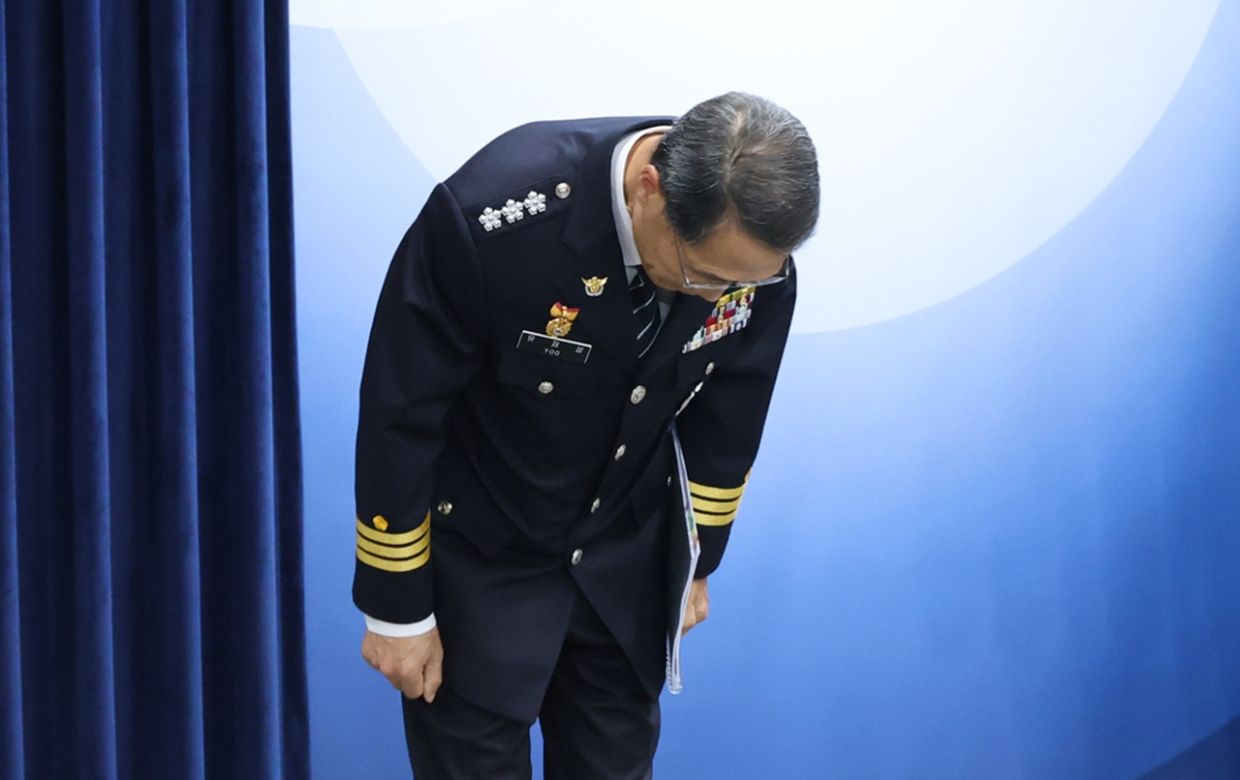
South Korea's police leadership is facing mounting pressure to rebuild institutional credibility following revelations of alleged misconduct in a murder investigation that has exposed systemic vulnerabilities in the country's law enforcement hierarchy. Acting National Police Agency Commissioner General Yoo Jae-sung announced on Monday a far-reaching reform agenda designed to address pervasive concerns about investigative integrity and the improper influence of personal connections within police ranks, particularly the troubling circumstances surrounding the case of suspect Jang Yoon-gi, who faces charges in connection with the death of a teenage girl in Gwangju last May.
The scandal has prompted urgent questions about police accountability mechanisms and the extent to which family relationships can compromise investigative objectivity. Reports suggest that investigators inappropriately disclosed sensitive case information to Jang's father, a police officer himself, while simultaneously failing to preserve critical evidence—a combination of lapses that has crystallised public distrust in the institution. Yoo's remarks at the Government Complex Seoul represented an acknowledgment of the gravity of these concerns, with the commissioner framing the current crisis as a catalyst for fundamental change in how police conduct sensitive investigations and interact with their communities.
Central to the reform initiative is the establishment of an investigative reform task force, scheduled to commence operations by the end of July. This body will comprise between seven and ten members, with at least half drawn from external experts outside the police establishment. The composition reflects an attempt to infuse the reform process with independent perspectives and insulate recommendations from potential institutional self-interest. The task force will examine personnel management protocols, specifically targeting the informal networks and local relationships that can undermine investigative independence. It will also scrutinise procedures governing cases involving vulnerable populations, a focus area particularly relevant given that the current scandal involves a teenage victim.
Parallel to this initiative, a new internal affairs unit operating under the National Office of Investigation will begin functioning imminently, with jurisdiction to examine serious misconduct allegations regardless of an officer's rank or seniority. This signals a departure from previous arrangements that may have afforded protective discretion to senior personnel. The creation of this unit represents recognition that internal corruption investigations require structural independence to maintain credibility and ensure thoroughness. By positioning this function outside conventional police hierarchies, authorities aim to remove potential conflicts of interest that could arise if senior police investigated their peers.
Yoo's package also includes provisions for establishing a substantial civilian oversight mechanism under the Korean National Police Commission. This body, comprising approximately one hundred civilian investigators, would examine allegations of human rights violations and investigative misconduct with authority to recommend personnel changes and disciplinary measures. Implementation requires legislative amendment to the Police Act, and relevant proposals have already been submitted to the National Assembly. Yoo characterised strengthening the National Police Commission's role as aligned with current government policy priorities, suggesting broader political will to enhance external accountability over police operations.
The commissioner acknowledged that expanding the nationwide officer rotation system—currently applied to superintendent-level personnel and some senior inspectors—presents complicated logistical and financial implications. Rotating officers across different jurisdictions theoretically reduces the entrenchment of local relationships that can compromise investigative integrity. However, extending this practice across all ranks would require providing official residences to transferred personnel at lower grades, a proposal raising substantial budgetary concerns and fairness considerations. Yoo indicated the police would consult with rank-and-file officers before proceeding, recognising that implementation challenges must be addressed through collaborative problem-solving rather than top-down mandate.
The timing and scope of these announcements reflect calculations about managing both institutional reputation and workforce morale. Police officers, particularly those in field positions, have expressed concerns that rotation policies create undue personal and family hardship without corresponding institutional benefits. Yoo's commitment to develop "support measures" alongside rotation implementation signals responsiveness to these grievances, though critics may question whether accommodation of officer concerns adequately serves public interest in institutional reform. The commissioner indicated that measures capable of immediate implementation would be introduced sequentially, with longer-term structural changes subject to more deliberate task force examination.
Regarding Jang's father specifically, Yoo stated that the police would defer concluding their internal inspection pending final findings from the special investigation team examining the case. This measured approach maintains procedural propriety while respecting the gravity of potential misconduct allegations against a serving officer. The decision to wait for external investigation results before determining disciplinary consequences suggests authorities are attempting to manage the optics of self-investigation, recognising that hasty or lenient internal conclusions could further erode public confidence in police integrity.
For Malaysian and Southeast Asian observers, this Korean case illustrates structural vulnerabilities that transcend individual jurisdictions. Police institutions across the region face recurring challenges in maintaining investigative independence when family or patronage networks intersect with official responsibilities. The South Korean experience demonstrates both the risk that even relatively institutionalised police systems can experience investigative compromise and the potential for transparent, externally-informed reform processes to address systemic weaknesses. The emphasis on civilian oversight and external expertise reflects international best practices increasingly adopted across democracies contending with similar accountability questions.
Yoo's repeated invocation of the need to "regain public trust" underscores how severely high-profile investigative failures damage institutional legitimacy. The commissioner's willingness to acknowledge that current structures require fundamental recalibration, rather than merely administrative adjustment, suggests recognition that incremental reforms would prove insufficient to restore confidence. However, the success of these initiatives will ultimately depend on implementation rigour and the willingness of police leadership to subordinate institutional self-protection to accountability imperatives—a challenging cultural shift for hierarchical organisations worldwide.
The reform agenda also reflects broader contemporary trends in police governance emphasising civilian participation in oversight mechanisms. Rather than treating external scrutiny as adversarial imposition, increasingly professional police forces recognise that legitimate authority rests partly on demonstrated responsiveness to community concerns and transparent accountability structures. South Korea's National Police Commission enhancement represents this evolving understanding, positioning civilian participation as integral to legitimate governance rather than external constraint.

