South Korean police have initiated questioning of a senior Shinsegae Group executive in connection with an ill-fated Starbucks Korea campaign that reignited national sensitivities around one of the country's darkest historical chapters. The Seoul Metropolitan Police Agency interviewed Yang Jong-hwan, who heads the audit division at Shinsegae Group, on Wednesday as a witness in the ongoing investigation, according to company representatives. This development marks an escalation in the fallout from what has become one of the most controversial corporate missteps in recent South Korean business history, extending well beyond the internal disciplinary measures initially taken by the multinational coffee operator's local partner.
The controversy emerged last month when Starbucks Korea announced a "Tank Day" promotion centred on May 18, a date laden with historical significance in the national consciousness. The campaign, designed to encourage customers to purchase and use reusable cups, fell catastrophically into a public relations disaster because May 18 marks the anniversary of the Gwangju uprising, a watershed moment in South Korea's struggle for democracy that resulted in significant loss of civilian life. Official records document 165 deaths from the 1980 military crackdown, though historians and eyewitnesses maintain the actual casualty toll considerably exceeded this figure, with some estimates suggesting over 600 fatalities when accounting for the wounded and disappeared.
The naming and timing of the promotion appeared to many observers as tone-deaf at best and deliberately provocative at worst, triggering waves of public anger across the nation. Civic organizations and citizens viewed the campaign as insensitive to the memory of those who died during the pro-democracy movement, particularly given that May 18 carries profound emotional weight for Gwangju residents and democracy advocates nationwide. The scale of the backlash forced Shinsegae Group into immediate damage control, with the company dismissing its Korea chief executive on the very day the scandal erupted publicly. Group chairman Chung Yong-jin subsequently made a formal public apology, yet these measures proved insufficient to quell the controversy.
A civic group filed a formal complaint against Chung and other company executives, invoking a 2016 law that criminalizes the dissemination of false or distorted information regarding the 1980 Gwangju uprising and the pro-democracy movement. This legislative framework represents Seoul's effort to protect historical memory and prevent revisionism around this pivotal period. Beyond the historical defamation allegations, the complaint also includes charges of personal insult, suggesting the executives' negligence constituted an affront to the dignity of those affected by the crackdown and their descendants. The complaint's invocation of this specific statute underscores how seriously South Korean society treats the preservation of accurate historical narrative around the uprising.
Investigations into Shinsegae's internal processes revealed a chain of preventable failures that allowed such an insensitive campaign to proceed through approval stages without correction. Company officials identified multiple instances of negligence, including senior staff signing off on promotional materials and designs without conducting adequate content review. This breakdown in internal governance and quality control mechanisms suggests the problem stemmed not from malicious intent but from systemic carelessness and insufficient awareness of historical significance among those responsible for campaign oversight. For a global conglomerate operating in a market as historically conscious as South Korea's, such lapses raise questions about the adequacy of cultural competency training and historical awareness protocols.
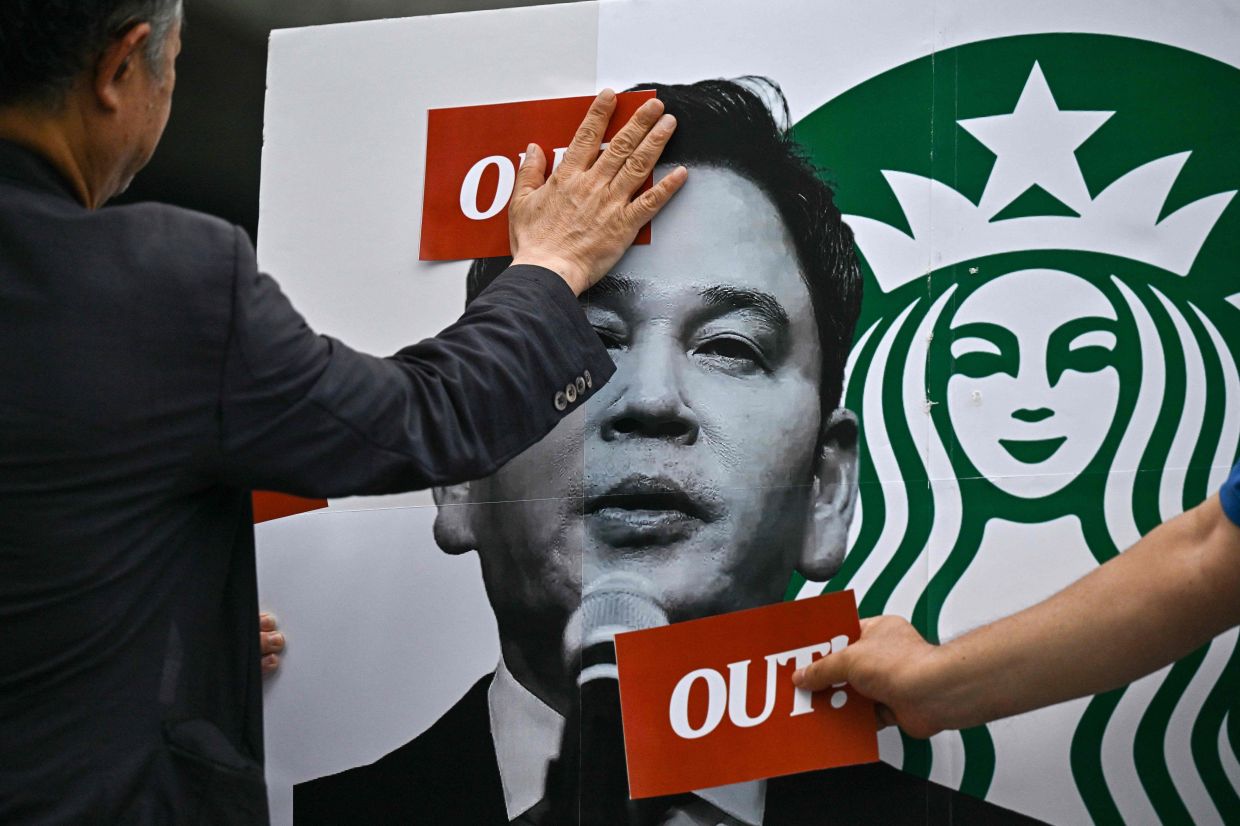
The scandal triggered immediate public demonstrations in Seoul and Gwangju, with citizens expressing their anger through protests and boycotts. These visible manifestations of public discontent registered commercially as well, with Starbucks Korea reporting a sharp decline in sales during the early stages of the controversy. The economic impact extended beyond mere transaction figures to encompass damage to brand reputation and customer loyalty in a fiercely competitive coffee market. For Sharbucks Korea, which operates more than 2,000 stores nationwide under licensing from Shinsegae Group, the reputational wound threatened the company's standing in South Korea, which ranks as the coffee chain's third largest market globally after the United States and China.
In response to the crisis, Starbucks Korea announced that all of its South Korean locations will close for half a day on Monday to provide history education for staff members. This remedial measure aims to ensure employees understand the historical context and significance of May 18 and the broader 1980 pro-democracy movement. Additionally, Chung Yong-jin and other senior executives of Shinsegae will attend a similar educational session two days subsequently. These commitments to institutional learning represent an attempt to demonstrate genuine commitment to rectifying the organization's historical awareness gaps and preventing similar incidents.
The involvement of law enforcement in what began as a corporate public relations debacle reflects the seriousness with which South Korean society treats matters touching upon the national historical narrative. President Lee Jae-myung weighed in publicly by condemning the campaign as "inhumane and disgraceful," signalling that the controversy had risen to the level of presidential concern. Political figures' willingness to comment on a commercial matter underscores how the Gwangju uprising occupies a particular position in South Korea's national identity and political discourse.
For regional observers and international business operators, the Starbucks Korea case offers instructive lessons about cultural and historical sensitivity in Asian markets, where historical memory often carries greater political and social weight than in Western contexts. The incident demonstrates that even multinational corporations with established market presence and sophisticated operational infrastructure can fail to account for locally significant historical dates and their associated sensitivities. As South Korean society continues to grapple with how to commemorate and protect the memory of 1980, corporate actors will face heightened expectations to demonstrate adequate historical knowledge and respect when conducting business in the nation.