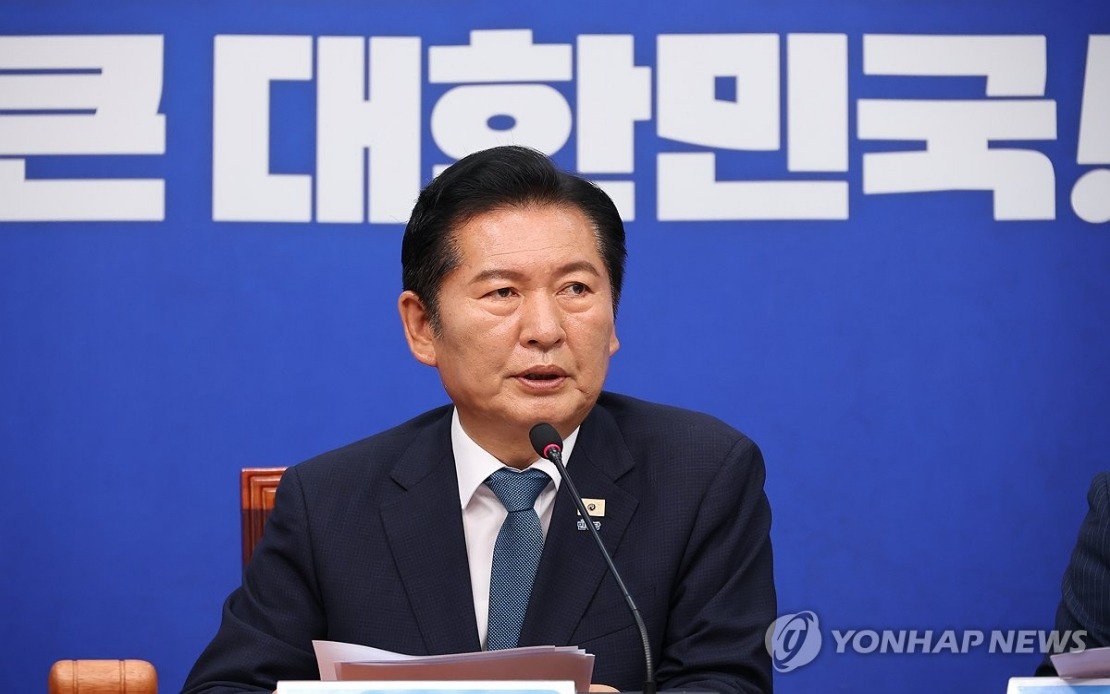
South Korean lawmaker Jung Chung-rae announced his resignation as chairman of the ruling Democratic Party on Wednesday, a strategic move widely interpreted as clearing the path for him to contest the party's upcoming national convention scheduled for August 17. The departure, disclosed during a meeting of the party's supreme council at the National Assembly in Seoul, represents a significant development in the internal dynamics of South Korea's governing coalition as it navigates political challenges ahead.
In his statement before senior party members, Jung provided a carefully worded explanation for his decision, reflecting on recent months of introspection regarding his tenure and political trajectory. He characterised his term as demanding and emotionally taxing, suggesting that the pressures of leadership—both from competing factions and external critics—had weighed heavily throughout his period in office. The resignation underscores the intensity of factional competition within the Democratic Party, where different power centres maintain distinct visions for the party's direction and strategy.
Throughout his chairmanship, Jung emphasised his commitment to supporting President Lee Jae Myung's administration and fostering unity between the ruling party, the government apparatus, and the presidential office. This framing is significant because it positions Jung as a loyalist to the administration while simultaneously highlighting the organisational challenges he encountered. His remarks about maintaining this alignment despite "resistance from within and outside the party" suggest ongoing tensions between those aligned with the president and other influential party members pursuing their own agendas.
The resignation has emerged amid growing criticism from pro-Lee factions within the Democratic Party who contend that Jung's leadership prioritises his own supporters rather than advancing the president's key policy objectives. These internal divisions reflect broader struggles within South Korean politics, where party structures often become vehicles for competing leaders rather than cohesive organisations unified around shared principles. The friction between Jung and the presidential camp indicates that factional loyalties continue to override institutional coherence even within ruling coalitions.
The August convention will feature a three-way contest involving Jung and two other major political figures. Prime Minister Kim Min-seok, who maintains close ties to President Lee and represents continuity within the presidential coalition, is expected to leverage his government position and the backing of Lee loyalists. Song Young-gil, a former Democratic Party leader, has also indicated his intention to enter the race, reportedly suggesting to President Lee that he might coordinate his candidacy with Kim to prevent Jung from winning. These manoeuvres reveal the complex negotiations occurring behind closed doors as different camps calculate their strategic interests.
The possibility of Kim and Song unifying their candidacy against Jung represents a significant realignment of party forces. Such coordination would suggest that concerns about Jung's leadership extend beyond a single faction, potentially reflecting broader elite consensus that a different direction is needed. The involvement of multiple heavyweight politicians in these negotiations demonstrates how consequential party leadership contests have become in South Korean politics, with implications reaching into the presidential office and broader governance priorities.
During Jung's chairmanship, he presided over a period when the Democratic Party faced numerous challenges, including managing the administration's legislative agenda, coordinating with government priorities, and addressing internal discontent from various party wings. The decision to resign rather than face what appeared to be an increasingly difficult re-election battle may reflect Jung's calculation that stepping down strategically could preserve his political capital and allow him to contest the convention without the encumbrance of defending his existing record as party leader.
With Jung's departure, DP floor leader Han Byung-do will assume the role of acting party chairman until the August 17 convention. This interregnum period will likely witness intensive behind-the-scenes negotiations among the three prospective candidates and their respective networks. The two-month interim period provides time for the three camps to mobilise support, arrange endorsements from provincial party organisations, and shape public narrative regarding their respective visions for the party's future direction and policy emphasis.
For Malaysian observers of regional politics, this Korean development illustrates patterns evident across East Asia regarding party institutionalisation and factional competition. Like Malaysian political parties, South Korea's Democratic Party demonstrates how personal networks and leadership figures often transcend formal institutional structures, creating parallel power hierarchies. The convention contest reflects how ruling coalitions must continuously negotiate internal power distribution, a challenge that resonates with dynamics in Southeast Asian political systems where intra-party management remains critical to government stability.
The Democratic Party's internal turmoil occurs against a backdrop of broader challenges facing President Lee's administration, including legislative scrutiny and opposition party pressure. How the party leadership transition unfolds will significantly influence the administration's capacity to advance its remaining policy agenda and maintain legislative discipline. The convention result may reshape the government's relationship with the party apparatus and determine which factional networks gain enhanced influence over resource distribution and candidate selection in future elections.
Song Young-gil's reported willingness to coordinate with Prime Minister Kim against Jung suggests that Lee administration loyalists prioritise preventing Jung from consolidating party control. This coalition-building around Kim indicates confidence that he can unite different party strands more effectively than Jung while remaining aligned with presidential preferences. The August convention will thus serve as a referendum on competing visions for the party's role within the Lee administration's governance framework during the final years of the presidential term.

