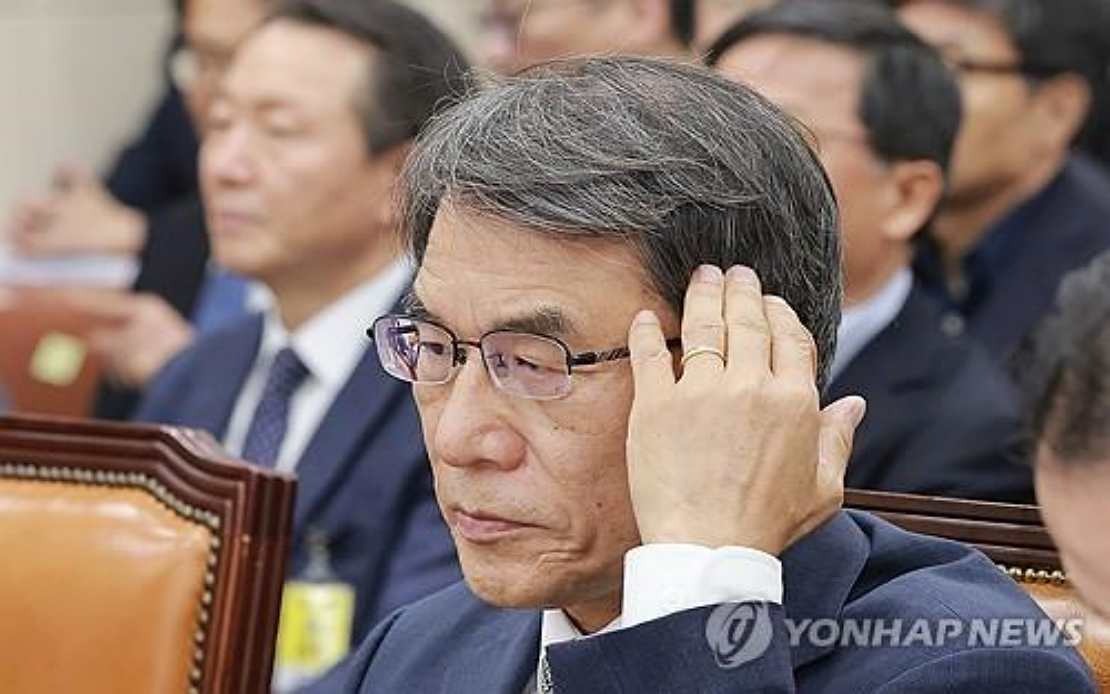
South Korean investigators have intensified their crackdown on corruption within the country's electoral authority, conducting a major raid on the National Election Commission in Seoul as part of a widening probe into suspected financial misconduct by its former leadership. The joint police-prosecution team executed the operation on Monday, presenting warrants that formally named former chief Roh Tae-ak and several unnamed NEC officials as criminal suspects in connection with allegations of embezzlement and the unlawful appropriation of commission resources.
The search warrant gave authorities access to the NEC chairperson's office, where investigators sought documents and evidence related to the suspected financial irregularities. The decision to exclude Roh's residence from the day's raids suggests that authorities may have gathered sufficient preliminary evidence from institutional sources or may be pursuing a phased investigative strategy that could extend to personal property at a later stage. The targeted approach underscores the sensitivity of investigating a state institution responsible for administering elections, one of democracy's fundamental mechanisms.
At the heart of the emerging scandal lies Roh's conduct during his tenure as NEC chief, particularly a pattern of overseas business trips that investigators believe may have been mischaracterised or improperly funded. Records show that Roh undertook three international journeys during his time in office, visiting Australia and New Zealand in one instance, Germany and Estonia in another, and Denmark and Sweden on a third occasion. What has triggered regulatory scrutiny is the consistent presence of Roh's spouse on all three trips—a detail that Roh's office conspicuously omitted from the official post-trip reports submitted to the public record.
The omission of spousal attendance from public documentation raises fundamental questions about how the NEC justified and funded these travels. If Roh's spouse was accompanying him on business-classified trips, the costs associated with the additional passenger would typically require transparent accounting and clear justification under South Korean public sector regulations. The decision to exclude this information from publicly released reports suggests either an attempt to conceal the true cost of the missions or to misrepresent the nature of the journeys—both potential violations of occupational conduct standards and fiduciary responsibility.
Beyond the former chief's personal conduct, the NEC itself has become the subject of systematic investigation over a far broader pattern of questionable expenditures. Authorities have identified that between 2022 and June of this year, a total of 461 NEC employees collectively undertook 107 overseas business trips to destinations that raise eyebrows for an election management organisation. The list of locations—the Maldives, Bangkok, Kota Kinabalu, and Florence—encompasses renowned resort areas and tourist hotspots rather than the sort of administrative, technical, or diplomatic hubs typically associated with official government missions.
The concentration of leisure destinations on an election commission's travel itinerary suggests either a systemic misclassification of personal travel as official business or institutional cultures that have normalised the use of government resources for activities tangential to core electoral functions. For Malaysian readers familiar with Southeast Asian governance challenges, this pattern mirrors concerns that periodically surface in the region regarding the blurred boundaries between official duties and personal benefit in state institutions. The scale of the irregularities—461 employees and 107 trips—indicates this was not an isolated occurrence involving a single official but rather a widespread institutional practice.
The investigation itself was catalysed by formal complaint mechanisms, demonstrating that South Korea's political opposition retains capacity to hold the state apparatus accountable. The main opposition People Power Party filed a complaint against Roh on June 19, citing suspicions of occupational embezzlement. This trigger point is significant because it shows that electoral oversight institutions can become targets of partisan scrutiny, though in this instance the complaints appear substantiated by subsequent investigative findings rather than merely politically motivated allegations.
Roh's resignation last month came in the immediate aftermath of operational failures during the June 3 local elections, when ballot shortages disrupted voting procedures at multiple polling stations in southern Seoul. This electoral dysfunction may have created the political space for investigations into institutional conduct that might otherwise have received less public attention. The convergence of operational failure and financial impropriety has severely damaged the NEC's credibility as an independent, professionally-managed institution.
For the wider East Asian region and observers in Southeast Asia monitoring institutional integrity, the South Korean case illustrates both the vulnerabilities of election management bodies to internal corruption and the capacity of democratic mechanisms—parliamentary opposition, prosecutorial independence, and judicial oversight—to investigate and potentially remedy such abuses. The willingness of authorities to raid a state institution responsible for legitimating democratic governance suggests confidence in the broader institutional framework's capacity to withstand scrutiny of its components.
The implications extend beyond personnel accountability. Public confidence in electoral administration depends fundamentally on the perceived impartiality and financial integrity of the bodies that oversee voting. When voters learn that election commission officials have used public resources for luxury travel under misrepresented pretexts, the legitimacy of electoral outcomes themselves can come into question, even if the voting process itself remained technically sound. This reputational damage may require the NEC to implement more rigorous financial controls, enhanced transparency mechanisms, and stricter travel approval protocols.
As the investigation deepens, the scope of potential charges could expand beyond Roh and the unnamed officials already implicated. The sheer number of employees involved in the 107 trips suggests that supervisory officials, human resources personnel, and finance department staff may also face scrutiny regarding their roles in approving, funding, and documenting these journeys. Establishing chains of responsibility and identifying who authorised the misclassification or concealment of trip details will be central to prosecutors' efforts to impose meaningful accountability.
The case also highlights why independent prosecutorial authority matters within democratic systems. South Korea's joint police-prosecution investigation team structure allows both agencies to coordinate in pursuing complex institutional corruption cases, reducing the risk that a single authority might be compromised or deterred from investigating state institutions. This institutional redundancy, while sometimes appearing inefficient, provides safeguards against selective enforcement or political obstruction of justice.

