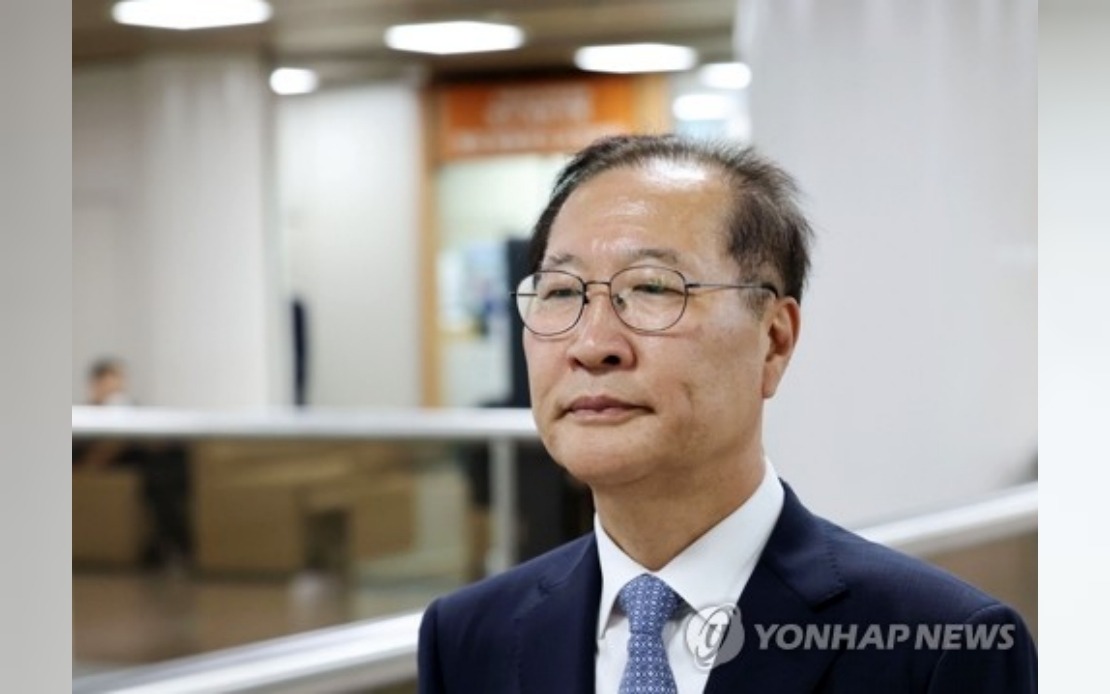
South Korea's former Justice Minister Park Sung-jae received a 25-year prison sentence on Monday from the Seoul Central District Court for his instrumental involvement in the constitutional crisis triggered by former President Yoon Suk Yeol's martial law declaration in December 2024. The court determined that Park actively supported the insurrection bid, finding him guilty on charges of playing a key role in the illegal action and abusing his ministerial authority. The sentence surpassed the 20-year term requested by special counsel Cho Eun-suk's investigative team, signalling the court's view of the severity of Park's misconduct.
Immediate detention orders were issued against Park following the verdict, with the judiciary citing substantial flight risks and the likelihood that he might tamper with evidence relevant to the ongoing investigation. This precautionary measure underscores the gravity with which South Korean authorities view his participation in what prosecutors characterized as a conspiracy to overturn constitutional governance through force.
The special counsel's case against Park centred on his actions in the immediate aftermath of the December 3, 2024 martial law announcement. According to court findings, Park convened a gathering of high-ranking ministry officials ostensibly to coordinate prosecutorial deployment to bodies supporting the martial law framework. However, evidence presented during trial suggested his agenda extended beyond routine administrative coordination. The prosecution argued that Park ordered the assessment of detention facility capacities, implying preparation for the mass arrest of political opponents and key figures who would resist the putative new order. Additionally, he allegedly mobilized staff responsible for enforcing travel restrictions, effectively using his ministerial position to operationalize the martial law machinery.
The court's judgment emphasized Park's abandonment of constitutional duty at a pivotal moment when principled resistance from senior officials might have checked executive overreach. The bench stated that Park, recognizing the insurrection's potential viability, consciously opted to participate rather than uphold the Constitution. This finding carries particular significance for Malaysia and other Southeast Asian democracies grappling with questions about institutional accountability and the responsibility of senior officials to resist authoritarian impulses from above.
Park now joins a growing roster of Yoon's administration officials imprisoned for supporting the martial law gambit. Former Prime Minister Han Duck-soo and former Defence Minister Kim Yong-hyun have previously received insurrection convictions. In February, Yoon himself was sentenced to life imprisonment for orchestrating the short-lived constitutional seizure, though he has mounted an appeal challenging that judgment. The cascade of convictions illustrates how thoroughly the South Korean judicial system has dismantled the power structure that briefly attempted to override democratic processes.
The court's decision to dismiss supplementary corruption charges against Park reflected narrow procedural boundaries rather than substantive exoneration. The special counsel had alleged that Park issued inappropriate directives to subordinates at the behest of Yoon's wife, Kim Keon Hee, in May 2024, following her request for the prosecutor's office to investigate specific aspects of her corruption cases. By ruling these allegations outside the special counsel's investigative remit, the court effectively preserved prosecutorial independence while declining to expand Park's criminal liability beyond the insurrection-related charges.
Park's legal team has signalled their intention to contest the sentence immediately, characterizing the verdict as fundamentally misaligned with both factual evidence and established legal doctrine. Defence counsel contend that the court misinterpreted their client's conduct and misapplied jurisprudence on insurrection liability. Conversely, the special counsel's office indicated reluctance to appeal, viewing the ruling as a valuable clarification of the constitutional obligations binding justice ministers to resist illegal martial law declarations and defend the institutional architecture of democratic governance.
The case carries broader implications for constitutional theory and governmental accountability in East Asia. South Korea's willingness to prosecute and imprison a former cabinet minister for complicity in democratic subversion demonstrates judicial independence and institutional resilience in the face of executive pressure. For Malaysia, which has experienced its own periodic constitutional tensions and debates surrounding executive prerogatives, the Park case exemplifies how transparent trials and meaningful accountability can reinforce democratic norms even when political actors at the highest levels attempt to transgress them.
The sentencing also underscores the vulnerability of administrative state machinery to capture by those seeking to circumvent constitutional constraints. Park's mobilization of prosecutorial and detention apparatus illustrates how justice ministry portfolios, when wielded without institutional restraint, can become instruments of authoritarian transformation. The court's severe punishment sends a forceful message to incumbent and future officials that occupying such positions entails not merely managerial responsibility but a fiduciary duty to the constitutional order transcending loyalty to individual political leaders.
As South Korea continues adjudicating the fallout from the martial law episode, the Park conviction contributes to a historical record demonstrating that democratic societies possess mechanisms to hold elites accountable for anti-constitutional conduct. The legal process remains ongoing, with appeals pending for both Park and Yoon, meaning final constitutional clarifications may take additional months or years to crystallize. Nonetheless, the judicial system's current trajectory suggests that South Korea's democratic institutions have absorbed the shock of the December crisis and reasserted their primacy over the executive branch.

