South Korean President Lee Jae Myung has struck a careful balance between acknowledging serious failures in the nation's June 3 local elections and rejecting what he characterises as unfounded claims of widespread electoral manipulation. Speaking on social media on June 15, the president recognised the legitimate grievances of citizens whose voting rights were compromised by documented ballot paper shortages and administrative mismanagement, yet warned protesters against crossing legal and institutional boundaries in their demonstrations.
The controversy surrounding the June 3 local elections has exposed significant vulnerabilities in South Korea's electoral machinery. Multiple polling stations experienced temporary suspensions or delays in voting due to insufficient ballot papers, leaving voters frustrated and raising questions about the competence of the National Election Commission. These are not alleged irregularities or disputed claims—they are acknowledged facts that prompted the president himself to describe the commission's handling as a serious democratic failure. For any nation where electoral integrity underpins the legitimacy of government, such failures strike at the foundation of public trust and warrant the scrutiny they have received.
Yet President Lee has drawn a sharp distinction between justified criticism of bureaucratic incompetence and what he views as conspiratorial narratives about deliberate election fraud. He cautioned against forces exploiting legitimate grievances to promote what he called baseless conspiracy theories, noting that some individuals spreading such claims had escalated their tactics to include threats against law enforcement and obstruction of facilities. This demarcation reflects a broader challenge facing democracies in the digital age: distinguishing between accountability for genuine failures and the spread of unfounded allegations that can destabilise institutions and undermine faith in democracy itself.
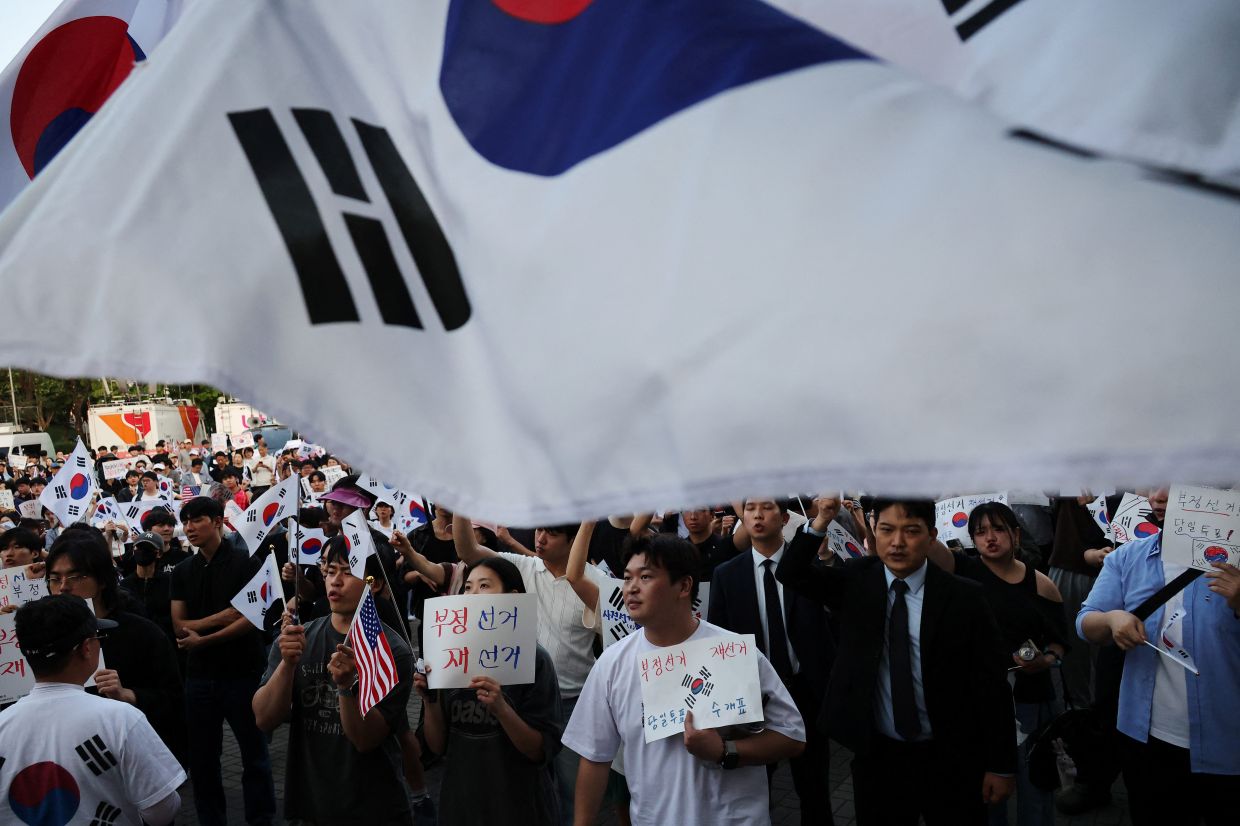
The focus of sustained protests has been Olympic Park's handball arena in southern Seoul, which served as a vote-counting centre for the June 3 elections. Demonstrators have maintained a presence around the facility to keep public attention on what they view as inadequate official responses to the electoral failures. However, these protests have begun to impose costs on other institutions housed within Olympic Park, with sports organisations reporting work disruptions and administrative obstacles that have impeded their ability to facilitate South Korean athletes' participation in international competitions. This spillover effect illustrates how extended protest actions, however well-intentioned, can create collateral damage that extends beyond their intended targets.
Recognising this tension, President Lee instructed police to conduct thorough investigations not only into those who obstructed facilities by force or blocking access, but also into any individuals or groups that conspired to organise such obstruction. His language was notably careful, neither dismissing the protesters' underlying concerns nor condoning methods that infringe on the rights of third parties. He acknowledged that citizens have legitimate grounds for anger at the electoral failures and that young people in particular have demonstrated what he termed a righteous response to the infringement of their voting rights. This framing suggests the administration recognises the need to address public frustration while maintaining institutional order.
President Lee called for multiple investigative mechanisms to be accelerated, including parliamentary inquiries that could commence within the week and a joint task force of prosecutors and police responsible for determining accountability without exception. He specifically urged the National Election Commission to fully cooperate with parliamentary investigations, signalling that the executive branch expects comprehensive institutional self-examination. The emphasis on transparency and thoroughness reflects both the seriousness with which the government is treating the failures and the need to rebuild public confidence through visible accountability processes rather than dismissive denials.
For Southeast Asian democracies watching South Korea's institutional responses, the situation offers both reassurance and caution. Reassurance comes from the fact that electoral failures, when documented, trigger serious investigation and calls for accountability from high-level officials rather than defensive stonewalling. The Korean president's willingness to concede that voting rights were infringed demonstrates that democratic systems possess mechanisms for acknowledging their own shortcomings. However, the challenge of distinguishing legitimate protest from problematic obstruction, and genuine concerns from conspiratorial narratives, reflects difficulties that other regional democracies may also face when electoral credibility is questioned.
President Lee's insistence on maintaining the distinction between deserved criticism and baseless conspiracy theories carries particular weight given that he made these comments while presiding over senior officials' meetings via video link from the Vatican—emphasising that electoral integrity concerns were significant enough to command presidential attention even from abroad. This signals that South Korea's leadership treats the June 3 failures not as a minor administrative inconvenience but as a matter affecting the foundational health of democratic institutions. The president's framing of the challenge as an opportunity to strengthen democracy and popular sovereignty, rather than merely to punish wrongdoers, suggests an administration attempting to channel public anger toward constructive institutional reform.
The path forward requires what President Lee termed healthy criticism and constructive alternatives pursued together across society. This involves completing the fact-finding process speedily and transparently, establishing clear accountability for administrative failures, implementing safeguards to prevent recurrence, and simultaneously ensuring that investigations proceed according to law and democratic principles. For voters whose right to cast ballots was compromised, and for demonstrators attempting to ensure that failures are neither minimised nor repeated, the next phase will test whether South Korean institutions can deliver both justice and measured restraint.
For Malaysian and regional observers, South Korea's response to its electoral crisis illustrates the importance of robust electoral management systems and the complexity of managing public accountability while preserving institutional stability. The balance that President Lee is attempting to strike—between recognising failures, demanding investigation, protecting rights while rejecting conspiracy—represents the narrow path that democracies must navigate when electoral credibility is questioned. Whether South Korea's institutions successfully complete this navigation will have implications for how other democracies in Southeast Asia approach similar challenges should they arise.