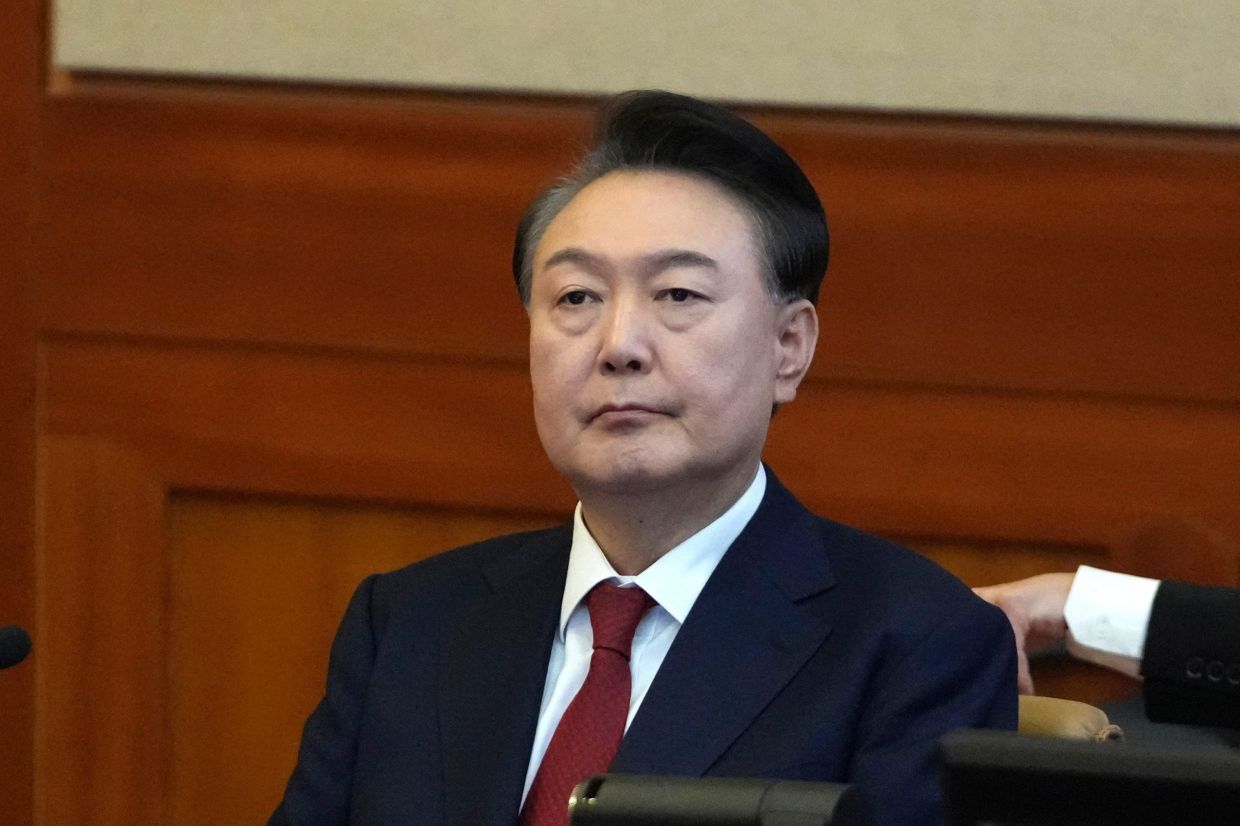
South Korea's highest court has confirmed a seven-year prison sentence against ex-president Yoon Suk Yeol for a cascade of offences connected to his abortive attempt to impose martial law in December 2024, bringing closure to one of several criminal cases the embattled former leader is navigating. The Supreme Court's Thursday ruling marks the end of appellate proceedings in what prosecutors have characterised as a systematic effort to manipulate the machinery of government, though Yoon continues to contest other convictions through separate channels and maintains his innocence on constitutional grounds.
The judicial findings centre on Yoon's conduct both leading up to and immediately following his shock late-night televised address that suspended civilian rule, an act that paralysed South Korean politics for hours and sent shockwaves through international relations. Evidence presented to the court established that Yoon orchestrated a narrowly selected ministerial meeting designed to bypass normal cabinet procedures before announcing the extraordinary measure, a manoeuvre judges concluded was deliberately calculated to circumvent constitutional safeguards. The court also found that Yoon and associates fabricated a fake martial law decree complete with forged signatures purportedly from the prime minister, fundamentally undermining the procedural legitimacy of the declaration itself.
Beyond the procedural manipulations, prosecutors demonstrated that Yoon's team had engaged in an active cover-up strategy following the martial law's swift collapse. The former president allegedly directed officials to distribute a misleading account to international media outlets in an effort to shape foreign perception of events, while simultaneously instructing military personnel to delete records from secure communication systems used by army commanders. These actions revealed what courts interpreted as consciousness of wrongdoing and a determination to obscure his culpability from public and international scrutiny.
The progression through South Korea's judicial system illustrates both the seriousness with which the courts have treated the incident and the complexity of separating individual acts into distinct criminal categories. A lower court in January had imposed a five-year sentence, determining Yoon guilty on most substantive counts. By April, an appeals panel not only sustained that conviction but added a guilty verdict regarding the misleading foreign press release and escalated the punishment to seven years, reflecting a darker assessment of premeditation. The Supreme Court's decision to affirm this higher sentence and reject both prosecution requests for a decade-long term and defence appeals indicates judicial consensus regarding the severity of Yoon's misconduct.
Yoon's legal representatives have signalled their intention to pursue constitutional challenges, claiming the Supreme Court rushed to judgment "without sufficient deliberation" and pledging to lodge formal complaints. This strategy reflects the limited avenues remaining to contest convictions in South Korean law, where Supreme Court decisions represent the final appellate stage and constitutional review offers a narrower path focusing on fundamental rights violations rather than factual or legal disputes about guilt. The determination of Yoon's defence team to exhaust every procedural option suggests they view the judicial process itself as politically motivated, a contention that remains fiercely contested by judicial officials and government prosecutors.
The ex-president's legal troubles extend considerably beyond this one conviction. In a concurrent proceeding, another court handed down a 30-year sentence related to allegations that Yoon dispatched drones across the border into North Korean territory with the explicit purpose of manufacturing a security crisis that would justify his martial law gambit—an accusation Yoon has categorically denied. Additionally, Yoon faces a separate life sentence for leading an insurrection through the martial law declaration itself, a charge he continues to contest while simultaneously arguing that his actions were motivated purely by national interest concerns and the necessity of combating what he portrayed as existential threats.
The December 2024 martial law declaration itself lasted barely six hours before opposition lawmakers, mobilising rapidly, voted to nullify it in an emergency parliamentary session. Yet in that brief window and its immediate aftermath, the reverberations proved substantial. The Korean stock market tumbled sharply, diplomatic contacts with key allies including the United States experienced jarring disruptions, and the incident exposed fault lines in South Korea's constitutional order and institutional checks on presidential power. The episode underscored how swiftly a single decision by one person could destabilise an entire democratic system, even when institutional mechanisms ultimately functioned to restore civilian authority.
Yoon's removal from office followed in April 2025, precipitating special elections that installed Lee Jae Myung of the centre-left Democratic Party as his replacement. The transition represented not merely a change in personnel but a sharp pivot in political direction and governance philosophy, with the new administration inheriting both the practical challenges of restoring institutional confidence and the symbolic weight of managing Yoon's criminal accountability. The judicial proceedings now unfolding occur against this backdrop of fundamentally altered political circumstances, raising questions about whether prosecutorial zeal and judicial rigour reflect genuine accountability or serve competing political interests.
From a Southeast Asian perspective, the South Korean experience offers instructive lessons regarding institutional resilience and the risks of executive overreach, particularly in democracies where constitutional constraints on presidential power can appear fragile when tested by determined leaders. The case demonstrates both strengths and vulnerabilities in systems designed with checks and balances; while courts and parliament successfully constrained Yoon's attempted power grab, the very fact that such an attempt could proceed to the stage of a national martial law declaration indicates potential weaknesses in earlier preventative mechanisms. Malaysia and other regional democracies face similar challenges regarding the concentration of executive authority and the adequacy of institutional safeguards.

