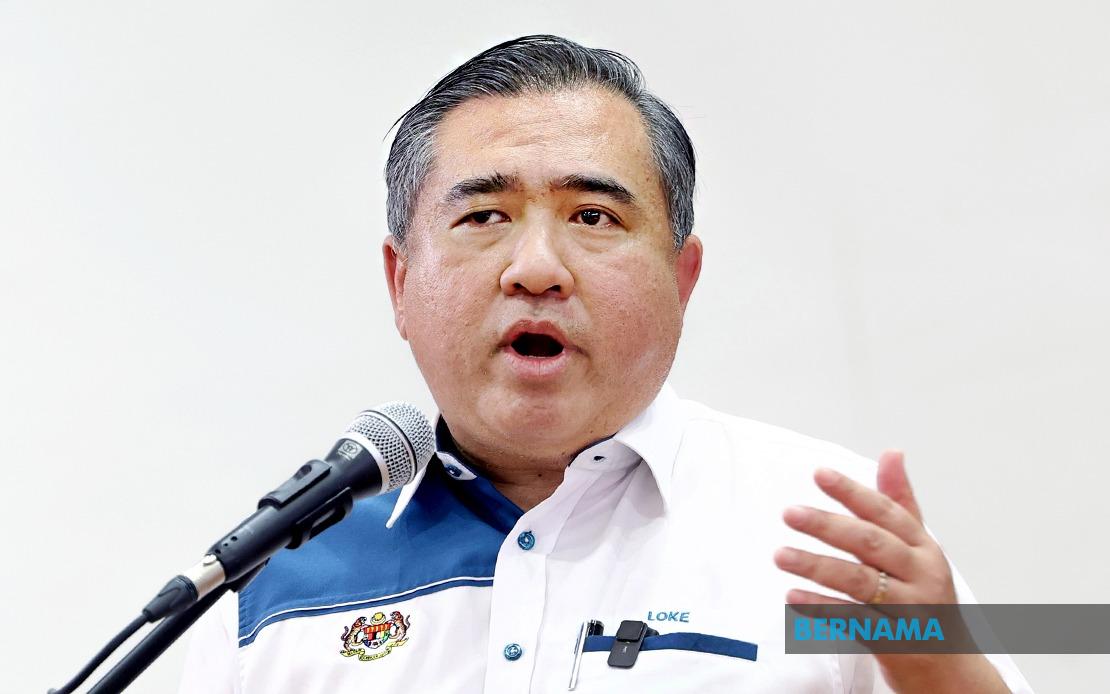
Transport Minister Anthony Loke has defended the temporary use of diesel-powered trains on Johor's Southern Shuttle service, emphasising that the decision reflects a practical balance between serving commuters immediately and waiting for new generation electric trains still under production. Speaking on social media, Loke acknowledged public concerns about the current fleet whilst reframing the situation as a deliberate policy choice: delivering transport options now rather than enforcing a prolonged wait for upgraded infrastructure.
The ministry faces a straightforward operational trade-off. Ten new Electric Multiple Unit train sets remain two to three years away from completion, a timeline that would leave southern Johor residents without rail connectivity improvements during that extended period. By deploying existing diesel rolling stock, the government has opted to commence services immediately, allowing commuters to experience faster journey times and improved connectivity whilst permanent electrified infrastructure develops. This pragmatic approach reflects broader transport policy challenges across Malaysia, where capital-intensive rail projects often involve extended procurement and manufacturing schedules that can delay public benefits by years.
To sustain expanded rail services, the Ministry of Transport has committed annual subsidies ranging from RM11 million to RM15 million, a financial commitment designed to keep fares accessible and encourage broader adoption of rail-based public transport across the region. Such subsidisation mechanisms remain essential in Malaysia's developing rail landscape, particularly in secondary cities where operational costs might otherwise price services beyond reach for everyday commuters who form the backbone of sustainable transport adoption.
The Southern Shuttle network encompasses three stations along a strategic corridor, connecting Kulai, JB Sentral, and Pasir Gudang with journey times significantly shorter than existing alternatives. The segment between Kulai and JB Sentral requires approximately 40 minutes, while the Kempas Baru to Pasir Gudang section takes between 40 and 45 minutes, offerings that represent material improvements over congested road routes frequently experienced during peak hours in Johor's expanding urban zones. These travel time advantages provide tangible benefits that validate the service's existence regardless of locomotive power source.
A particularly notable aspect involves the Kempas Baru-Pasir Gudang route, which previously functioned exclusively as freight infrastructure. Opening this corridor to passenger services marks the first time residential and commercial communities along this alignment gain direct rail access, effectively expanding the urban rail network's reach into previously underserved areas. Such infrastructure repurposing demonstrates how existing assets can deliver multiplied utility when regulatory and operational frameworks evolve to accommodate new user categories.
The eventual transition away from diesel operations depends on completion of the Gemas-Johor Bahru electrified double-tracking project, a larger infrastructure undertaking that will permit Electric Train Service operation on the route. Once this foundational work concludes, diesel trains become obsolete for passenger services, replaced by cleaner electric-powered alternatives. This staging approach reflects the reality that comprehensive rail modernisation cannot occur instantaneously; instead, successive phases must proceed sequentially, with interim solutions maintaining service continuity.
Public criticism regarding current service configurations has centred on the apparent inconsistency between diesel-powered trains and fare structures, with observers noting that Southern Shuttle pricing approaches three times the levels charged on comparable services in Kuala Lumpur and Seremban. This disparity raises legitimate questions about tariff equity and subsidy distribution across Malaysia's rail network. Higher fares in peripheral urban centres potentially undermine the affordability objective that subsidies supposedly advance, creating a messaging problem where policy intentions diverge from passenger experience.
The Southern Shuttle initiative sits within Malaysia's broader regional rail development strategy, particularly the ongoing modernisation efforts affecting transport corridors throughout the Klang Valley and peripheral zones. Johor's transport infrastructure development carries special significance given the state's rapid urbanisation, growing cross-border traffic with Singapore, and increasing freight demands tied to Malaysia's role in Southeast Asian logistics networks. Improving rail connectivity in Johor addresses multiple policy objectives simultaneously: reducing congestion, lowering transport costs for residents, and supporting economic activity.
The minister's explanation reflects a refreshingly transparent approach to infrastructure development realities. Rather than concealing the temporary nature of current arrangements, Loke positioned the decision within a coherent long-term vision where present-day solutions enable immediate public benefit whilst permanent infrastructure proceeds toward completion. This communication strategy acknowledges that commuters prefer usable services today over theoretically superior systems arriving years hence, a principle that should increasingly guide Malaysian transport policy.
For Malaysian and Southeast Asian observers, the Southern Shuttle case illustrates how developing economies manage the tension between ambitious infrastructure ambitions and resource constraints. Perfect solutions rarely arrive on ideal timelines; instead, pragmatic sequencing allows incremental improvements that enhance lives whilst longer-term transformations develop. Whether the pricing structure adequately reflects service subsidisation remains a secondary question worth monitoring as the service matures and ridership patterns emerge.

