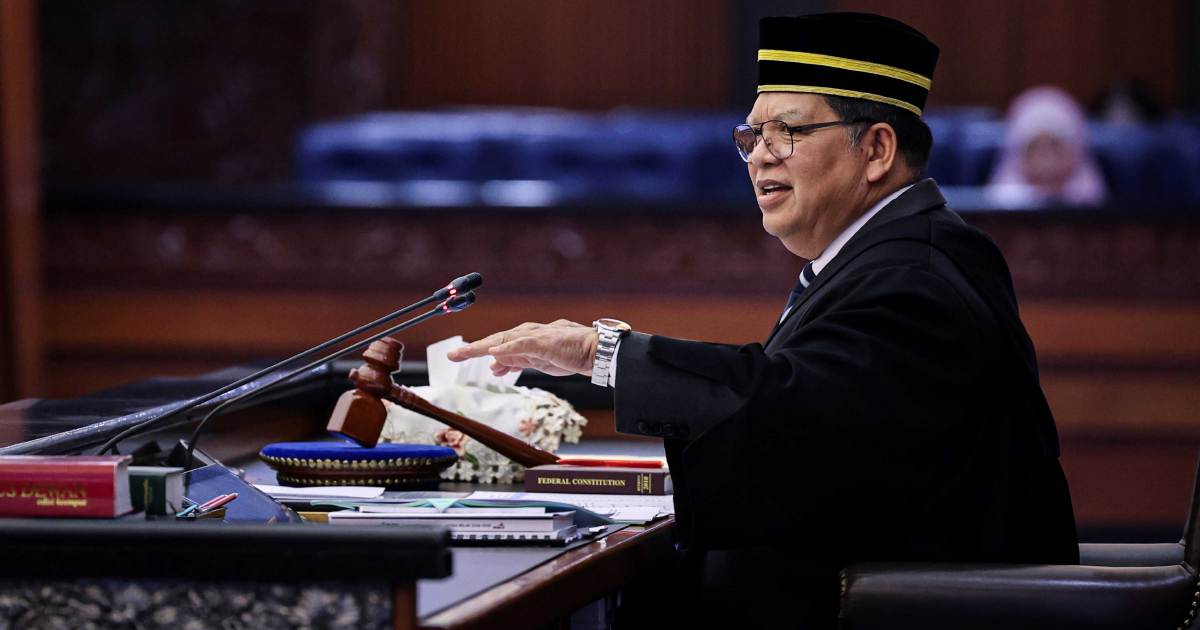
Dewan Rakyat Speaker Tan Sri Johari Abdul has issued a forceful reminder to all members of parliament that attendance at parliamentary sittings is mandatory unless a legitimate justification exists, underscoring the significance of parliamentary duties in Malaysia's democratic system. The speaker's statement reflects growing concerns about fluctuating attendance rates during recent parliamentary sessions, where the chamber's quorum has at times appeared insufficient to conduct legislative business effectively.
The attendance requirement for Members of Parliament carries considerable weight in Malaysia's constitutional framework, as the Dewan Rakyat serves as the primary chamber for debating and passing legislation that affects all Malaysians. When MPs choose to absent themselves without proper cause, they effectively undermine the chamber's ability to fulfill its role as a representative body, potentially compromising the legitimacy of parliamentary proceedings and legislative decisions.
In recent months, attendance issues have surfaced across different parliamentary sessions, with observers noting that some benches remain noticeably sparse during important debates. This pattern has prompted leadership within the chamber to take corrective action, recognising that sustained legislative work requires consistent participation from elected representatives. The speaker's intervention demonstrates that parliamentary leadership is prepared to enforce attendance standards.
The concept of valid reasons for parliamentary absence is well-established within Westminster-style legislatures, typically encompassing health emergencies, family crises, official duties, or other compelling circumstances that arise unexpectedly. However, what constitutes a valid reason remains subject to scrutiny and interpretation, with parliamentary rules generally requiring members to notify the speaker's office and provide documentation when circumstances necessitate absence.
For Malaysian lawmakers, the reminder carries particular relevance given the country's ongoing legislative agenda, which includes bills addressing economic recovery, social welfare, infrastructure development, and governance reforms. With multiple pieces of legislation requiring debate and parliamentary votes, sustained attendance becomes essential for ensuring that the Dewan Rakyat functions efficiently and that all registered members contribute to the legislative process.
The speaker's directive also reflects broader concerns about parliamentary culture and the expectations placed upon elected representatives. Members of parliament receive salaries and allowances funded by taxpayers, creating an implicit compact that they will fulfill their legislative responsibilities. Frequent unexcused absences risk undermining public confidence in parliamentary institutions, particularly if constituents perceive their representatives as shirking core duties.
Enforcement mechanisms for parliamentary attendance vary, with potential consequences ranging from loss of allowances to more formal disciplinary procedures. In Malaysian parliamentary practice, the speaker possesses authority to address attendance concerns, though enforcement typically occurs through peer pressure, formal warnings, and administrative consequences rather than punitive measures.
The reminder also touches upon the operational challenges faced by parliamentary administrations. Scheduling debates, allocating time for various legislative items, and managing parliamentary business requires reliable knowledge of which members will be present. When absences remain unpredictable or unexplained, parliamentary staff cannot efficiently plan debate schedules or determine whether committees can meet quorum requirements.
Beyond procedural concerns, attendance at parliamentary sittings provides individual MPs with opportunities to influence legislation, raise constituent concerns, and participate in the scrutiny of government activities. Colleagues who regularly attend benefit from exposure to diverse viewpoints, access to networks with other lawmakers, and the chance to build legislative skills through participation in debates.
The speaker's intervention carries particular weight given Malaysia's multi-party political landscape, where coalition governments require consistent legislative support and where individual MP attendance can prove decisive in close votes on contentious legislation. When attendance becomes unreliable, government business faces complications, and opposition parties gain opportunities to exploit vacancies in government benches.
Looking forward, the speaker's statement likely signals that parliamentary leadership will adopt a more stringent approach toward monitoring attendance patterns. This could manifest through enhanced reporting mechanisms, greater transparency regarding reasons for absences, or increased formal documentation requirements from members who must miss sessions.
For Malaysian citizens observing their parliament, the speaker's reminder underscores that democratic institutions function effectively only through consistent participation and commitment from those entrusted with legislative responsibility. While circumstances occasionally necessitate absences, the expectation that MPs prioritise parliamentary duties reflects a fundamental principle: that elected office carries obligations to both the institution and the constituents who entrusted representatives with their mandate.

