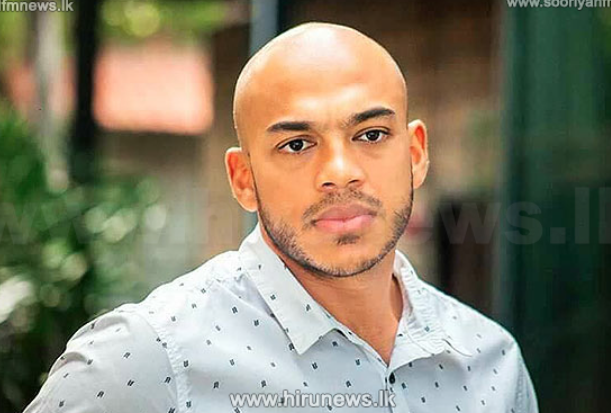
The arrest of Yoshitha Rajapaksa on Wednesday, 17 June, represents a significant moment in Sri Lanka's ongoing reckoning with one of its most dominant political dynasties. The 38-year-old naval officer was taken into custody by the Bribery Commission following allegations that he improperly advanced his military career and subsequently leveraged government resources to finance overseas training courses that he was not qualified to undertake. His detention comes as part of a broader accountability drive that has gathered momentum since the 2024 presidential election brought Anura Kumara Dissanayake to power on an explicit anti-corruption platform.
The specific allegations against Yoshitha Rajapaksa centre on his rapid promotion through naval ranks without meeting the established professional requirements that bind ordinary officers. Investigators contend that during his father's presidency—which lasted from 2005 to 2015—he obtained positions and opportunities that would normally require demonstrated merit and technical qualifications. Most notably, the Bribery Commission has determined that state funds were unlawfully redirected to support his attendance at Dartmouth, Britain's prestigious naval college, a place many observers believed should have gone to a more qualified candidate who had legitimately earned selection through competitive processes.
Yoshitha's detention represents the latest chapter in what has become a systematic legal assault on the Rajapaksa family's accumulated power and wealth. Over the past months, multiple relatives and associates have faced charges ranging from financial fraud to more serious criminal offences. These prosecutions had stalled or moved slowly under previous administrations, but Dissanayake's government has signalled a determination to pursue cases regardless of the prominence of those involved. The shift in political momentum has emboldened investigators and prosecutors who previously operated under constraints, creating space for accusations that had languished in bureaucratic limbo to finally advance through the courts.
The case against Yoshitha also encompasses separate allegations regarding his inexplicable enrichment. Investigators zeroed in on his purchase of a residential property during his father's administration, questioning where the capital originated. When confronted, Yoshitha claimed he had sold gemstones inherited from his grandaunt to finance the transaction. However, his grandaunt subsequently told authorities she could not explain how she had acquired the precious stones in the first place—a claim that undermines his account and suggests potential laundering of illicit proceeds through the family's informal networks. This opacity surrounding financial transactions has become emblematic of the opacity characterising the family's dealings during their tenure in high office.
Additionally, Yoshitha faces separate criminal charges connected to his acquisition of a television network, another transaction that prosecutors view as suspicious given his military background and the absence of apparent legitimate business experience. These overlapping cases paint a picture of systematic financial manipulation and abuse of state resources that extended beyond military advancement into commercial acquisitions and property ownership. The cumulative weight of these allegations suggests a broader pattern rather than isolated missteps, a narrative that strengthens the case for sustained judicial action.
Prior to his latest arrest, Yoshitha had already been implicated in two money-laundering investigations and remained subject to a travel ban that restricted his international movement. He had secured bail release pending trial, but that conditional liberty has now been revoked. The detention also signals that investigative authorities believe the evidence warrants more stringent measures, possibly indicating that prosecutors fear potential flight risk or destruction of evidence.
The Rajapaksa family's vulnerability has intensified following the 2022 removal of Gotabaya Rajapaksa, Mahinda's younger brother, from the presidency. Gotabaya fled the country amid mass uprisings triggered by an unprecedented economic collapse that devastated household incomes and exposed the family's mismanagement of state resources. His recent imposition of a foreign travel ban, ordered earlier in June, reflects authorities' renewed determination to ensure accountability. More troublingly for Gotabaya, he has sought court protection against potential arrest related to the Easter Sunday bombings of 2019, a militant attack that killed 279 people and for which critics argue he bears responsibility as defence secretary for catastrophic security failures.
The ramifications of these prosecutions extend beyond the immediate legal consequences for individual family members. For Malaysian observers, the Sri Lankan situation illustrates the political and institutional mechanisms through which authoritarian families can eventually be held accountable once power shifts and new leaders prioritise rule of law. The case demonstrates that systemic corruption and dynastic entrenchment, however entrenched, remain vulnerable to determined legal scrutiny backed by popular mandate. Conversely, it also reveals the precarious nature of accountability in South Asian democracies, where prosecutorial vigour often oscillates with political cycles rather than operating from genuine institutional independence.
The concentration of cases against the Rajapaksas raises questions about whether these are genuine accountability mechanisms or prosecutorial weaponisation against a defeated rival political force. International observers will scrutinise whether due process protections remain robust and whether confessions are obtained voluntarily or under coercive conditions. The credibility of these proceedings depends on maintaining standards of procedural fairness, transparent evidence handling, and judicial independence—criteria that have historically proven challenging in South Asian jurisdictions.
For regional analysts, the Rajapaksa prosecutions also underscore the vulnerability of political families who have relied on networks of patronage and state capture rather than institutional consolidation. Once electoral support evaporates and political protection dissolves, the intricate financial arrangements and personnel hierarchies that sustained their dominance crumble rapidly. This pattern has repeated across South Asia, from Bangladesh to Pakistan, suggesting that personalistic governance models, regardless of initial institutional success, contain inherent instabilities that ultimately culminate in legal reckoning.
The path forward for Yoshitha Rajapaksa remains uncertain, but his arrest signals that Sri Lanka's new leadership has committed substantial political capital to dismantling the family's parallel power structures. Whether this commitment survives potential backlash from remaining Rajapaksa supporters and whether the judicial system maintains its independence through extended litigation will determine whether these cases ultimately contribute to genuine institutional reform or merely represent a cyclical settling of political scores.