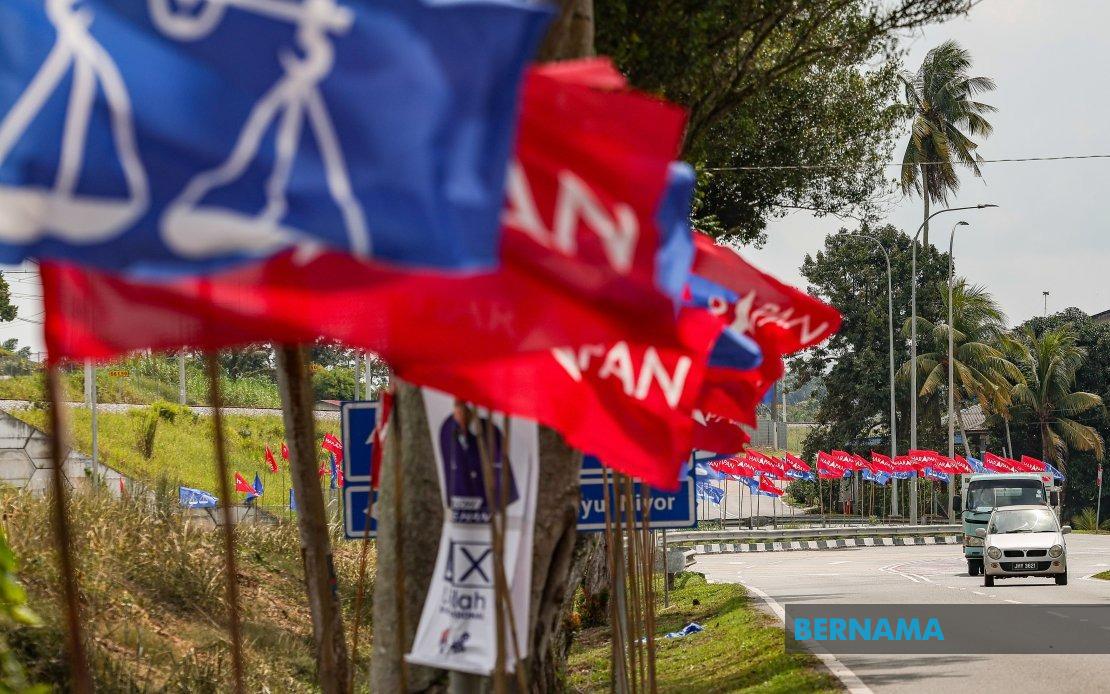
Pakatan Harapan candidate Suhaizan Kaiat is projecting confidence that his coalition can recapture the Larkin state seat from incumbent Barisan Nasional in the 16th Johor state election scheduled for July 11. Speaking after engaging with constituents in his constituency, the Pulai Member of Parliament grounded his optimism in historical voting data, pointing specifically to performance during the 14th General Election as evidence that the seat remains competitive for opposition forces under the right conditions.
The lynchpin of Suhaizan's electoral strategy rests on voter participation rates. He contends that the 2022 Johor state election result, which saw BN retain the seat, cannot be taken as a reliable indicator of underlying voter sentiment because turnout that year reached only 51 per cent. The depressed participation was attributable to constraints imposed by the COVID-19 pandemic, which limited campaign activities and public movement. This distinction is crucial for understanding opposition prospects in urban constituencies like Larkin, where mobilisation and foot traffic during campaigns can significantly influence electoral outcomes.
The 2022 result saw Barisan Nasional's Mohd Hairi Mad Shah win Larkin with a majority of 6,178 votes. However, this masks a broader narrative of fluctuating allegiances in the seat. In the 14th General Election, Datuk Mohd Izhar Ahmad won the same constituency under the Pakatan Harapan banner, having contested as part of Bersatu. That transition from PH victory to BN control in just four years demonstrates how sensitive Larkin voters are to political messaging and turnout conditions, particularly in a state where federal and state election cycles often produce divergent results.
A secondary element of Suhaizan's campaign calculus involves wooing supporters of Bersatu, the party that previously partnered with PH in the 2018 political realignment. Recent political developments have strained relationships between Bersatu and its ally PAS, potentially creating an opening for Pakatan Harapan to recover ground among voters who previously backed Bersatu but may be receptive to returning to the opposition coalition. Significantly, Bersatu has chosen not to field a candidate in Larkin this round, which Suhaizan argues removes a vote-splitting dynamic that could benefit either PH or BN depending on how erstwhile Bersatu supporters redistribute their votes.
The contest itself is a three-cornered affair. Beyond Suhaizan and the incumbent Mohd Hairi, Suhaizan faces competition from Bersama candidate Norsinah Abu. The entry of a third contender introduces additional complexity, as vote fragmentation across three poles can dramatically alter winning margins. Historically, such contests have advantaged incumbent parties with stronger grassroots organisation and existing administrative advantages, though in recent Johor elections, the split opposition vote has occasionally allowed BN to win with pluralities rather than clear majorities.
For Malaysian observers of state politics, the Larkin race epitomises broader tensions within Johor's electoral landscape. The state remains crucial to both Barisan Nasional's legitimacy and Pakatan Harapan's resurgence, given Johor's historical dominance of BN and its electoral weight within the federation. Elections here often serve as barometers for national political sentiment, and the opposition's ability to mobilise voters in urban seats like Larkin will reverberate beyond state boundaries.
The 16th Johor state election encompasses 172 candidates vying for 56 state assembly seats, making it a substantial undertaking. Early voting occurred on July 7, allowing working professionals, those travelling, and other eligible voters to cast ballots ahead of the main polling day. This staggered voting arrangement is increasingly common in Malaysian elections, designed to improve overall participation rates by removing scheduling barriers that might otherwise suppress turnout among time-constrained voters.
Turnout improvement represents a demonstrable challenge for electoral organisers. The 51 per cent participation in 2022 reflected pandemic-era constraints, but even in non-pandemic contexts, Malaysian state elections frequently struggle to attract upwards of 60 per cent of eligible voters, particularly in comparison to general elections which typically generate higher participation. Whether turnout in the 2024 Johor election will exceed 2022 levels will depend on public engagement levels, weather conditions, competing social activities, and the perceived stakes of the contest.
For Pakatan Harapan strategically, Larkin represents one of several urban seats where the coalition believes it can compete effectively if organisation and messaging align. The coalition's national discourse around governance, anti-corruption, and institutional reform tends to resonate more strongly in urbanised constituencies with higher education levels and greater exposure to media plurality. Conversely, Barisan Nasional traditionally leverages incumbency advantages, administrative reach, and resource distribution to consolidate support in such areas.
The political mathematics of Larkin thus reflect microcosmic versions of national contests. Suhaizan's bet on turnout improvement is not merely tactical but speaks to a broader opposition thesis that Malaysian voters will return to reformist parties when mobilisation reaches sufficient threshold. Whether that theory holds water in Johor will become apparent once the July 11 results are tallied, offering insights into voter sentiment across the peninsula's southeastern anchor state.

