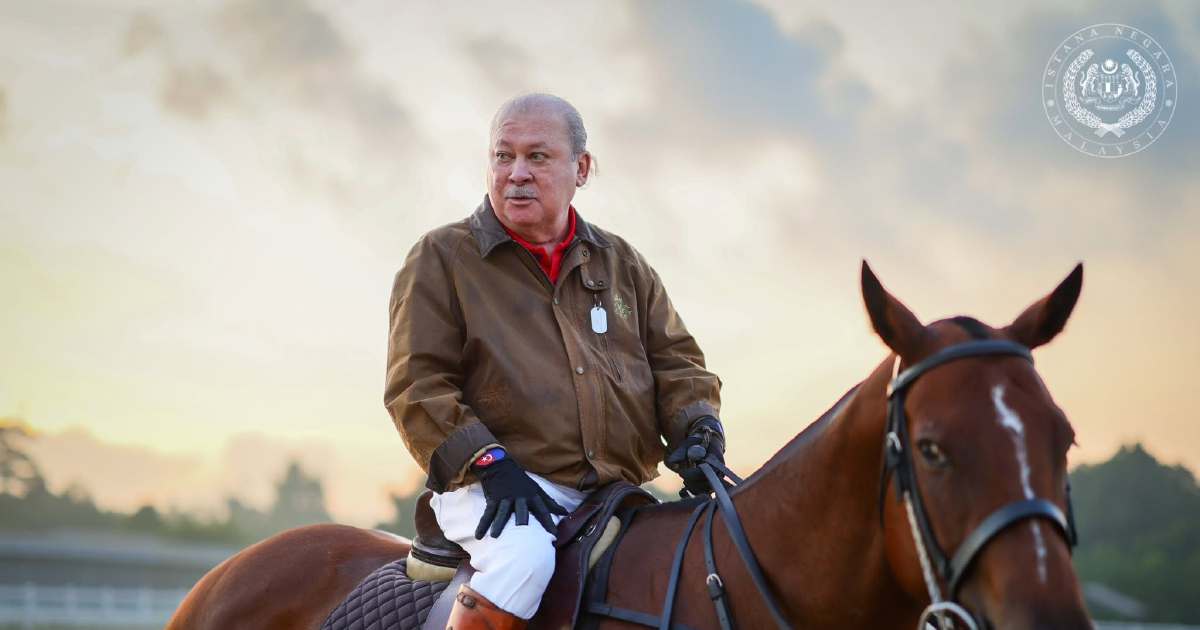
His Majesty Sultan Ibrahim, King of Malaysia, has maintained his regular morning equestrian routine at the Royal Johor Polo Club situated within the grounds of Istana Pasir Pelangi in Johor Baru. The monarch's consistent participation in horseback riding demonstrates his commitment to sustaining an active lifestyle and personal wellness regimen, with the activity performed at a measured, unhurried pace that reflects relaxed engagement with the sport.
The Royal Johor Polo Club serves as the primary venue for the King's equestrian pursuits, providing an established setting for His Majesty's ongoing fitness activities. Located within the palace grounds, the facility offers privacy and proper facilities for the head of state to pursue his sporting interests away from the public eye. The club's presence in Johor Baru underscores the historic significance of the state's royal heritage and the long-standing association between the Johor palace and equestrian traditions dating back generations.
Maintaining regular physical activity has become increasingly important for senior figures across governance and leadership positions globally. Sultan Ibrahim's visible commitment to morning horsemanship reflects broader contemporary attitudes toward wellness and fitness, particularly among individuals bearing significant national responsibilities. The decision to maintain scheduled athletic pursuits sends an implicit message regarding the importance of health management and work-life balance, even for those occupying the highest constitutional offices.
The horse-riding routine exemplifies a longstanding Malaysian royal tradition. Equestrianism holds cultural significance within the Malay-Muslim heritage and has been associated with the sultanate systems across Malaysia's states for centuries. The continuation of such practices by the current monarch demonstrates respect for institutional customs while integrating contemporary health consciousness into these traditional activities.
Physical fitness routines undertaken by heads of state often carry implications beyond personal wellness. When such activities become publicly known or documented, they contribute to perceptions of vitality, engagement, and capability—attributes that voters and citizens frequently associate with effective leadership. The visible maintenance of active pursuits can influence public confidence in a monarch's ability to discharge constitutional duties with full energy and focus.
For Malaysian readers, the preservation of royal traditions within modern health frameworks represents a broader pattern of institutional continuity alongside adaptive governance. The photograph-ready nature of such activities, while ostensibly private fitness pursuits, also reflects the contemporary reality that even royal actions occur within an environment of media attention and public interest. The documentation of such moments provides opportunities for citizens to perceive their head of state as connected to familiar, relatable practices.
Regionally, the maintenance of such routines by Southeast Asian monarchs reflects evolving standards for public figures regarding health transparency and active engagement. The visibility of senior leaders pursuing fitness activities has become normalized across democratic and constitutional systems, where demonstrating personal vigor can influence public perception of administrative capacity. Within Malaysia's federal framework, the Sultan's activities also carry significance as they occur in Johor, one of the nation's most significant and politically important states.
The Royal Johor Polo Club itself represents an institution of considerable historical weight, having served the state's elite for extended periods. The club's continued operation as a venue for royal activity underscores the preservation of established institutional structures within Malaysia's broader modernization trajectory. Such continuity provides citizens with tangible anchors to their nation's heritage while adapting those traditions to contemporary expectations and lifestyle practices.
For equestrian enthusiasts and sports administrators throughout Malaysia, the visible engagement of the nation's monarch in horse riding provides encouragement for the preservation and development of related sporting infrastructure. Polo and horse riding maintain niche but devoted followings within Malaysia, and royal patronage—whether active or symbolic—contributes to the maintenance of these communities and their associated facilities. The routine nature of His Majesty's participation demonstrates sustainable engagement rather than occasional ceremonial involvement.
The simplicity of the reported activity—a calm, relaxed morning ride—stands in contrast to some international perceptions of Asian monarchical engagement. Rather than elaborate ceremonial presentations or highly formal public appearances, the documentation of routine personal activities demonstrates an approach to public presence that emphasizes normalcy and accessibility. This measured presentation may reflect deliberate choices regarding how the monarchy interfaces with both media coverage and public perception in the contemporary Malaysian context.