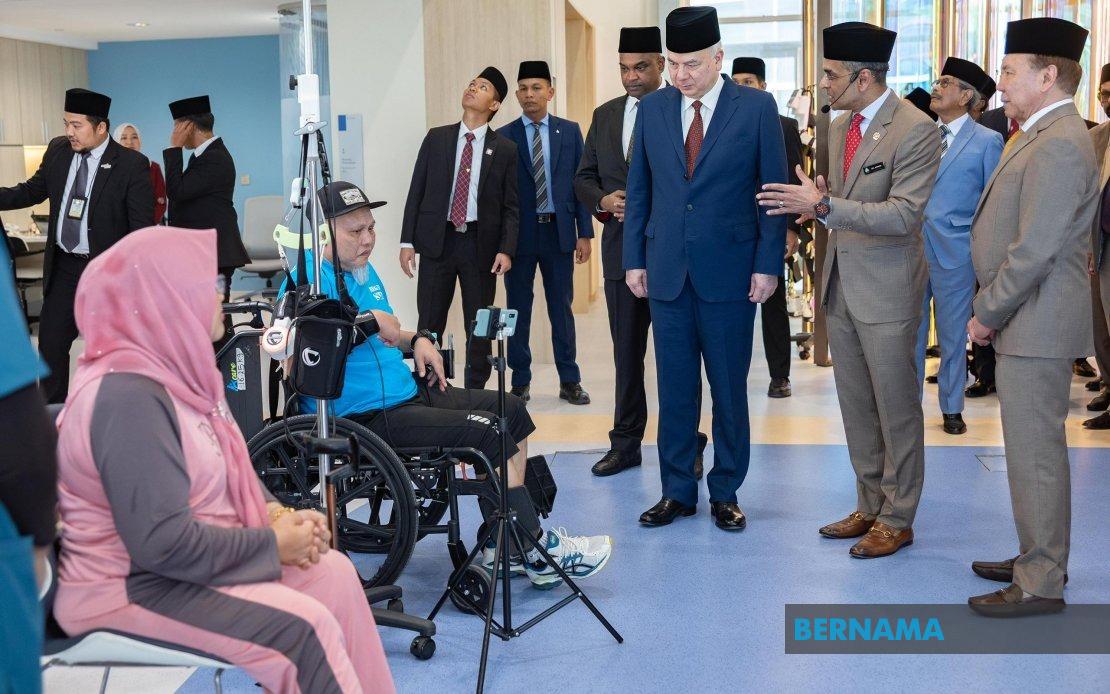
The Sultan of Perak, Sultan Nazrin Shah, officially opened the Social Security Organisation's (PERKESO) Neuro-Robotics and Cybernetics Rehabilitation Centre in Meru Raya on June 16, positioning the facility as a transformative milestone in Malaysia's approach to worker rehabilitation and social healthcare. The centre, which will bear the Sultan's name as "Pusat Rehabilitasi Perkeso Sultan Nazrin Shah", represents a significant investment in modernising how the country supports individuals recovering from workplace injuries and neurological conditions.
The architectural design of the facility draws inspiration from traditional gold-thread embossing, a nod to Malaysia's cultural heritage while housing state-of-the-art medical and therapeutic technology. The event brought together senior leadership including Raja Muda Perak Raja Jaafar Raja Muda Musa, Raja Di Hilir Perak Raja Iskandar Dzulkarnain Sultan Idris Shah, Perak Menteri Besar Datuk Saarani Mohamad, and Minister of Human Resources Datuk Seri R. Ramanan, underscoring the initiative's importance across government and regional administrations.
In his address, Sultan Nazrin articulated a vision extending well beyond infrastructure and technology. He emphasised that the centre's true value emerges from the multidisciplinary expertise assembled within its walls—specialists spanning neurology, physiotherapy, occupational and vocational therapy, assistive technology design, psychological support, and social guidance. This integrated approach reflects a deliberate pivot in how Malaysia conceptualises rehabilitation: not as medical treatment in isolation, but as a holistic pathway toward restoring independence and human dignity.
The Sultan framed the opening as embodying a fundamental shift in national thinking regarding disability and workplace injury. He articulated that genuine progress transcends economic measures and infrastructure development, instead reflecting a society's commitment to preserving human dignity and safeguarding vulnerable populations. This framing carries particular resonance in Malaysia, where industrial injuries remain a significant social challenge and where cultural attitudes toward disability continue to evolve. The centre stands as institutional proof that recovery and reintegration remain achievable goals when proper support systems exist.
For different patient populations, the centre promises distinct therapeutic pathways. Stroke survivors may experience guided recovery of motor function through robotic-assisted physiotherapy. Workers sustaining neurological injuries gain access to comprehensive strength rebuilding across physical and cognitive domains. Individuals recovering from traumatic brain injury receive integrated support targeting memory, speech, and confidence restoration. For families navigating these crises, the facility offers tangible hope grounded in contemporary rehabilitation science.
Sultan Nazrin specifically credited Ipoh Barat Member of Parliament M. Kulasegaran for initiating the project during his tenure as Minister of Human Resources from 2018 to 2020, acknowledging the political leadership that brought this vision to fruition. This recognition also highlights how cross-party initiatives in rehabilitation infrastructure can advance beyond electoral cycles, establishing durable institutional improvements.
A critical element of the Sultan's message centred on societal attitudes toward persons with disabilities. He called explicitly for the elimination of prejudice and stigma, framing this attitudinal shift as essential to successful reintegration. This appeal directly addresses a persistent barrier in Malaysian workplaces: employer hesitation regarding hiring individuals with disabilities despite their demonstrated capability. By connecting rehabilitation infrastructure with employment outcomes, the Sultan elevated the conversation beyond medical intervention toward comprehensive social inclusion.
The collaboration between PERKESO and 7-Eleven represents a practical implementation of this philosophy. The partnership provides vocational training and employment pathways for rehabilitated workers, demonstrating how large corporations can embed social responsibility into operational strategy. Sultan Nazrin extended an invitation to other Malaysian private-sector organisations to replicate this model, whether through workplace training partnerships, corporate sponsorships of rehabilitation programmes, or direct hiring of programme graduates.
The economic argument supporting such private-sector engagement merits careful attention. Malaysia's workforce faces chronic labour shortages in certain sectors, while simultaneously generating substantial numbers of injured workers requiring income rehabilitation. Rehabilitated workers represent proven employees already screened by medical professionals, possessing demonstrated motivation and resilience. From a purely business perspective, this population represents an underutilised talent pool offering demographic and motivational advantages over conventional recruitment channels.
Sultan Nazrin's broader vision positions rehabilitation not as a welfare expenditure but as an investment in human capital and social cohesion. The centre's emphasis on technology—particularly neuro-robotics—positions Malaysia within contemporary global rehabilitation science, potentially creating opportunities for research collaboration, medical training, and advanced therapeutic exports across Southeast Asia.
The opening occurs within broader Malaysian context of workforce digitalisation and industrial evolution. As automation reshapes employment landscapes, comprehensive rehabilitation infrastructure becomes increasingly vital for supporting workers displaced or injured during economic transitions. The facility addresses current needs while demonstrating institutional foresight regarding future challenges.
For Malaysian readers and policymakers, the centre's significance extends beyond Perak's borders. It exemplifies how integrating technology, clinical expertise, and social policy can transform lives while building more inclusive labour markets. The Sultan's articulation of rehabilitation as a moral obligation and reflection of national character resonates across diverse Malaysian communities, grounding social welfare not in charity but in shared responsibility and respect for human potential.