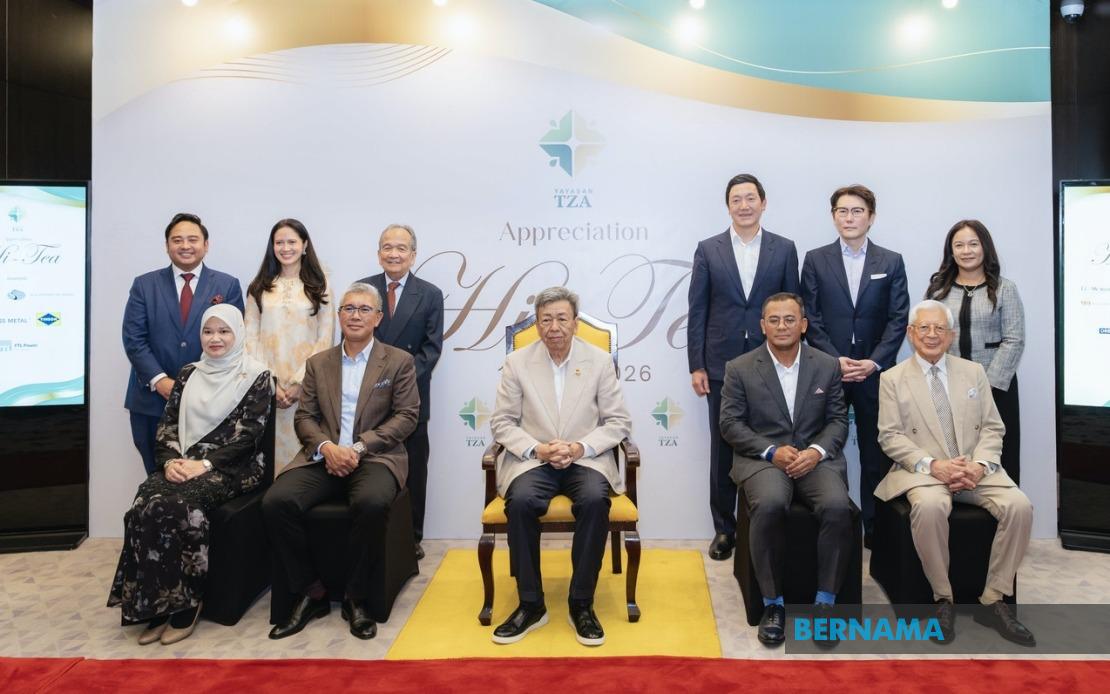
Sultan Sharafuddin Idris Shah, the Sultan of Selangor, lent his royal patronage to the Yayasan TZA (YTZA) Appreciation Hi-Tea Ceremony on June 18, underlining the monarchy's continued commitment to educational advancement and community welfare in the state. The presence of the constitutional ruler, together with senior government officials including Selangor Menteri Besar Datuk Seri Amirudin Shari and Education Minister Fadhlina Sidek, signalled the importance placed on the foundation's work in addressing socioeconomic disparities through targeted intervention programmes.
Tengku Datuk Seri Zafrul Abdul Aziz, serving as the foundation's advisor, articulated during the ceremony a vision that extends beyond immediate charitable relief towards sustainable empowerment. His remarks emphasised that YTZA's multifaceted approach—spanning academic support, environmental sustainability, community engagement, and cultural celebrations—aims to construct a framework for lasting social mobility rather than temporary assistance. This philosophy reflects a growing recognition within Malaysia's philanthropic sector that effective charity must combine short-term aid with long-term capability building, particularly for marginalised populations.
The ACE SPM programme emerged as YTZA's flagship educational initiative, specifically targeting Sijil Pelajaran Malaysia candidates from B40 households who face systemic barriers to academic excellence. The 2025 cohort demonstrated impressive scalability, with the in-person component reaching 467 students across 10 Selangor schools, while digital extensions of the programme touched over 4,000 learners. For Malaysian educators and policymakers, such hybrid delivery models illustrate how technology can democratise access to supplementary education—a critical consideration as rural-urban and socioeconomic achievement gaps persist despite decades of reform efforts.
The foundation's expansion trajectory carries particular relevance for Southeast Asia's education landscape, where many nations struggle with similar disparities between privileged and disadvantaged student populations. By demonstrating that B40 students can achieve competitive academic standards when provided adequate resources and mentorship, YTZA contributes evidence to an ongoing regional debate about meritocracy and systemic inequality. The programme's success suggests that resource constraints rather than ability deficits often explain achievement gaps, a finding with profound implications for education policy across the region.
Corporate sponsorship proved instrumental in sustaining YTZA's operations, as evidenced by the RM1 million contribution from Kuok Brothers Sdn Bhd and RM300,000 from YTL Power International Berhad—both announced during the royal ceremony. These donations reflect a broader shift among Malaysian corporations towards structured corporate social responsibility aligned with national development priorities. For multinational and domestic corporations operating in Malaysia, education-focused giving has become strategically important, addressing both talent pipeline concerns and legitimate social responsibility mandates.
The launch of Larian KITA@Klang, scheduled for October 10 in conjunction with the Sultan of Selangor's Silver Jubilee celebration, represents the foundation's fourth iteration of its community fun run concept. This event typifies a contemporary approach to social engagement that seamlessly blends charitable objectives with celebratory occasions, fostering community cohesion whilst maintaining focus on inclusive participation. The strategic timing alongside the royal jubilee creates symbolic alignment between grassroots community initiatives and institutional monarchy, strengthening social bonds that transcend traditional hierarchical frameworks.
Larian KITA's emphasis on inclusivity and cultural celebration addresses a subtle but significant challenge within Malaysian society: the psychological and social distance that can separate privileged and underprivileged communities. By creating spaces where diverse socioeconomic groups share experiences around physical activity, local cuisine, and cultural landmarks, such initiatives subtly challenge structural divisions that education and welfare systems alone cannot address. The Klang route selection, with its rich multicultural heritage and culinary traditions, ensures the event itself becomes a statement about Malaysia's plural identity and shared civic space.
Tengku Zafrul's explicit acknowledgment of sponsors, donors, volunteers, and partners underscored a fundamental reality of contemporary philanthropic work: individual foundations cannot scale impact without ecosystem support. This dependency on multiple stakeholders—government agencies, corporations, civil society volunteers, and affected communities themselves—mirrors international best practices in development work. For Malaysian readers, understanding this networked approach to social change offers perspective on why isolated charitable efforts, however well-intentioned, often fail to create systemic change.
The royal participation carries constitutional and symbolic weight within Malaysia's governance framework. While Selangor's Sultan exercises ceremonial rather than executive authority over education policy, his visible backing of YTZA's initiatives sends a powerful social signal about which causes deserve public legitimacy and sustained attention. In Malaysian culture, royal patronage functions as a form of social validation that extends beyond the specific event, potentially influencing corporate giving patterns, volunteer recruitment, and community participation in subsequent YTZA programming.
For stakeholders in Malaysia's education and social development sectors, YTZA's growth trajectory offers important lessons about sustainability and replication. The foundation's ability to expand from single-location programmes to multi-school, multi-state operations whilst maintaining educational quality suggests that scalability need not compromise impact. This model may provide a template for other foundations seeking to address education gaps in underserved communities across Malaysia and potentially throughout Southeast Asia, where similar socioeconomic challenges manifest across borders.
The emphasis on empowering future generations through education directly supports Malaysia's long-term economic competitiveness and social stability. As the country navigates the Fourth Industrial Revolution and increasingly knowledge-intensive job markets, ensuring that talented students from B40 backgrounds access quality academic preparation becomes a matter of national economic interest rather than mere charity. YTZA's work thus intersects with Malaysia's broader development aspirations, making the foundation's success relevant not only to immediate beneficiaries but to the nation's trajectory.
Looking forward, the foundation's stated commitment to expanding reach suggests ambitious growth plans that will require continued corporate and philanthropic support. The positive reception at the royal ceremony, combined with substantial new funding commitments, positions YTZA to potentially influence education outcomes for thousands of additional students. For Malaysian society more broadly, such targeted interventions addressing systemic inequality through education represent crucial components of the broader national project of creating truly inclusive development and building social cohesion that transcends class boundaries.