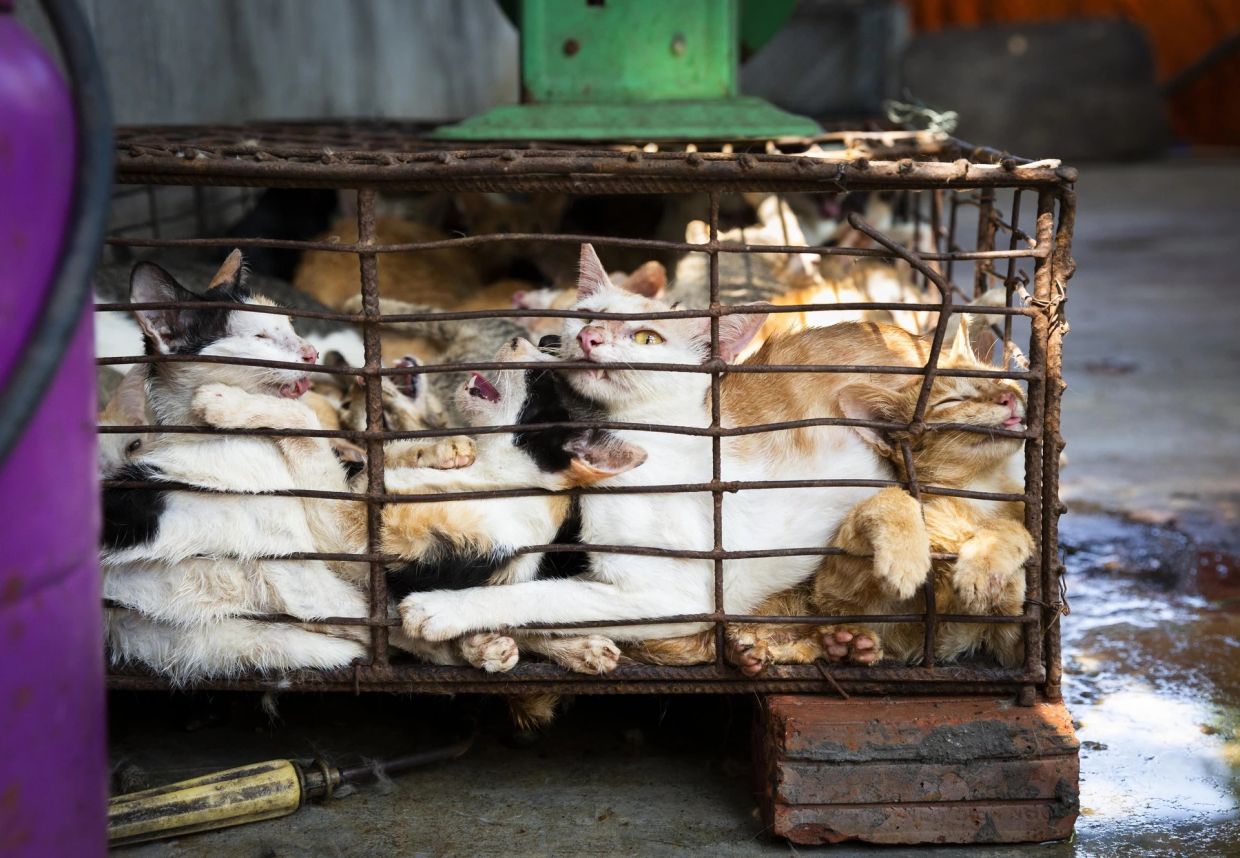
A clandestine market in cat meat continues to thrive across Indochina, driven largely by deeply embedded superstitions linking feline consumption to fortune and health benefits rather than dietary necessity. Animal welfare organisations document the systematic theft, trafficking and slaughter of cats throughout the region, with Vietnam bearing the heaviest toll. According to international welfare group FOUR PAWS, approximately one million cats meet this fate annually in Vietnam alone, whilst smaller but still significant numbers disappear in remote communities across Cambodia and Laos, predominantly for their purported medicinal properties.
The persistence of this trade reflects a complex interplay of cultural beliefs that have endured despite decades of government awareness campaigns and international activism. In Vietnam specifically, certain consumer segments maintain the conviction that consuming cat meat during particular lunar calendar periods can reverse misfortune or attract positive luck, whilst others subscribe to traditional medicine claims attributing health benefits to feline flesh. Such convictions operate independently of any rational dietary need, with cat meat functioning as a niche commodity driven purely by superstitious demand rather than forming any substantial component of regional cuisine.
Jon Rosen Bennett, who directs animal welfare policy for FOUR PAWS addressing canine and feline issues, emphasises that consumption patterns reflect cultural tradition rather than nutritional necessity. He notes that historical Southeast Asian associations have embedded cat meat within folk beliefs about luck and fortune, creating a persistent consumer base despite the trade's controversial nature. This cultural dimension distinguishes the cat meat market from conventional livestock farming, rendering conventional food security arguments irrelevant to the phenomenon.
The resilience of this underground economy defies the apparent absence of legal frameworks criminalising the practice. Vietnam notably maintains no nationwide legislation banning the slaughter, sale or consumption of cat meat, creating a regulatory vacuum that permits the trade to operate with minimal official obstruction. This legal ambiguity contrasts sharply with growing popular sentiment opposing the practice, suggesting a significant gap between public values and legislative action at the national level.
Recent law enforcement action in Ho Chi Minh City illuminated the scale and organisation of this illicit market. Local police disrupted a smuggling operation spanning multiple provinces, apprehending nine individuals responsible for systematic cat theft and trafficking over a three-year period. The operation resulted in the rescue of approximately 500 cats awaiting slaughter, offering a rare glimpse into supply chains that typically operate beyond official scrutiny. Such seizures remain exceptional rather than routine, indicating that enforcement capacity or political will remains limited.
Pricing data gathered by FOUR PAWS during 2020 investigations reveals the commercial structure underlying this market. Live cats commanded prices between USD 6 and USD 8 per kilogramme, whilst dressed meat commanded USD 10 to USD 12 per kilogramme. Black cats attracted premium pricing, reflecting consumer beliefs in their enhanced luck-bringing or medicinal potency compared to other coloured animals. These price points, whilst modest by international standards, represent significant value within rural economies, providing financial incentive for organised theft and trafficking networks.
A profound disconnect exists between consumer perception and documented public opinion across the region. Surveys cited by FOUR PAWS indicate that almost 90 percent of Vietnamese respondents would support formal prohibition of both dog and cat meat trading, whilst more than 90 percent explicitly reject characterisations of the practice as authentically Vietnamese cultural heritage. This overwhelming opposition suggests that the trade's persistence reflects minority demand rather than broad-based cultural attachment, potentially indicating generational shifts or urban-rural divides in consumption patterns and values.
Beyond immediate animal welfare concerns, the trade poses significant public health risks through uncontrolled animal movement across borders and between regions. The mass, undocumented trafficking of cats facilitates potential transmission of rabies and other zoonotic pathogens capable of crossing species barriers and threatening human populations. Such epidemiological dimensions render this not merely an animal welfare issue but a genuine public health governance problem, particularly given Southeast Asia's vulnerability to emerging infectious diseases and the region's porous internal borders.
The cat meat trade represents only a portion of a broader canine and feline consumption phenomenon affecting Southeast Asia. Animal welfare estimates document over 10 million dogs slaughtered annually for meat across the region, though dog meat consumption similarly contradicts demonstrated public opposition and increasingly attracts criticism even in communities with historical consumption traditions. This dual market reflects shared superstitious and traditional foundations, suggesting that interventions addressing one species require simultaneous attention to both.
International welfare organisations have begun implementing technological and community-based intervention strategies. FOUR PAWS launched an online public reporting platform in Cambodia during June, enabling citizens to document and report suspected trafficking activities. Such mechanisms attempt to harness growing public opposition into actionable intelligence, potentially compensating for weak government enforcement by mobilising community surveillance and awareness. The effectiveness of such grassroots approaches remains unproven at scale but represents recognition that top-down regulation alone has failed to arrest the trade.
The persistence of this market reflects broader challenges in regulating informal economies rooted in traditional belief systems. Unlike conventional animal agriculture, which responds to commercial logic and food security rationales, the cat meat trade operates through cultural and superstitious demand channels resistant to conventional economic or public health argumentation. Interventions must therefore target underlying belief systems rather than merely supply chains, requiring sustained educational campaigns and generational attitude shifts towards companion animals and traditional medicine practices.
For Malaysia and other Southeast Asian nations, this trade pattern offers cautionary insights regarding informal economy regulation and cross-border wildlife trafficking generally. The absence of binding regional agreements criminalising the practice permits individual nations to pursue uncoordinated responses, creating jurisdictional gaps exploited by trafficking networks. Strengthening regional cooperation frameworks addressing companion animal welfare could establish baseline standards across Indochina whilst building enforcement capacity across borders, preventing the displacement of trafficking operations to neighbouring jurisdictions.

