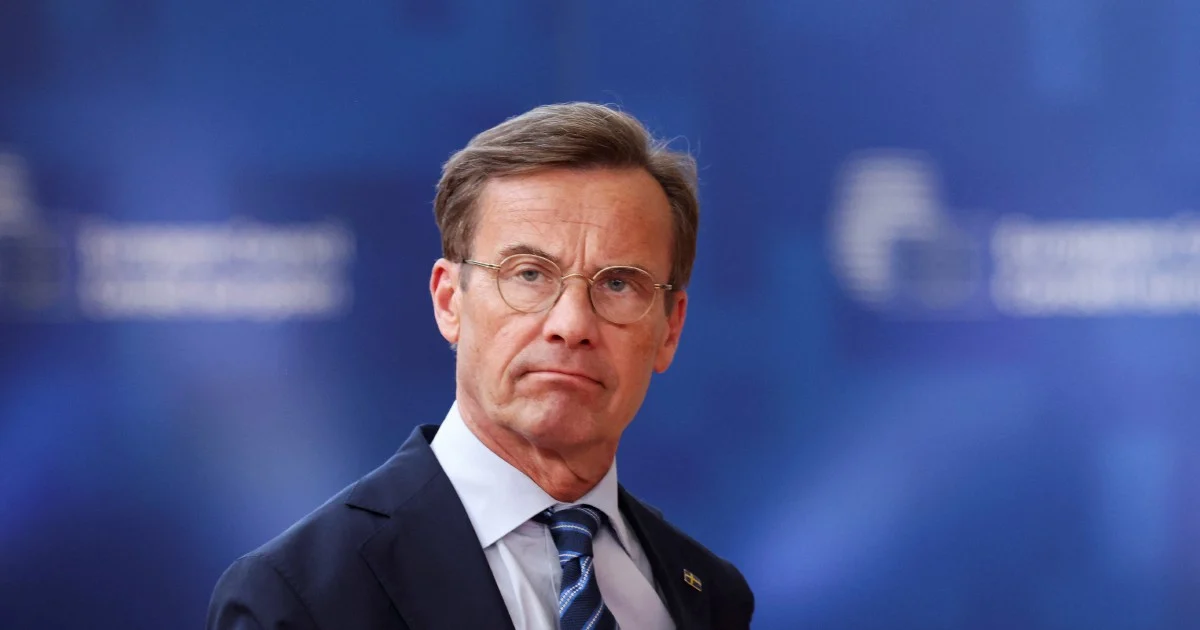
Swedish Prime Minister Ulf Kristersson has developed a reputation for weathering political turbulence with remarkable resilience, repeatedly emerging from scandal-plagued situations with minimal political damage. As his government enters the final three months before legislative elections, Kristersson finds himself confronting fresh corruption allegations that add to an already crowded catalogue of controversies spanning his entire four-year administration. The timing presents a particular challenge, coming when Swedish voters should be focused on evaluating the government's record and policy platform ahead of their ballots.
Throughout his tenure leading Sweden's centre-right coalition government, Kristersson has demonstrated an almost consistent ability to deflect criticism and survive situations that might have proved fatal to other politicians. Each crisis—whether involving ministerial misconduct, administrative impropriety, or ethical breaches—has been absorbed into the political landscape without triggering the kind of systemic pressure that typically forces leadership changes in Nordic democracies. This pattern raises important questions about institutional accountability and the durability of political consequences in Swedish governance.
The current allegations targeting Kristersson arrive at a particularly delicate moment in the electoral calendar. Three months represents a compressed timeframe in which to manage new damaging revelations while simultaneously prosecuting a government campaign. Swedish voters are accustomed to robust debate about political ethics, particularly in a region where standards of transparency and accountability are deeply embedded in political culture. The emergence of corruption charges, therefore, carries particular weight in the Swedish context, where institutional integrity and clean governance have traditionally served as pillars of public trust.
For Malaysian and broader Southeast Asian observers, Kristersson's experience offers an intriguing counterpoint to political accountability frameworks in the region. While Malaysia has witnessed intense political turbulence when senior leaders faced corruption allegations—with consequences ranging from electoral defeat to legal proceedings—the Swedish case demonstrates that even in established democracies with strong institutions, political resilience can sometimes outweigh scandal. The mechanisms differ substantially between systems, but the underlying tension between institutional checks and individual political survival remains relevant across contexts.
Kristersson's government presides over a coalition that has pursued notably strict immigration policies, representing a significant shift from Sweden's historically liberal approach to refugee and migration questions. This ideological repositioning, alongside economic policy priorities, has defined the administration's agenda and constituted its central appeal to voters. Against this backdrop, corruption allegations targeting leadership introduce a complicating factor that threatens to overshadow the substantive policy debates that the government might prefer to dominate pre-election discourse.
The pattern of scandals characterising Kristersson's tenure reflects broader complexities within Swedish coalition politics. Managing a multi-party government requires careful balance and compromise, creating dynamics where individual ministers or senior officials may operate in ways that generate controversy. Yet the fact that such incidents have accumulated without precipitating major structural changes suggests either that the coalition partners perceive mutual benefit in stability, or that Kristersson's political capital remains sufficient to absorb criticism that might otherwise destabilise the administration.
Swedish media and civil society institutions have traditionally served as robust monitors of governmental conduct, maintaining pressure on leaders to maintain high ethical standards. The emergence of new corruption allegations indicates that these monitoring mechanisms continue functioning, detecting and publicising concerns about potential wrongdoing. How effectively these institutions can translate their reporting into electoral consequences, however, represents a separate question—one that Swedish voters will effectively answer in the coming months.
The international dimension adds additional complexity to Kristersson's political situation. Sweden's recent NATO membership represents a cornerstone achievement of his government, fundamentally altering the country's security posture after decades of military non-alignment. This strategic accomplishment carries substantial weight in the Nordic geopolitical context and may serve to moderate electoral punishment for domestic scandals among voters prioritising national security considerations. The intersection of foreign policy success and domestic ethical concerns creates a layered environment for pre-election evaluation.
For the Swedish electorate, the upcoming legislative contest will effectively serve as a referendum on whether Kristersson and his coalition partners merit continued confidence, or whether the accumulated pattern of controversies tips the balance toward alternative leadership. The compression of this decision into a three-month window, coinciding with fresh allegations, creates particular pressure on voters to crystallise judgments about institutional fitness and political character. Malaysia's experience with electoral accountability for corruption allegations suggests that voters in different contexts weigh such factors with varying intensity, reflecting distinct political cultures and institutional expectations.
As Sweden approaches its electoral moment, the broader question animating Kristersson's political career crystallises starkly: can accumulated scandals, even when individually absorbed without catastrophic consequence, ultimately compound into decisive electoral liability? The answer will provide valuable data about political resilience, accountability mechanisms, and voter preferences in contemporary Nordic democracy—insights applicable far beyond Sweden's borders to regions grappling with similar tensions between scandal and governance.

