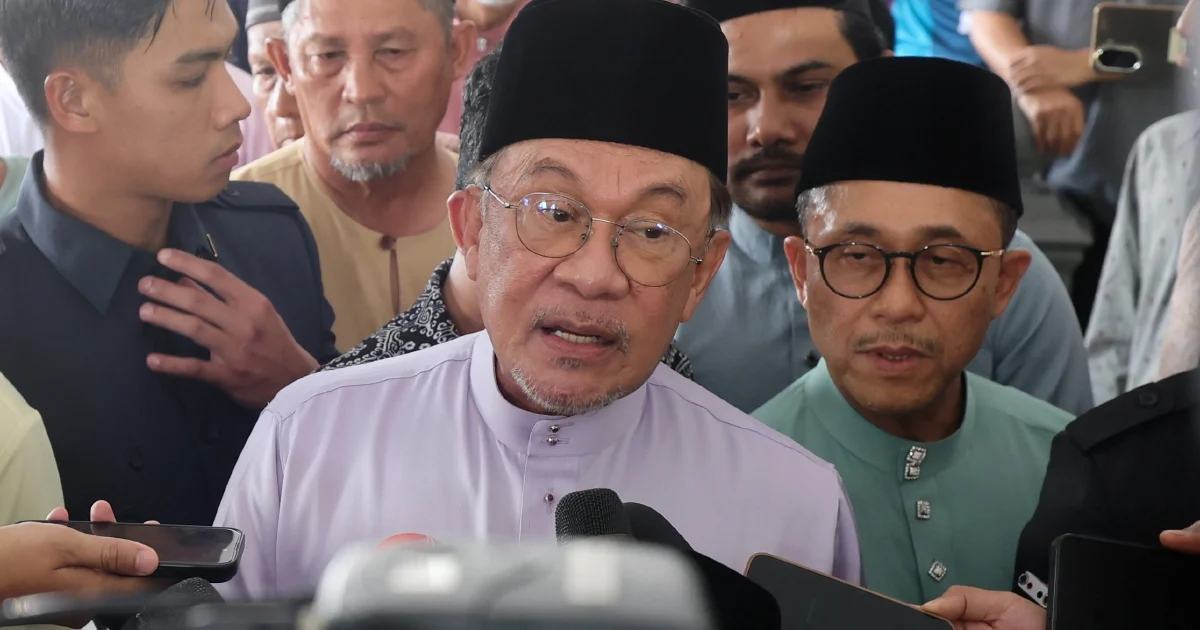
Prime Minister Datuk Seri Anwar Ibrahim has offered assurances that initiatives aimed at enhancing the standing and capacity of Malaysia's Syariah court system will pose no threat to the religious rights of the country's non-Muslim population. Speaking in Putrajaya, the premier underscored that institutional improvements within the Islamic judicial framework would operate entirely within constitutional bounds and would not diminish the protections afforded to Christians, Buddhists, Hindus, and adherents of other faiths to worship freely according to their beliefs.
The statement arrives amid broader discussions in Malaysia concerning the role and authority of religious institutions in the nation's legal architecture. Over recent months, various proposals have circulated regarding ways to improve the efficiency, consistency, and standing of Syariah courts, which primarily handle matters of personal law for Muslims including marriage, divorce, inheritance, and religious offences. These discussions have naturally prompted scrutiny and concern from segments of Malaysian society worried about potential constitutional implications.
The Prime Minister's remarks reflect a delicate balancing act inherent in Malaysian governance. The Federal Constitution explicitly recognises Islam as the religion of the federation while simultaneously guaranteeing Article 11, which protects freedom of religion for all citizens. This dual framework has defined Malaysian public life since independence, establishing what scholars often describe as an inclusive constitutional settlement where religious pluralism coexists with Islamic institutional prominence. Anwar Ibrahim's reassurance essentially reiterates that governmental intentions remain aligned with this constitutional compact.
Practical considerations underpin these discussions. Malaysia's Syariah court system, which operates in all thirteen states, handles tens of thousands of cases annually affecting millions of Muslim Malaysians. Court officials and administrators have periodically highlighted challenges including case backlogs, resource constraints, and variable quality of judgments across different jurisdictions. Proposals to upgrade the system's infrastructure, training standards, and technological capacity represent attempts to address these operational realities without fundamentally altering the constitutional order.
For non-Muslim communities in Malaysia, religious liberty remains a matter of significant concern. While Malaysia's constitution provides formal protections, practical challenges occasionally arise regarding permits for places of worship, restrictions on religious propagation, and disputes over property and internal religious governance. The Prime Minister's explicit commitment to preserving these freedoms carries particular weight given his political positioning as leader of a coalition government that includes parties with differing perspectives on secularism and religious governance.
The timing of this statement also merits consideration within Malaysia's current political trajectory. The Pakatan Harapan-led government has positioned itself as a force for institutional reform and democratic strengthening. Amid efforts to restore judicial independence, strengthen checks and balances, and rebuild institutional credibility following the previous administration, initiatives affecting any component of the judiciary naturally attract heightened scrutiny. The Prime Minister's emphasis on constitutional fidelity appears designed to maintain public confidence across diverse communities that institutional reforms serve genuine efficiency goals rather than ideological reorganisation.
Regionally, Malaysia's approach to managing religious diversity within an Islamic institutional framework commands attention from other Southeast Asian nations grappling with similar constitutional questions. In pluralistic societies where one faith holds particular constitutional status, Malaysia's experience offers both lessons and cautionary notes about maintaining religious harmony while accommodating majority-religion institutional development. The region hosts numerous Muslim-majority democracies navigating comparable challenges, making the Malaysian model's evolution of considerable interest.
The opposition to strengthening Syariah courts, where it exists, often stems less from disagreement with improving judicial efficiency than from concerns about institutional scope creep or from preferences for unified secular legal frameworks. Some observers worry that enhanced Syariah court standing might eventually expand into areas traditionally handled by civil courts, whilst others advocate for complete secularisation of law. The Prime Minister's statement appears calculated to address these anxieties by emphasising that reform aims at better serving Muslim constituents without encroaching on spheres beyond Islamic personal law.
Non-Muslim political leaders and civil society organisations will likely scrutinise the substance of any specific proposals, seeking clarity on the precise scope and mechanisms of institutional elevation. Generic reassurances, whilst politically important, ultimately require concrete legislative language and institutional safeguards to meaningfully address substantive concerns. The government's willingness to engage these constituencies during the implementation phase may prove crucial to maintaining the broad consensus that religious stability depends upon constitutional faithfulness.
Moving forward, the credibility of the Prime Minister's commitment will depend substantially on how proposed reforms unfold administratively and legislatively. Malaysian experience suggests that successful navigation of religious institutional matters requires sustained attention to maintaining the constitutional equilibrium, transparent governance processes, and genuine consultation across community lines. Whether the current administration can deliver comprehensive Syariah court improvements whilst simultaneously reinforcing non-Muslim protections will significantly influence religious relations across the federation for years ahead.

