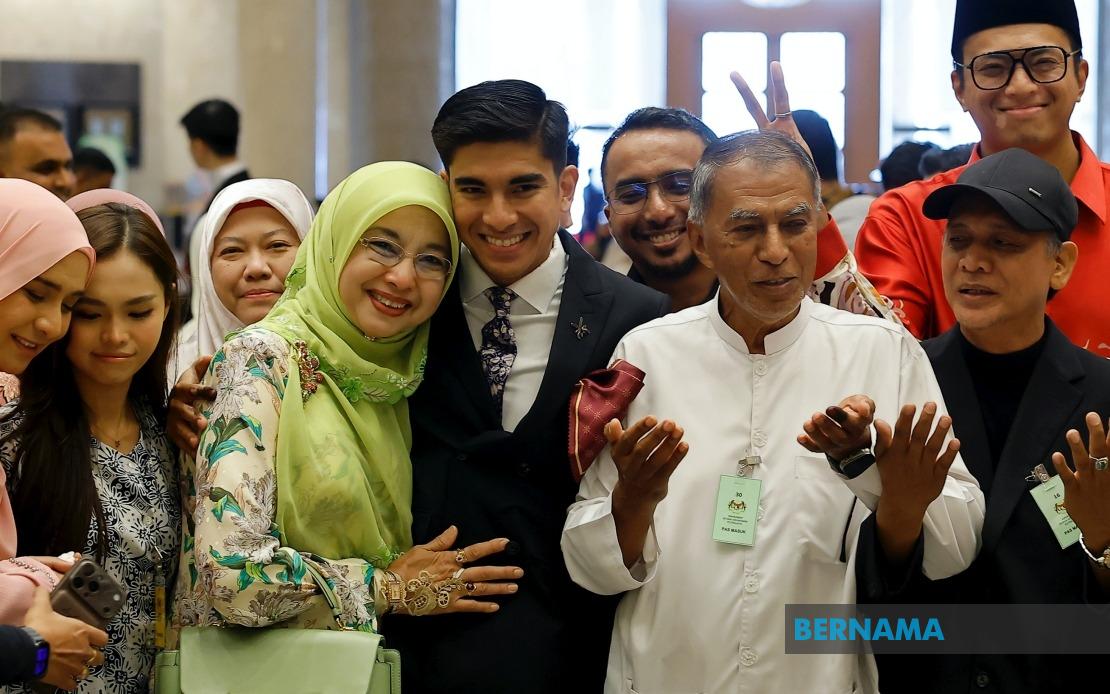
Syed Saddiq Syed Abdul Rahman, the Muar Member of Parliament, has emerged victorious from a protracted six-year legal battle after the Federal Court upheld his acquittal on all charges, marking a significant moment for the politician and his family. The 33-year-old former youth and sports minister performed a sujud syukur with his family following the court's decision at the Palace of Justice in Putrajaya on July 13, celebrating what he characterised as a triumph of truth and righteousness in Malaysia's justice system.
The charges against Syed Saddiq centred on four counts involving abetting criminal breach of trust, misappropriation of property, and money laundering, all relating to funds belonging to Angkatan Bersatu Anak Muda (Armada), a youth-focused political organisation. The protracted proceedings represented one of the more closely watched legal cases in Malaysian politics in recent years, particularly given Syed Saddiq's prominence as a younger generation political figure who has been vocal on governance matters.
In his remarks to journalists at the Palace of Justice, Syed Saddiq emphasised that his ordeal had only strengthened his conviction that justice operates through institutional channels. He reflected on the personal toll the six-year process had exacted, extending beyond his individual circumstances to impact his extended family network, political associates, and the broader political landscape of the nation. His comments underscored how high-profile legal cases involving politicians can ripple through Malaysian society, affecting not merely the accused but their circles of support and influence.
The acquittal carries particular weight given the scrutiny surrounding financial management within political organisations in Malaysia. The case touched on sensitive issues of party fund governance and personal integrity, matters that have become increasingly important to Malaysian voters concerned with transparency and accountability in political life. Syed Saddiq's full exoneration suggests the court found insufficient evidence to support the prosecution's allegations, a verdict that may have implications for how such cases are prosecuted in future.
Syed Saddiq articulated a philosophical perspective on his experience, noting that individuals should never abandon their principles or integrity even when facing seemingly insurmountable legal obstacles. He encouraged others to maintain faith in institutional frameworks and divine guidance during periods of adversity. This messaging resonates within Malaysian political discourse, where questions of moral courage and steadfastness frequently feature in public narratives about leadership and character.
Looking forward, Syed Saddiq indicated his intention to step back temporarily from active political engagement to prioritise family matters and personal affairs. He emphasised that while he remains affiliated with MUDA (Majlis Amanah Rakyat), the party he co-founded, he wishes to defer decisions regarding his broader political trajectory. This measured approach differs from the triumphalism some acquitted political figures display, suggesting a more introspective stance toward his vindication.
The MP revealed that his parents have given approval for him to proceed with wedding plans, indicating that normalising family life constitutes a priority following the extended legal proceedings. This personal dimension humanises what might otherwise remain a purely political or judicial matter, reminding observers that legal cases impose genuine human costs beyond their courtroom dimensions. His commitment to attending Parliament despite these personal considerations demonstrates an adherence to his parliamentary obligations.
Datuk Hisyam Teh Poh Teik, Syed Saddiq's lead counsel, expressed appreciation toward the judicial panel and acknowledged the defendant's faith in his legal representation throughout the process. The legal team's role in securing acquittal across all charges underscores the importance of robust defence counsel in Malaysian criminal proceedings, particularly in high-profile cases where political dimensions intersect with legal processes.
The prosecution's response, conveyed through Deputy Public Prosecutor Datuk Wan Shaharuddin Wan Ladin, indicated acceptance of the court's decision while leaving open the possibility of a review application. This measured acknowledgement reflects prosecutorial protocol in Malaysia, where the Attorney General's chambers must determine whether to pursue further remedies available under the legal system. The possibility of a review application, though not yet decided, means the legal dimensions of this case may not be entirely concluded.
The broader implications of Syed Saddiq's acquittal extend to Malaysian politics' generational dynamics. As a younger political figure who has articulated reformist positions, his vindication may influence how younger politicians navigate Malaysia's institutional environments. The case also speaks to the intersection of party funding regulations and personal liability, an area where Malaysian law continues to evolve as political organisations face scrutiny regarding financial transparency.
For Southeast Asian observers, the case illustrates how Malaysia's judiciary handles high-profile political cases, offering insights into institutional independence and the rule of law. The Federal Court's decision to uphold the acquittal, presumably after reviewing lower court proceedings, demonstrates appellate scrutiny of criminal convictions and the availability of multiple judicial levels to address potentially wrongful prosecutions. This multi-tiered system, while sometimes lengthy and burdensome, provides recourse mechanisms that some regional jurisdictions lack.
Syed Saddiq's reference to the importance of judicial independence as foundational to Malaysia's strength addresses contemporary concerns about institutional autonomy in the region. His stated commitment to defending these institutions, emerging from his personal experience navigating the legal system, positions him as a potential advocate for judicial reform and strengthening of rule of law principles. This advocacy role may define his political trajectory as he eventually returns to more active participation.
The conclusion of this legal ordeal creates space for Syed Saddiq to reassess his political identity and future direction. Whether he eventually assumes a higher political profile or settles into his current parliamentary role may depend on how he processes the six-year experience and evaluates his institutional commitments. His measured approach to his vindication suggests a politician contemplating carefully how to move forward, rather than rushing to capitalise on favourable judicial outcomes.

