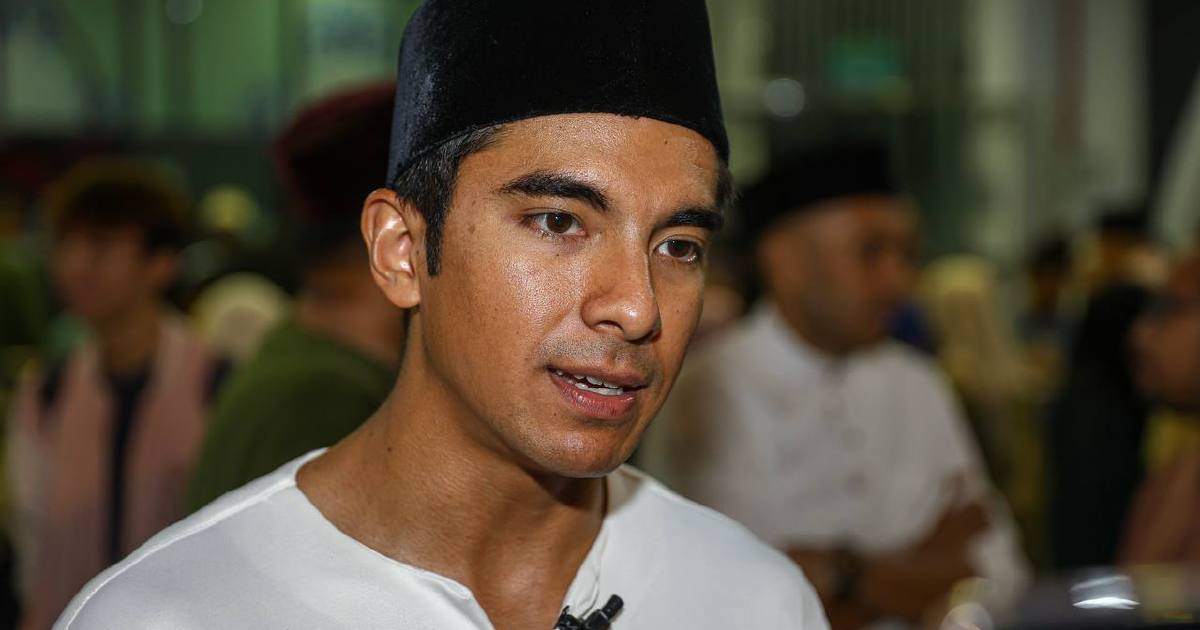
Former Youth and Sports Minister Syed Saddiq Abdulrahman has adopted a position of spiritual resignation ahead of an imminent Federal Court decision that could substantially alter the trajectory of his political career. As the nation's highest judicial body prepares to pronounce its verdict, Syed Saddiq has publicly stated his willingness to accept whatever outcome emerges, signalling a pivot toward acceptance rather than continued contestation of the legal proceedings.
The case represents a significant juncture not merely for Syed Saddiq personally, but for the broader landscape of Malaysian politics and particularly for Amanah, the political party he has represented in parliament. His legal troubles have cast a shadow over the Islamic and progressive-leaning coalition partner's internal dynamics, especially given his previous role as a prominent voice within the party's younger constituencies and his former ministerial portfolio under the Pakatan Harapan administration.
Syed Saddiq's invocation of divine will reflects a common rhetorical strategy among Malaysian political figures navigating uncertain judicial outcomes. This language of spiritual acceptance, while deeply rooted in Islamic tradition and cultural practice, also serves a pragmatic communicative function within the Malaysian political sphere—it demonstrates humility before the courts while signalling to supporters that he remains resolute in conviction regardless of the legal determination to come.
The Federal Court's impending decision carries implications that extend beyond individual consequences for Syed Saddiq. His situation has become intertwined with broader questions about the accountability of political figures, the application of campaign finance regulations, and the boundaries between legitimate political activity and legal transgression. These questions are particularly pertinent in Malaysia's context, where allegations of financial impropriety have featured prominently in recent years across multiple political parties and levels of government.
Political observers have noted that Syed Saddiq's case unfolds against a backdrop of shifting coalitions and recalibrated political alignments in Malaysia. His position within Amanah and within the broader opposition coalition has arguably become more precarious with each stage of legal proceedings, as party leaders must balance loyalty to a young prominent member against institutional concerns about associations with legal difficulties.
The timeline of Syed Saddiq's legal challenges has been extended and complex, involving multiple procedural stages and submissions before the court. His approach of deferring to judicial determination rather than mounting aggressive public campaigns against the charges represents a notable strategic choice, one that stands in contrast to the defensive postures adopted by certain other Malaysian political figures facing comparable legal exposure.
Within Amanah's party structure, Syed Saddiq remains a figure of consequence despite his legal predicament. His age—he is among the younger generation of Malaysian parliamentarians—and his previous governmental experience as Youth and Sports Minister positioned him as a potential leadership successor within the party. A Federal Court ruling that substantially restricts his political participation could therefore reshape internal party dynamics and leadership succession planning within Amanah.
The case also reflects Malaysia's ongoing struggle to establish clear, consistently applied standards for political finance and accountability. International observers and local civil society organisations have long highlighted concerns about transparency in political funding and the need for robust mechanisms to detect and prevent financial irregularities. Syed Saddiq's case, regardless of its outcome, will contribute to the evidentiary record shaping public understanding of how such matters are adjudicated in Malaysia's legal system.
For Malaysian youth interested in political engagement and public service, Syed Saddiq's trajectory offers a cautionary case study. His rise from activist to minister to defendant has been closely watched by younger citizens evaluating their own paths toward political participation. The Federal Court's determination will either vindicate his position or confirm the gravity of the allegations—in either scenario, it will send signals about the costs and consequences of political involvement for emerging leaders.
The precise nature of the charges and the legal arguments traversed during proceedings have been subject to considerable discussion within Malaysian legal circles and among political commentators. The Federal Court's reasoning, once delivered, will likely inform future interpretations of relevant statutory provisions and establish precedent for comparable situations.
Syed Saddiq's public posture of acceptance and spiritual trust, though genuine in expression, also reflects the limited agency individuals possess once their matters reach the apex of the judicial hierarchy. The Federal Court's determination will be final and binding, leaving no further appellate avenues. This reality may partly explain his recourse to language emphasising acceptance of divine will—it represents a psychological and spiritual accommodation to circumstances largely beyond his direct control.
As Malaysia awaits this judgment, political analysts are preparing assessments of potential scenarios and their ramifications for parliamentary composition, party alignments, and the broader evolution of Malaysian political leadership. The ruling will inevitably prompt reflection on themes of accountability, generational change, and the intersection of law and politics that continue to define contemporary Malaysian discourse.

