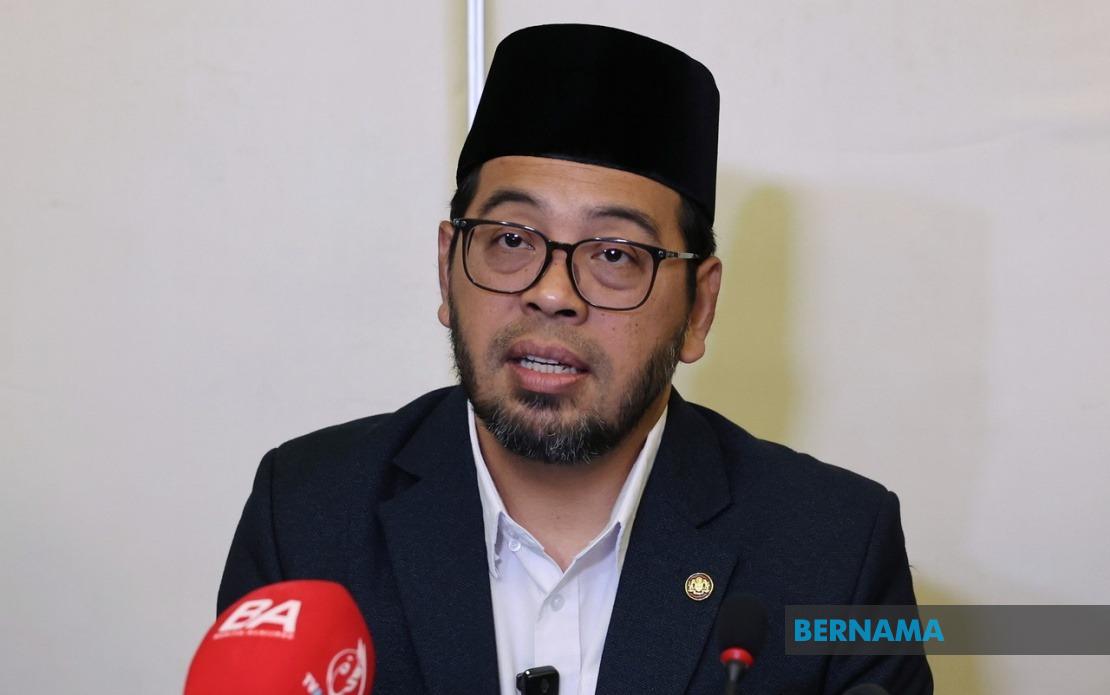
Tabung Haji has achieved a significantly improved operational and financial standing following an intensive institutional rehabilitation programme implemented since late 2022, according to Minister in the Prime Minister's Department (Religious Affairs) Dr Zulkifli Hasan. Speaking during a special Parliament sitting, Zulkifli outlined how the MADANI Government had prioritised restoring the pilgrimage fund to stability before releasing its controversial Royal Commission of Inquiry report to the public in July.
When the current administration assumed office at the tail end of 2022, the nation's primary haj management institution faced substantial challenges inherited from previous years. Legacy assets accumulated since 2018 had become increasingly problematic and uncompetitive, creating significant drag on the organisation's operational capacity and financial performance. Rather than rushing to accountability measures, the government chose to grant Tabung Haji sufficient operational space to undergo comprehensive internal restructuring and remedial action. This strategic decision reflected confidence in the institution's leadership and a commitment to restoration before public scrutiny.
The recovery trajectory has been marked by several notable achievements demonstrating the effectiveness of management intervention. Tabung Haji secured five World's Best Haj Management Awards across four consecutive years, a distinction that validates the quality of contemporary governance and operational competence. These international recognitions underscore a fundamental principle that Zulkifli emphasised: capable, trustworthy leadership with demonstrated integrity can successfully guide even troubled institutions toward excellence. The awards carry particular significance for Malaysian Muslims given the sacred nature of pilgrimage fund management and the need to rebuild confidence among depositors.
On 29 July, the Cabinet unanimously approved both the public release of the 211-page RCI report and the decision to table it for parliamentary debate through an exceptional sitting. This marked a watershed moment in institutional accountability. The comprehensive inquiry, chaired by former Chief Justice Tun Mohamed Raus Sharif, had examined governance weaknesses spanning 2014 to 2020 and proposed 25 specific improvements. By late July, the institution had already implemented approximately 75 per cent of these recommendations, with remaining measures undergoing active execution. This rapid implementation rate reflects serious institutional commitment to addressing identified deficiencies and forestalling repetition of past problems.
The government's response to RCI findings has extended beyond administrative reform into criminal investigation. The Malaysian Anti-Corruption Commission and police commenced formal inquiries immediately following the Cabinet decision, with multiple senior figures linked to misappropriation subsequently detained. Zulkifli characterised this enforcement action as evidence of unwavering governmental and institutional determination that no individual would escape accountability for abuse of power or criminal breach of trust involving pilgrim assets. The approach aligns with a royal directive from His Majesty Sultan Ibrahim, King of Malaysia, emphasising comprehensive, transparent investigation conducted without compromise until every aspect of suspected wrongdoing receives thorough examination.
The minister's remarks reflected recognition of the profound trust deficit that emerges when custodians of religious institutional funds fail in their fiduciary responsibilities. Tabung Haji's depositors represent a cross-section of Malaysian society: parents systematically saving to facilitate their children's pilgrimage, educators, small-scale traders, pensioners, agricultural workers, fishermen, rubber estate labourers, and taxi drivers. These individuals do not pursue Tabung Haji accounts for speculative investment returns but specifically as vehicles facilitating the sacred obligation of the haj pilgrimage. The spiritual and emotional dimension of deposited funds distinguishes Tabung Haji fundamentally from commercial banking institutions.
This characterisation of depositor motivation underpinned Zulkifli's principled stance rejecting concealment or minimisation of institutional failures. When such profound trust becomes compromised, he argued, authorities cannot retreat behind financial metrics, suppress inconvenient information, or permit politically motivated narratives to override the legitimate interests of depositors and the broader Muslim community. Accountability in this context transcends conventional corporate governance discourse and enters the realm of religious obligation and social responsibility. The government's decision to subject the institution to public scrutiny despite short-term political risks demonstrated alignment with these principles.
Governance framework going forward must be anchored to principles of depositor confidence and institutional trustworthiness. Every decision involving Tabung Haji requires rigorous evaluation against these benchmarks. Similarly, any allegations of trust violation demand thorough investigation designed to establish factual truth, rectify operational vulnerabilities, and establish safeguards preventing recurrence. This investigative approach, which motivated the RCI's establishment in the first place, represents the logical extension of accountability across administrative, parliamentary, and judicial domains.
The RCI process itself embodied these principles through institutional design. Appointed on 20 January 2022, the inquiry panel comprised five individuals with established expertise spanning public administration, banking, finance, Islamic jurisprudence, and accounting. The inquiry chair's status as a former Chief Justice ensured judicial credibility and independence. When the report reached His Majesty on 30 August 2022, it reflected exhaustive examination of governance weaknesses, misappropriated assets, and systemic deficiencies. The subsequent delay in public release permitted the institution to demonstrate capacity for genuine reform before subjecting itself to parliamentary and public scrutiny.
The implementation record since report publication suggests that Tabung Haji's leadership recognises both the severity of identified problems and the necessity of demonstrable corrective action. With three-quarters of RCI recommendations operationalised within weeks of the report's release, the institution displayed responsiveness that could either indicate authentic reform commitment or strategic damage control. Zulkifli's framing emphasised the former interpretation, emphasising renewed leadership quality and management capacity. The international haj management awards lend credibility to claims of operational excellence, though observers might reasonably note that award-winning management coexists historically with substantive governance lapses.
For Malaysian depositors, particularly the working-class savers who constitute the institution's core client base, the recovery narrative requires tangible validation beyond ministerial statements and administrative metrics. The depositor class—teachers, traders, farmers, fishermen—depends entirely on institutional integrity and competent stewardship. Their savings, frequently accumulated across decades, represent sacrificial commitments toward religious obligation rather than commercial investment. Rebuilding confidence demands not merely administrative reform and enforcement action against miscreants but sustained demonstration that systemic vulnerabilities have been addressed and that governance mechanisms now prevent recurrence of historical abuses.
The juxtaposition of institutional recovery, international recognition, criminal investigation, and parliamentary accountability reflects the complex position contemporary Tabung Haji occupies within Malaysian governance and religious life. The institution must simultaneously restore operational credibility, demonstrate financial soundness, facilitate haj pilgrimage access for hundreds of thousands of Malaysian Muslims annually, and subject itself to rigorous oversight ensuring that past failures cannot recur. Zulkifli's parliamentary briefing framed this multifaceted recovery as substantially accomplished, with the institution now emerging from a difficult period toward renewed reliability and depositor confidence. Whether this optimistic assessment withstands scrutiny as criminal investigations progress and parliamentary scrutiny intensifies remains to be established.

