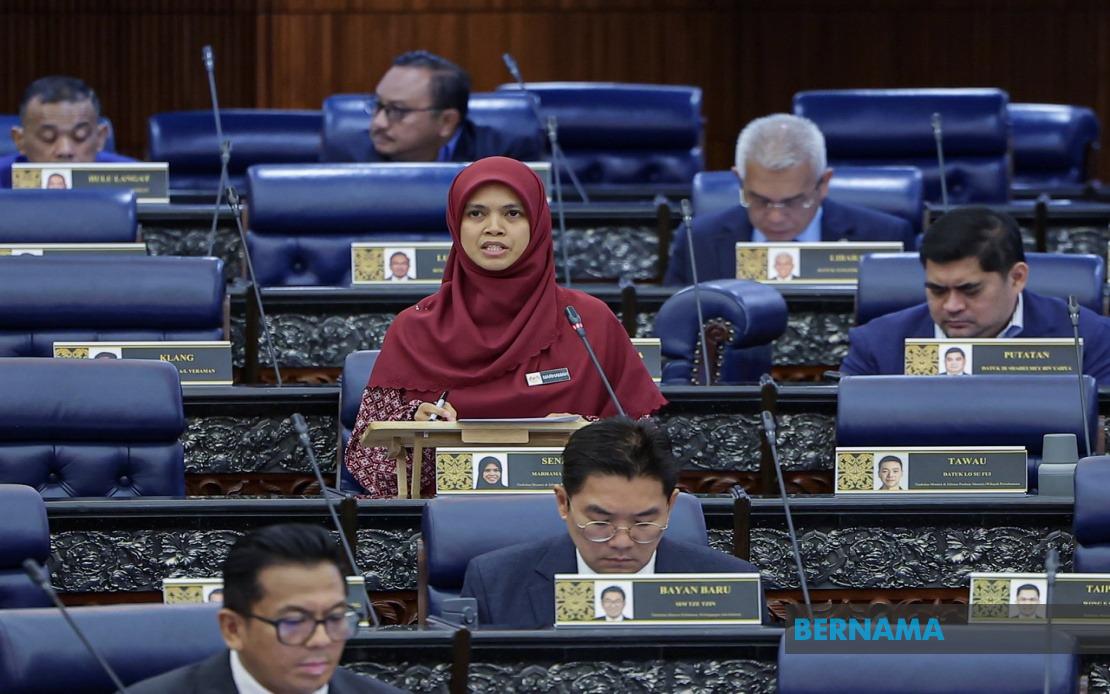
The government and Tabung Haji signalled openness to enhancing financial aid for lower-income pilgrims as the actual cost of performing the annual haj has reached RM33,300 per person this year. Deputy Minister in the Prime Minister's Department (Religious Affairs) Marhamah Rosli told the Dewan Rakyat that both entities would examine whether assistance levels should be adjusted in response to mounting expenses, responding to concerns raised by parliamentarian Onn Abu Bakar from Batu Pahat.
Currently, prospective pilgrims from the B40 income category—Malaysia's bottom 40 percent by household earnings—are required to contribute only RM15,000 towards their pilgrimage, with Tabung Haji's financial assistance scheme covering the remaining RM18,300. This substantial subsidy demonstrates the state's commitment to making the pilgrimage accessible to lower-income Muslims, though the gap between individual payment and total cost has widened noticeably as global haj expenses have increased. The assistance itself derives from investment returns generated through Tabung Haji's management of depositors' savings, creating a delicate balance between welfare provision and fiduciary responsibility.
Marhamah cautioned that while the government remains committed to supporting disadvantaged pilgrims, any increase in assistance must be dispensed thoughtfully and equitably. She emphasised that decisions cannot be made unilaterally without considering the broader interests of all Tabung Haji depositors whose savings underpin these schemes. This reflects the institutional tension between serving immediate humanitarian needs and maintaining the long-term sustainability of the savings and pilgrimage management system that affects millions of Malaysian Muslims.
Beyond the immediate question of subsidy levels, Tabung Haji is undertaking a comprehensive review of its haj queue management system with the aim of making selection processes more systematic and fair. A particular focus involves ensuring that depositors who have demonstrated financial discipline by saving consistently and accumulating adequate funds receive more equitable consideration. The current system generates situations where selected pilgrims defer their journeys due to insufficient personal funds, necessitating repeated replacement offers and creating inefficiencies in quota allocation.
The underlying challenge driving these policy discussions is the vast disparity between demand and supply. Haj registrations with Tabung Haji now exceed four million people nationwide, yet Malaysia's annual quota allocated by Saudi Arabia remains fixed at approximately 31,600 pilgrim slots. This gap of more than 120 times creates extraordinary waiting periods for newly registered applicants, with some facing decades before their turn arrives. The mismatch has become one of the most pressing issues in Islamic affairs administration, forcing Tabung Haji to develop sophisticated systems for managing expectations and allocating limited places.
For Malaysian pilgrims, particularly those in the B40 category, the implications are significant. An increase in financial assistance would reduce the personal financial burden and potentially allow more lower-income Muslims to undertake the haj without incurring substantial debt or family hardship. However, such enhancements must be calibrated carefully to avoid straining Tabung Haji's investment returns or diminishing returns for other depositors who may be saving for retirement or other purposes. The institution serves approximately 9.2 million depositors, making it one of Malaysia's largest financial entities.
The rising cost trajectory reflects global inflationary pressures affecting haj operations, from airfare and accommodation to catering and transportation within the Kingdom of Saudi Arabia. Since the haj remains one of the five pillars of Islam and constitutes a spiritual obligation for Muslims with the financial and physical means, ensuring accessibility across income levels remains a cornerstone of Malaysia's Islamic welfare policy. The government has consistently positioned haj accessibility as a religious and social priority.
Tabung Haji's commitment to positioning Malaysia as a global leader in haj management and services represents an aspirational agenda that encompasses not merely logistics but also welfare, safety and dignity for pilgrims. This positioning reflects Malaysia's role as a bridge between Southeast Asian Muslim populations and international Islamic institutions, with the haj system serving as a flagship demonstration of governance capability. Competition among Muslim-majority nations to enhance haj services has intensified, with countries investing heavily in pilgrim support infrastructure and assistance programmes.
The review of assistance mechanisms also carries implications for Malaysia's broader social welfare architecture. The targeting of aid to B40 households demonstrates commitment to progressive resource allocation, though the sustainability question remains central. As haj costs continue climbing globally—driven by Saudi Arabia's modernisation investments and capacity expansions—maintaining the current assistance ratio may become fiscally challenging without corresponding increases in Tabung Haji's investment returns or reallocation from other programmes.
Looking ahead, stakeholders including depositors, prospective pilgrims and policymakers await concrete proposals from Tabung Haji's ongoing review. The institution faces the complex task of balancing immediate humanitarian impulses against institutional sustainability, equity among different income groups and the practical constraints of a fixed annual quota. Parliament's engagement with these issues, as demonstrated by Onn Abu Bakar's question, suggests continued legislative scrutiny of how Malaysia manages this crucial intersection of religious obligation, social welfare and financial stewardship in the coming haj seasons.

