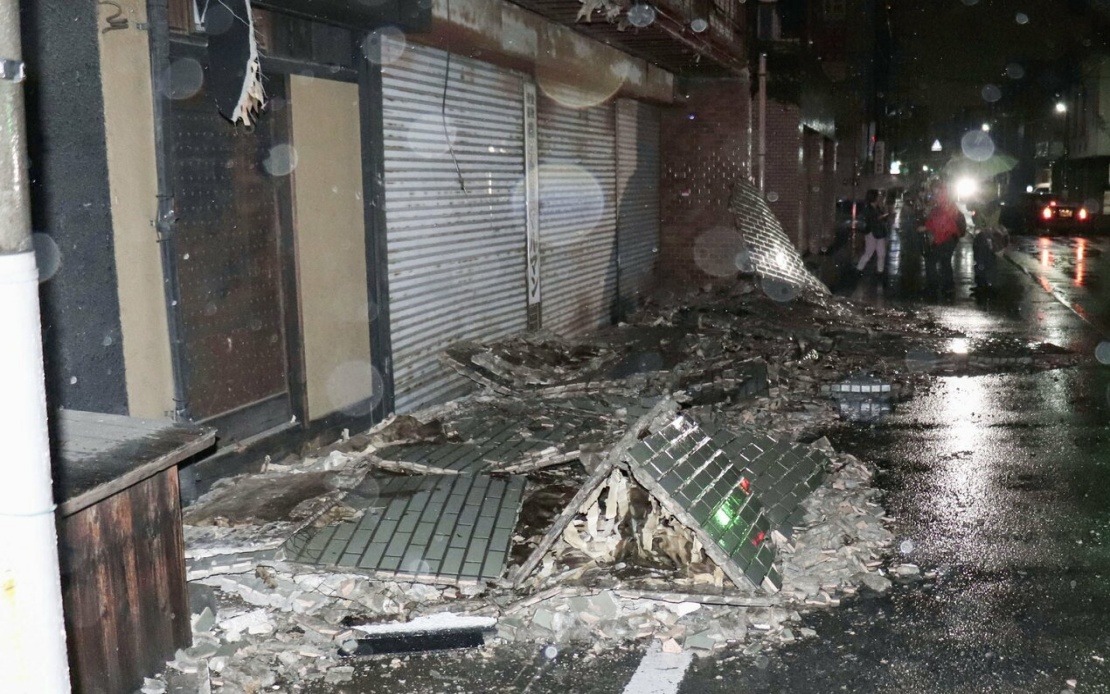
A significant earthquake with a magnitude of 5.6 struck the region surrounding Mt. Fuji in central Japan on Friday evening, resulting in minor injuries to ten people according to reports received by Japanese authorities on Saturday. The tremor, which occurred at approximately 10:28 pm, rippled through the central and eastern sections of the country, with its effects notably felt across the Tokyo metropolitan area and surrounding prefectures. The incident underscores Japan's ongoing vulnerability to seismic activity despite its advanced earthquake monitoring and building code systems.
The shaking intensity registered at the lower end of level 6 on Japan's seismic intensity scale, which ranges from 0 to 7, in parts of Yamanashi Prefecture. This particular level of ground motion represents a notable seismic event; authorities noted that such intensity had not been recorded in Yamanashi Prefecture since 1924, making this Friday's earthquake a relatively rare occurrence for the region in terms of recorded intensity levels. The fact that a century had passed since similar shaking was experienced locally highlights how seismic patterns in Japan can vary significantly across different time periods and geographic zones.
Japan's Meteorological Agency confirmed that the earthquake bore no connection to volcanic activity associated with Mt. Fuji, the iconic snow-capped peak that dominates central Japan's landscape. This clarification proved important for public reassurance, as earthquakes in volcanically active regions sometimes raise concerns about potential eruptions or related volcanic hazards. The agency's swift assessment helped prevent unnecessary panic among residents and tourists in the area, though it also demonstrated the complex interplay between tectonic and volcanic hazards in a geologically dynamic region.
The tremor's impact extended to Japan's transportation infrastructure, particularly affecting the Tokaido Shinkansen, the country's busiest bullet train line connecting major cities. Services on this critical transport corridor were immediately suspended between Tokyo and Shizuoka stations in the immediate aftermath of the quake, a standard precautionary measure implemented to ensure passenger safety while engineers conducted track inspections. The disruption was relatively brief, with operations resuming in the early hours of Saturday morning as authorities confirmed the infrastructure's structural integrity.
Approximately 22,000 passengers found their travel plans disrupted by the temporary service suspension, according to JR Central, the operator of the Tokaido Shinkansen. This figure underscores the enormous passenger volume that this railway line handles daily, with tens of thousands of commuters and travellers depending on it for intercity connectivity. The quick restoration of services demonstrated the railway's emergency response protocols and the importance Japan places on maintaining transportation continuity even following significant seismic events.
For Malaysian and Southeast Asian observers, this incident provides valuable perspective on how developed nations with advanced infrastructure manage earthquake risks. Japan's comprehensive earthquake early warning systems, stringent building codes, and well-rehearsed emergency procedures represent decades of accumulated experience managing seismic hazards. The relatively low injury count despite a magnitude-5.6 earthquake reflects this investment in preparedness and infrastructure resilience.
The broader context of this earthquake extends beyond the immediate incident. Japan sits atop the Pacific Ring of Fire, one of the world's most seismically active regions, experiencing thousands of tremors annually. Residents and infrastructure planners have adapted their approaches to accommodate this reality, with earthquake-resistant building designs, regular safety drills in schools and workplaces, and continuous technological innovation in early warning systems becoming standard practice across the nation.
The incident also highlights how transportation networks in major earthquake-prone regions must balance safety with operational efficiency. The immediate suspension and subsequent resumption of Shinkansen services demonstrates a protocol that prioritizes passenger safety during the critical assessment period while minimizing economic disruption once safety is confirmed. This approach has become a model for railway operators globally.
For the region surrounding Mt. Fuji and Yamanashi Prefecture, this earthquake serves as a reminder of seismic vigilance despite the long interval since the last comparable event. The century-long gap since 1924 does not guarantee seismic quiescence going forward; instead, it reflects the unpredictable nature of earthquake occurrence. Scientists and emergency management officials continue monitoring the area for aftershocks and any changes in seismic patterns that might indicate shifting tectonic stress.
The incident underscores why countries throughout the Pacific Ring of Fire, including those in Southeast Asia with significant seismic activity, maintain strong international partnerships with Japan for earthquake science and disaster management expertise. Japan's experience transforming earthquake hazards into manageable risks through technology, planning, and public education offers instructive lessons for developing nations working to enhance their own resilience frameworks.

