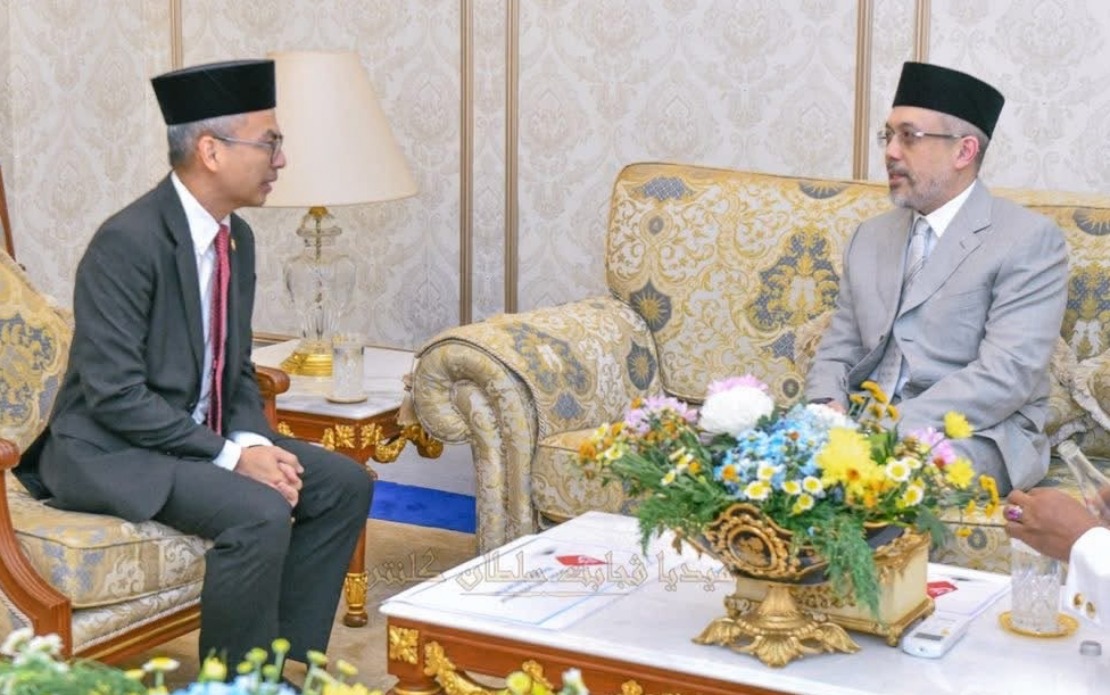
The Crown Prince of Kelantan, Tengku Muhammad Fakhry Petra, welcomed Communications Minister Datuk Fahmi Fadzil for a formal audience at Kota Lama Palace in Kota Bharu on June 17, marking a high-level engagement between the state's royal household and the federal communications portfolio. The meeting, which extended for approximately one hour, reflected the growing importance of coordinating responses to digital misinformation at the intersection of royal protocol and government communication policy.
According to the Kelantan Sultan's Media Office, the primary purpose of the audience was to present Tengku Muhammad with an overview of recent developments and initiatives within the Ministry of Communications' operational framework. This briefing format suggests a deliberate strategy by the ministry to keep the royal household informed about pressing digital governance issues affecting the nation, particularly those with implications for institutional stability and public perception.
Central to the discussions were two interconnected challenges that have increasingly concerned Malaysian authorities: the proliferation of fake accounts across social media platforms and the systematic dissemination of false information. The minister used the occasion to highlight how coordinated disinformation campaigns exploit social media's algorithmic structure to amplify misleading narratives rapidly among large audiences, a phenomenon that has accelerated across Southeast Asia as digital adoption deepens.
The second major focus concerned content specifically targeting the Malaysian Royal Institution. False narratives and defamatory material about the monarchy have circulated online with disturbing frequency in recent months, occasionally triggering heated public debates and raising questions about the adequacy of existing regulatory frameworks. By briefing the Kelantan Crown Prince directly, the Communications Ministry demonstrated recognition that protecting the dignity and reputation of constitutional monarchy demands coordination across multiple government agencies and stakeholder groups.
The broader context underscores Malaysia's ongoing struggle to balance free speech principles with safeguarding institutions from coordinated disinformation. Unlike centralized media ecosystems, social media networks operate across borders and jurisdictions, making traditional regulatory approaches insufficient. The challenge intensifies because false accounts—typically automated or operated from undisclosed locations—can generate the appearance of grassroots opinion while actually representing coordinated manipulation. This technical sophistication requires government communicators to engage in real-time fact-checking and narrative correction, a resource-intensive undertaking for any administration.
For Kelantan specifically, the visit carried additional significance. As a state with its own sultanate and unique constitutional arrangements within Malaysia's federal system, Kelantan's royal household possesses particular interest in communications policy. The Crown Prince's willingness to receive a ministerial briefing signals that state-level royal institutions view digital governance as sufficiently consequential to warrant direct engagement with federal communications leadership. This vertical integration of concern, from palace to ministry, suggests recognition that misinformation problems threaten both national cohesion and specific institutional interests.
Minister Fahmi's delegation included Senior Private Secretary MohamadAsif Afifi Mohd Yusof and accompanying officer Tuan Ahmad Afifi Hamdan Tuan Aziz, indicating the visit's official character and allowing detailed technical discussion of ongoing ministry initiatives. The presentation of a commemorative gift underscored the respectful diplomatic tone, transforming what might have been a routine briefing into a formal state occasion that acknowledged the Crown Prince's authority and the significance of the subjects discussed.
The inclusion of senior Kelantan Sultan's Office personnel in the audience reflects the palace's institutional approach to digital challenges. Rather than viewing misinformation as merely a federal government problem, the royal household positioned itself as an active stakeholder in developing responses. This collaborative posture could facilitate information-sharing between federal communications authorities and state-level institutions, potentially improving the coordination of counter-messaging efforts and rapid response protocols when false information emerges.
The problem of fake accounts specifically warrants deeper examination for Malaysian policymakers. These accounts often operate in networks, with automated posting patterns and coordinated timing designed to manipulate platform algorithms and create false impressions of public sentiment. Because they rarely engage in genuine dialogue, they degrade the quality of public discourse while evading traditional content moderation approaches focused on removing individual posts. The ministry's decision to highlight this technical dimension suggests growing sophistication in how government communicators understand digital threats—moving beyond simple concerns about individual false stories toward systemic comprehension of how networked fake accounts fundamentally distort information environments.
The emphasis on false news and negative content targeting the monarchy reflects Malaysia's constitutional arrangements, where the rulers occupy a distinctive institutional position. Unlike purely ceremonial monarchies, Malaysia's sultans and their federal counterpart, the Yang di-Pertuan Agong, exercise defined constitutional powers and command significant public respect grounded in Islamic, cultural, and legal traditions. Coordinated attacks on royal dignity therefore carry implications beyond individual reputation, potentially affecting public confidence in constitutional governance itself.
Looking forward, this audience may signal intensified ministry focus on developing targeted responses to coordinated disinformation campaigns. Whether through platform cooperation, improved detection mechanisms, or enhanced public communication strategies, the visible engagement between communications authorities and state royal institutions suggests a more integrated approach to digital governance challenges. For Malaysian stakeholders and regional observers, the meeting illustrated how misinformation problems now command attention at the highest institutional levels, reflecting their genuine significance for national stability and institutional credibility in an increasingly digitized society.