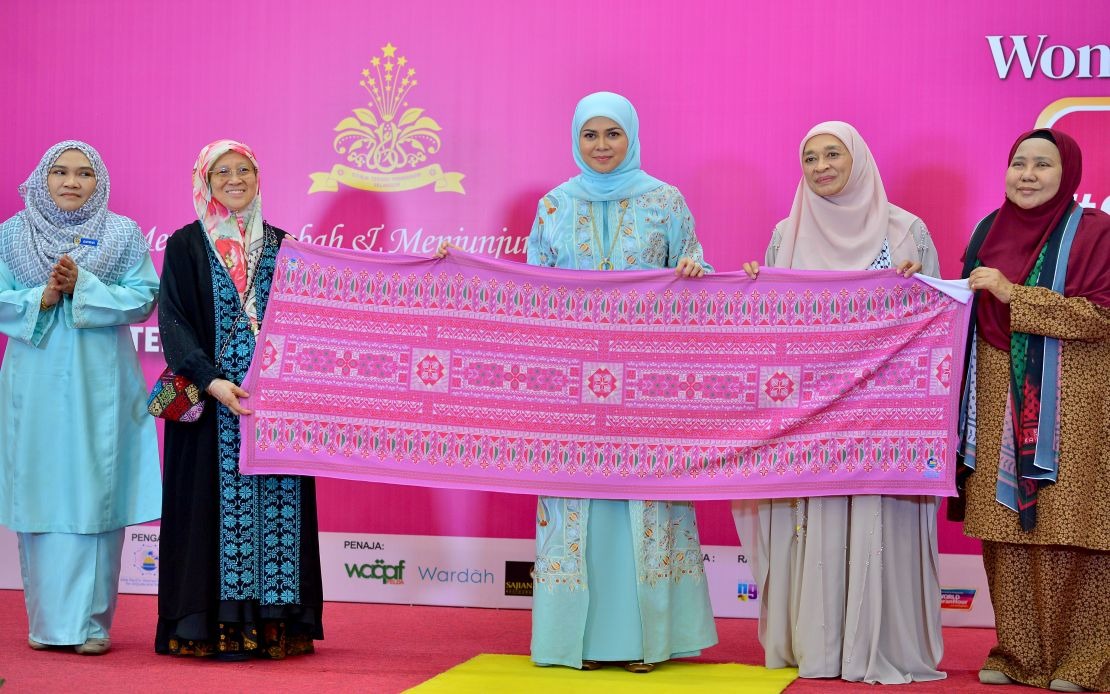
Tengku Permaisuri Norashikin of Selangor formally opened the Women Summit & Women #QuranHour 2026 programme on June 24 at the Dahlia Auditorium in Sultan Salahuddin Abdul Aziz Shah Mosque, Shah Alam, lending her royal patronage to an initiative designed to fortify women's resilience through faith-based learning. The gathering assembled approximately 400 female participants from across Selangor alongside visitors from Singapore, Indonesia and other regional nations, signalling growing interest in structured Quranic education tailored to women's contemporary challenges.
Organised jointly by Yayasan Warisan Ummah Ikhlas (WUIF) and the Asia Pacific Women's Coalition for Al-Quds and Palestine (ApWCQP), the summit operates under the thematic banner "Women of Grit," a deliberate reference to the emotional fortitude demonstrated by Palestinian women navigating displacement, loss and ongoing conflict while maintaining family bonds and educational continuity for their children. This international frame reflects how Southeast Asian Islamic organisations increasingly draw inspiration from global struggles to contextualise local empowerment narratives, creating emotional resonance for regional audiences grappling with their own social pressures.
The programme's conceptual foundation rests on leveraging Quranic teachings as a practical resource for managing life's mounting complexities rather than treating scripture as purely devotional material. Programme director Gharizah Hashim articulated this functional approach, emphasising that "Women of Grit" encompasses not merely enduring hardship but cultivating inner calm, exercising sound judgment and maintaining forward momentum through divine guidance. This reframing positions Islamic learning as a psychological and emotional toolkit, reflecting broader Muslim intellectual trends that bridge traditional scholarship with contemporary wellness discourse—a marketing strategy that resonates particularly with educated, urban Malaysian women seeking meaning-making frameworks beyond conventional religious instruction.
The platform brought together notable speakers including 2014 International Quran Recitation Champion Tirmizi Ali, lending credibility through demonstrated excellence in Islamic practice, and International Islamic University Malaysia senior lecturer Associate Prof Dr Nora Mat Zin from the Department of Psychiatry, whose involvement signals an attempt to integrate psychological expertise with religious education. This interdisciplinary approach acknowledges that Malaysian women increasingly expect institutional support to address mental health, family dynamics and social positioning through both spiritual and evidence-based frameworks, a convergence that programmes like this attempt to satisfy.
Marhaini Yusoff, WUIF's chief executive, outlined an ambitious scaling mechanism through the Rumah Ngaji network, a decentralised model of free Quranic study circles sustained by community sponsorship across Malaysia's states. This distributed architecture represents a sophisticated understanding of how grassroots Islamic movements function effectively in Southeast Asia, where centralised, top-down religious programming often struggles for sustainability and authentic engagement. By embedding the 2026 initiative within existing Rumah Ngaji infrastructure, organisers position themselves to reach beyond the 400 urban professionals gathered in Shah Alam, targeting women in secondary cities and rural areas where access to structured religious education remains limited despite rising demand.
The presence of Rumah Ngaji representatives from multiple states at the summit itself signals the beginning of what organisers characterise as a "more structured movement," distinguishing their approach from ad hoc or episodic religious gatherings. For Malaysian policymakers and civil society observers, this distinction matters considerably: sustained, networked programmes addressing women's spiritual development indicate shifting civil society capacity and growing recognition that Muslim women's engagement with their faith requires sophisticated institutional support. The Rumah Ngaji model also sidesteps potential government oversight or regulation, operating through voluntary associations and private sponsorship—a pattern increasingly common among Malaysian Islamic civil society organisations seeking autonomy and grassroots credibility simultaneously.
The selection of the Dahlia Auditorium within a state mosque as the venue carries symbolic weight, anchoring the women's initiative within institutional Islamic space while modernising its application. This placement reflects evolving Malaysian attitudes toward women's religious authority and participation, where major state mosques increasingly host diverse programmes targeting female audiences rather than restricting facilities to male-dominated spaces or peripheral women's wings. Tengku Permaisuri Norashikin's attendance further legitimises women's Quranic scholarship and religious learning as worthy of royal recognition, positioning such endeavours as aligned with state-level support rather than as marginal or oppositional activities.
The international dimension—drawing participants from Singapore and Indonesia alongside the Selangor contingent—suggests potential for South-East Asian networking around women's Islamic education and raises questions about how such regional movements might influence broader conversations regarding women's roles within Muslim-majority societies. Singapore's Muslim women, operating within a minority community context, bring distinct experiences to learning circles, while Indonesian participants represent a nation with the world's largest Muslim population and extensive traditions of female Islamic scholarship. These cross-border exchanges, facilitated through initiatives like Women #QuranHour 2026, gradually weave Malaysia into wider Southeast Asian conversations about women's religious agency, potentially subtly shifting local expectations and norms.
Gharizah Hashim's emphasis on developing "women of clear life purpose, compassion and resilience" articulates an aspirational vision that bridges personal spiritual development with social contribution. This formulation acknowledges that contemporary Malaysian women, particularly those engaged enough to attend a half-day summit and participate in Quranic circles, seek integration between their faith commitments and their professional, familial and civic identities. Rather than presenting religious learning as a retreat from secular society, the initiative positions Quranic engagement as a wellspring nourishing women's effectiveness across multiple life domains—a framing that aligns with how educated Muslim women globally now conceptualise their spiritual practice.
The timing of announcing state-level expansion through the Rumah Ngaji network suggests organisers anticipate sustained momentum beyond the 2026 programme itself, indicating confidence in the model's appeal and feasibility. For Malaysian readers, this implies that women's Quranic education—long understood as individually pious activity—increasingly operates as a collective, networked, and intentionally scaled social movement. The initiative's success will partially depend on whether state-level Rumah Ngaji circles can maintain the intellectual rigour and contemporary relevance demonstrated at the Shah Alam summit while remaining accessible to women with varying educational backgrounds and time availability across Malaysia's diverse geography.

