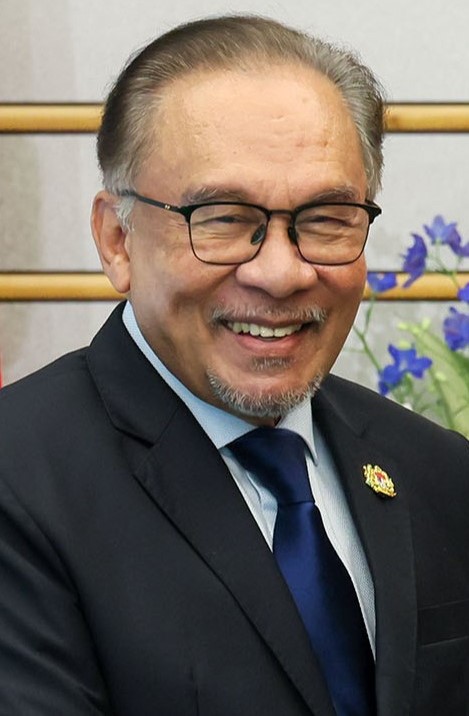
Tengku Datuk Seri Zafrul Tengku Abdul Aziz, who serves as a senior political adviser to the prime minister, has formally indicated his interest in contesting a parliamentary seat in Selangor when the nation goes to the polls for the 16th General Election. The announcement signals a deliberate shift towards electoral politics for one of the government's key advisory figures, potentially reshaping the dynamics of competition in the strategically important state.
Selangor, home to Malaysia's largest metropolitan population and consistently one of the most fiercely contested battlegrounds in national elections, represents a calculated choice for Zafrul's electoral debut. The state's economic significance, combined with its demographic diversity and history of tight contests between ruling and opposition coalitions, makes any candidacy announcement here a matter of considerable political consequence. The prospective entry of a high-profile government adviser into this arena underscores the intensity with which major political players are positioning themselves ahead of the anticipated electoral cycle.
The proposal reflects broader patterns within Malaysian politics wherein senior government figures transition from advisory or administrative roles into direct parliamentary representation. Such moves typically indicate either strengthening of factional support within a political coalition or a calculated attempt to bolster electoral prospects in a particular region. For Zafrul, the timing of his expression of interest suggests careful consideration of when maximum advantage can be gained from his current institutional position and political networks.
Zafrul's background and prominence within the prime minister's office have made him a recognisable figure in policy circles and business communities. His advancement into electoral politics would bring substantial experience in administrative and advisory capacities directly into the parliamentary arena, potentially elevating the technical competence of his party's parliamentary contingent. However, such transitions from technocratic roles to elective office do not always translate seamlessly, as electoral success depends on grassroots support and constituency-level organising that differs significantly from high-level advisory work.
The choice of Selangor carries particular implications for coalition building and representation strategies. The state encompasses constituencies ranging from urban centres to suburban developments and, in some areas, more rural demographics. Any candidate seeking to win here must demonstrate broad appeal across this spectrum, understanding both the aspirations of urban professionals and the concerns of suburban families and rural communities. Zafrul's proposal will likely trigger assessment among party leadership regarding his electoral viability across these diverse voter bases.
From a regional perspective, developments in Selangor reverberate throughout Southeast Asia's most competitive democracy. International observers of Malaysian politics closely monitor the state's electoral performance as an indicator of broader shifts in political sentiment and coalition strength. The emergence of new candidates, particularly those with government connections, provides insight into how ruling coalitions are adapting to evolving electoral pressures and demographic changes.
The announcement also occurs within the context of ongoing discussions about generational renewal within Malaysian political parties. Political observers have noted the need for established parties to develop fresh leadership cohorts while retaining institutional experience and networks. Zafrul's potential candidacy could represent an attempt to bridge this gap, positioning a government-connected figure with contemporary policy credentials as a bridge between established party structures and newer electoral constituencies.
District-level dynamics in Selangor will become crucial if Zafrul proceeds with his candidacy. The state comprises federal constituencies with distinct voting histories, local issues, and community priorities. His campaign strategy would necessarily need to address specific concerns within whichever constituency party leadership selects, while simultaneously leveraging his national profile and government association to differentiate himself from opposition contenders.
The political timing of such candidacy proposals carries significance beyond the immediate electoral calculation. GE16 remains subject to constitutional parameters and electoral commission schedules, yet the groundwork for candidate positioning and coalition negotiations intensifies well before formal dissolution of parliament. Zafrul's formal expression of interest enters this pre-electoral environment at a moment when other significant political figures are similarly making strategic decisions about their roles in the approaching contest.
For Malaysian voters in Selangor, the potential candidacy represents another option to evaluate as the electoral cycle approaches. The outcome of whether Zafrul's proposal translates into actual candidacy and subsequent electoral success will depend on party dynamics, internal consensus regarding candidate selection, and ultimately, voter reception in whichever constituency he contests. His progression from advisory role to electoral politics thus becomes a test case of how institutional prominence translates into electoral support within Malaysia's competitive political environment.