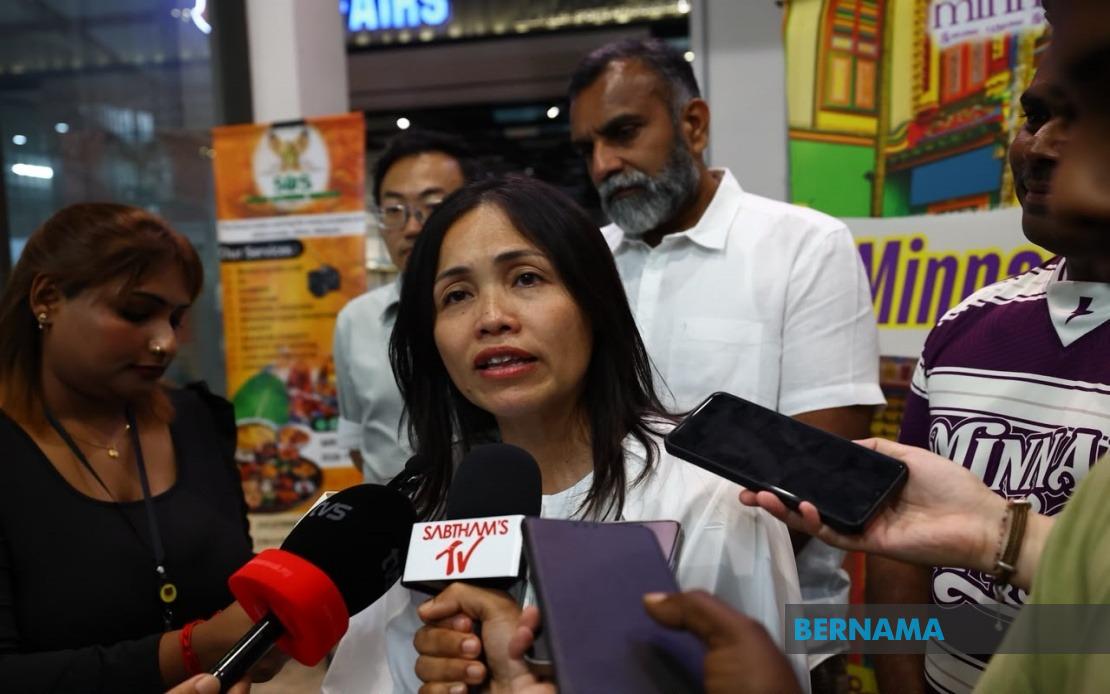
Johor DAP chairman and Deputy Communications Minister Teo Nie Ching has made an urgent appeal for political restraint and dignified conduct during campaign activities for the state election, following a series of incidents in which Pakatan Harapan materials have been deliberately damaged or obscured in multiple constituencies across the region.
The sabotage incidents have occurred across a geographic spread that includes the Kulai parliamentary area, where campaign infrastructure for the Bukit Permai state seat candidate—including tents and promotional materials—has been targeted. Similar attacks on party posters and flags have also been documented in the Mengkibol and Kluang constituencies, with police launching investigations into at least some of these cases. The pattern of coordinated vandalism appears designed to disrupt campaign momentum during what is ordinarily a critical phase of political mobilisation.
Teo expressed evident frustration at the incidents while speaking to journalists after attending community engagement activities in Kulai, including a musical programme and internet safety carnival. She characterised such vandalism as fundamentally at odds with the vision of mature political competition that Prime Minister Datuk Seri Anwar Ibrahim has articulated for the nation. The Deputy Communications Minister's intervention carries particular weight given her portfolio responsibility for public communications and her position within the federal government.
A concrete example of the interference emerged when Mohamad Shafwan Ani, the PH candidate contesting the Bukit Permai seat, reported that his campaign materials displayed in the Bandar Putra area had been covered using bunting belonging to a rival candidate—a tactic that effectively obscures opposition visibility while promoting competitors. This form of campaign sabotage is not merely a matter of vandalism but represents an attempt to distort the information landscape available to voters during the critical pre-election period.
The timing of these incidents carries significance for understanding the broader political dynamics at play. The 16th Johor state election represents a crucial electoral contest where PH is fielding candidates in all 56 available seats, with polling scheduled for July 11 and early voting commencing on July 7. This comprehensive commitment of resources suggests PH views the state as strategically important, making the party's campaign materials particularly visible and consequently more vulnerable to coordinated disruption by opponents.
Yet despite acknowledging the frustration caused by such tactics, Teo projected confidence that Johor voters would ultimately base their electoral decisions on substantive grounds rather than being swayed by campaign-trail theatrics. She emphasised that PH's electoral appeal rests upon its demonstrated capacity to deliver services and fulfil governmental responsibilities across both state and federal levels, with her remarks pointedly stressing non-partisan benefits—suggesting that party performance transcends communal boundaries and benefits voters regardless of ethnicity.
The emphasis on institutional performance reflects a strategic shift within Malaysian political discourse. Rather than engaging in tit-for-tat accusations about vandalism, PH leadership is attempting to elevate the conversation toward governance effectiveness and tangible service delivery. This approach implicitly frames the election not as a battle over campaign materials or grassroots intimidation, but as a referendum on which coalition can more effectively administer the state and translate policy promises into community benefits.
For Johor voters, the campaign sabotage incidents underscore the intensity of political competition in a state that has historically been a powerbase for rival coalitions. The willingness of political operatives to engage in vandalism suggests they perceive PH's campaign as sufficiently threatening to warrant such countermeasures—a backhanded acknowledgement of PH's electoral viability in the state. The incidents also raise questions about campaign conduct standards and whether existing electoral regulations adequately deter such behaviour or provide sufficient recourse for affected parties.
From a regional perspective, the Johor election carries implications extending beyond the state's borders. As Southeast Asia's most developed Malaysian state and a crucial economic hub, Johor's political trajectory influences investor confidence and governance standards across the broader region. Elections conducted under circumstances marred by systematic sabotage risk delegitimising outcomes among certain voter segments and undermining the quality of democratic practice that multinational corporations and international observers scrutinise when evaluating Malaysia's stability and institutional integrity.
The police investigation into flag and poster damage within Mengkibol represents the official response mechanism to such incidents. However, the reactive nature of criminal investigations—occurring after damage has been inflicted—raises questions about whether current enforcement approaches adequately deter potential saboteurs or whether additional preventive measures might be warranted during high-stakes electoral periods. The gap between law enforcement capacity and the dispersed nature of campaign vandalism creates openings for determined operators to cause disruption with relatively modest risk of consequence.
Teo's call for harmonious campaigning ultimately represents an appeal to political norms rather than a plea for enforceable change—she is essentially asking competing parties to exercise restraint voluntarily. The success of such appeals depends upon whether political actors perceive mutual benefit in maintaining elevated standards of campaign conduct. In contexts where electoral margins are narrow and political control of states carries substantial spoils, voluntary restraint often proves difficult to sustain absent external enforcement mechanisms or reputational consequences that parties actually value.
Moving forward to the July 11 polling date, the campaign period will likely continue to be scrutinised for additional sabotage incidents. PH's positioning around service delivery and governance capacity suggests the party believes it can prevail on substantive grounds despite campaign-level disruptions. For voters, the challenge lies in looking past campaign theatrics to evaluate which coalition genuinely offers superior administrative capacity and policy alignment with their priorities—a rational calculus that should ultimately determine electoral outcomes in a functioning democracy.

