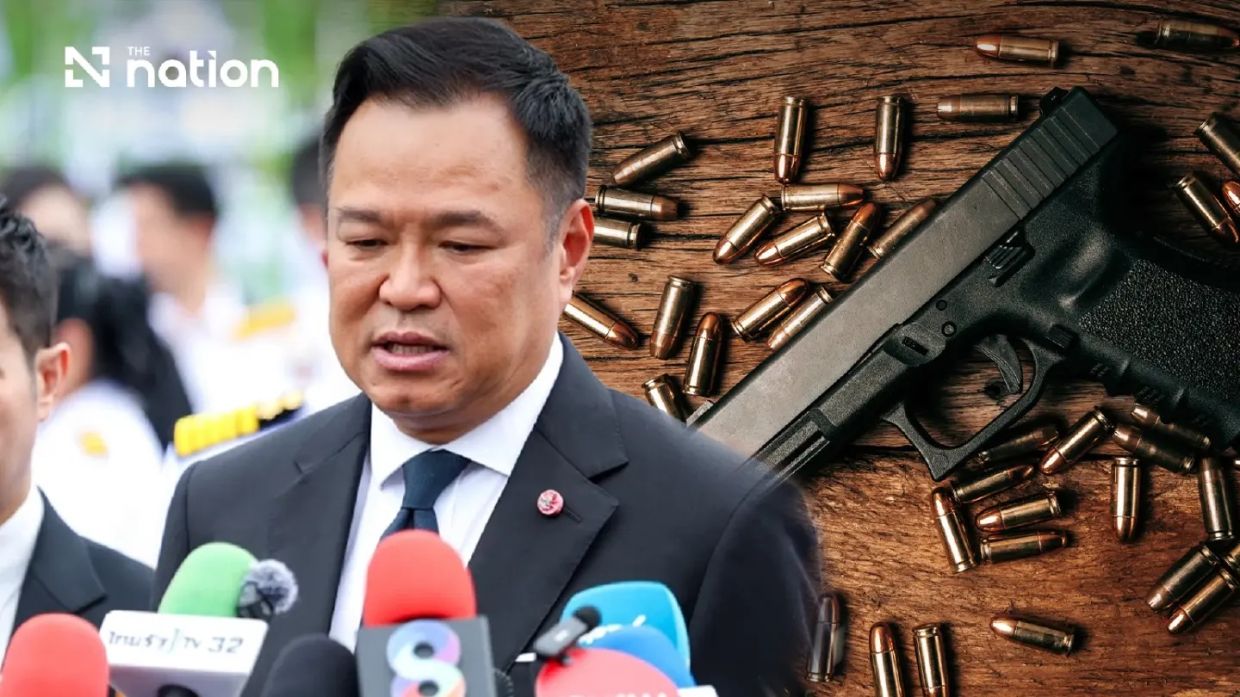
Prime Minister Anutin Charnvirakul has signalled his government's determination to implement tougher gun control measures in the wake of a deadly shooting at Debsirin Nonthaburi School, moving swiftly to discuss legislative reforms with senior law enforcement and cabinet colleagues. Following his visit to the school where the tragedy occurred, Anutin met with national police chief Pol Gen Kittharath Punpetch and Deputy Prime Minister Pakorn Nilprapunt to map out a comprehensive policy response, with firearms legislation sitting at the centre of the government's immediate agenda.
The Prime Minister's public comments reveal a zero-tolerance stance on unauthorised weapons possession, emphasizing that any individual found carrying a firearm in public spaces, vehicles, or outside their home without legitimate professional need will face serious criminal consequences. This hardline position represents a departure from suggestions that might soften enforcement, with Anutin making clear that authorities will establish checkpoints and conduct inspections to identify illegal weapons and those carrying them without authorisation. The remarks underscore growing pressure on the administration to demonstrate concrete action following public outcry over the school incident.
Among the most contentious issues to emerge from the tragedy was a proposal to permit teachers to carry firearms for self-defence purposes. Anutin has firmly rejected this suggestion, arguing that educators lack the official status and training of authorised law enforcement personnel and should therefore be excluded from any weapons-carrying scheme. This position reflects broader international concerns about arming untrained civilians in educational settings, particularly where children congregate, and suggests the Thai government is unwilling to adopt security measures that many countries have found problematic and ineffective.
The government is exploring the resurrection of a previous amnesty programme that would allow individuals to surrender illegal or unregistered firearms to state authorities without facing prosecution. However, Anutin has stipulated that any firearms involved must genuinely be removed from circulation, and that mere possession of an illegal weapon cannot be legitimised through any programme or legal mechanism. He stressed that individuals found with unauthorised guns during home searches connected to other offences would face additional criminal charges, reinforcing that there is no safe harbour for illegal weapons possession under any circumstance.
To facilitate the amnesty process, the government will establish clear pathways for weapon surrender through the Department of Provincial Administration, district offices, and police stations, creating documentation to ensure accountability and prevent the same firearms from returning to the black market. Anutin's insistence on proper official channels reflects concern about loose procedures that might allow weapons to circulate through informal surrender processes without proper tracking or elimination from civilian hands.
Address the broader social dimensions of the incident, Anutin called for restraint in public speculation about underlying causes, particularly unconfirmed reports that the shooter had experienced bullying. He emphasised that police investigations must be allowed to proceed without interference or premature conclusions from outside observers, warning that unfounded speculation could generate public anxiety and undermine official fact-finding efforts. This measured approach suggests the government wishes to avoid a media-driven narrative that could overshadow substantive policy responses or trigger copycat incidents.
Beyond immediate legislative measures, the Prime Minister outlined a multi-agency strategy for suppressing unlawful weapons activity involving not only the Department of Provincial Administration but also police and other authorised enforcement bodies operating under new policy directives. This coordination suggests recognition that effective gun control requires sustained effort across multiple government departments rather than isolated measures, reflecting best practices from other jurisdictions that have successfully reduced firearms violence through sustained inter-agency cooperation.
Household firearms present a particular challenge in Thailand's regulatory environment, and Anutin has mandated that all guns kept in private residences must be registered, properly stored in secure locations, and kept beyond children's reach. The dual-liability framework he outlined, holding both registered owners and those who actually use weapons in crimes responsible, creates incentives for responsible storage and monitoring of firearms within homes, a measure designed to prevent unauthorised use by family members or others with access to weapons.
The Prime Minister's statements reflect a sophisticated understanding that effective gun control requires multiple overlapping mechanisms rather than any single policy solution. Registration requirements combined with secure storage mandates, along with strict penalties for unauthorised possession and use, represent a comprehensive approach that addresses supply, access, and accountability across the civilian firearms ecosystem. This multi-pronged strategy suggests Thai policymakers are drawing on international evidence about what works in reducing gun violence, even as they tailor responses to local conditions and legal traditions.
For Malaysia and other Southeast Asian nations watching Thailand's response, the policy debate highlights the ongoing challenge of balancing legitimate civilian access to firearms for hunting, sport, or self-defence with public safety imperatives, particularly in urban environments. Thailand's stricter enforcement approach, if successfully implemented, could provide a model for regional governments seeking to tighten gun regulations without complete prohibition, offering lessons about enforcement mechanisms, inter-agency coordination, and public communication strategies in sensitive policy domains. The trajectory of these reforms will be closely monitored by security analysts and policymakers across the region grappling with similar tensions between civil liberties and public safety.

