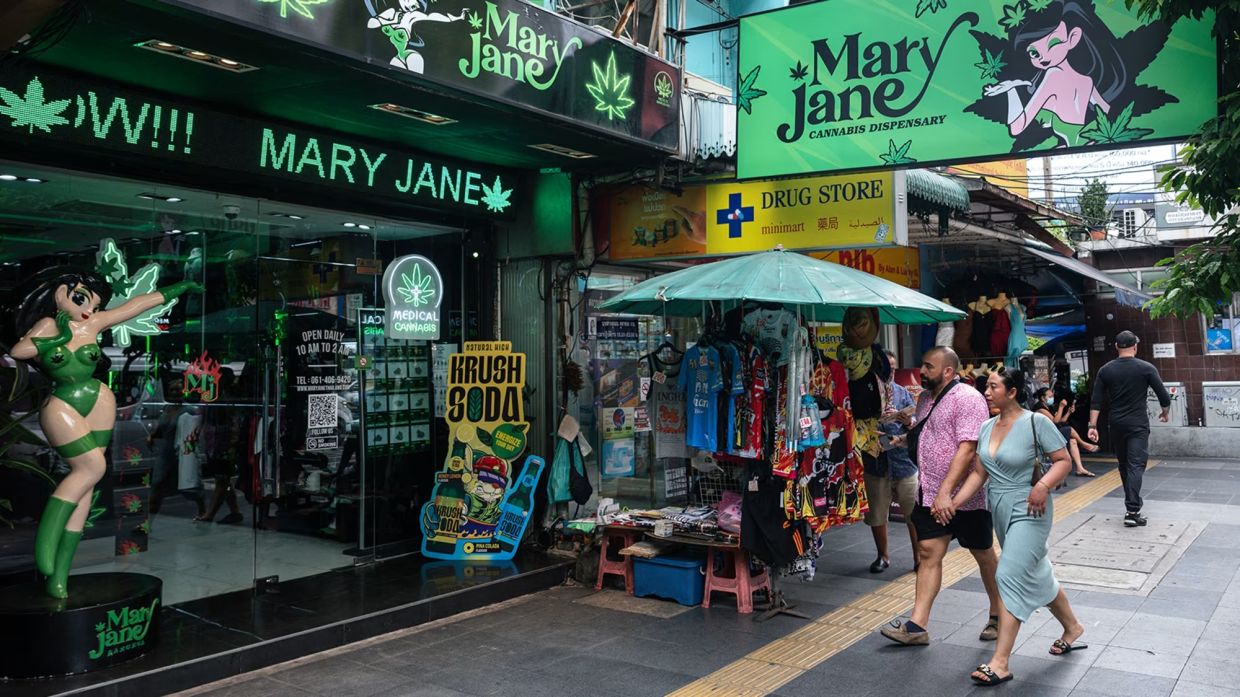
Thailand's approach to cannabis regulation faces a critical juncture, with the House Public Health Committee convening to assess whether the substance should return to the narcotics list as sales proliferate through unregulated channels and legislative gaps widen. The June 18 meeting, chaired by Sakoltee Phattiyakul, assembled an unusually broad coalition of stakeholders—from government agencies and medical professionals to farming networks and anti-drug advocates—each presenting starkly different visions for the country's cannabis future. The tension exposed during the gathering reflects a governance challenge that extends beyond Thailand's borders, resonating across Southeast Asia as regional governments grapple with cannabis liberalisation.
When Thailand decriminalised cannabis in June 2022, it became one of Asia's first nations to loosen restrictions, positioning itself as a potential hub for medical research and agricultural opportunity. Yet three years on, the promise has collided with practical realities. The Department of Thai Traditional and Alternative Medicine, represented by deputy director-general Dr Tewan Thaneerat, acknowledged that persistent problems have emerged since liberalisation. While the department currently classifies cannabis as a controlled herb under existing legislation, enforcement has proven inconsistent. The government's response—issuing three fresh regulatory guidelines in June 2025—appears insufficient to address the scale of the problem, particularly regarding research protocols, sales channels, processing standards and export oversight aligned with international norms.
The core disagreement centres on sequencing and control. Medical associations and public health advocates, represented by Assoc Prof Dr Smith Srisont and others, contend that cannabis should be reclassified as a narcotic immediately, at least on a temporary basis, while legislators draft a dedicated cannabis law. Their rationale is straightforward: the current framework creates dangerous grey zones. Cannabis flowers remain classified as a controlled herb with limited penalties, while extracts exceeding 0.2% THC retain narcotics status—a distinction that has spawned exploitable loopholes. Equally troubling, other plant parts fall outside criminal provisions entirely when cultivated, enabling businesses to circumvent spirit-of-the-law oversight. This patchwork invites both unscrupulous operators and enforcement confusion.
The regulatory vacuum extends to retail distribution. Ekkapop Sittiwantana, deputy chairman of the committee from the People's Party, highlighted how unregistered cultivation has become endemic while informal sales networks flourish beyond state supervision. The FDA acknowledged maintaining a three-tiered licensing system covering production facilities, imports and certified retail outlets, yet confessed that unlicensed sales channels remain the central problem. Inspections of cannabis products have largely confirmed compliance with labelling and potency standards, but this technical success masks a distribution collapse. Illegal imports, black market competition and uncontrolled street vendors have overwhelmed official channels, leaving legitimate operators at a commercial disadvantage.
The Thai Cannabis Future Network and allied operators present the counter-narrative: reclassification would devastate farmers and small businesses attempting to operate within legal parameters. They argue that economic opportunity and traditional medicinal value extend beyond therapeutic pharmaceuticals, yet current rules favour large-scale institutional investors over smallholders. More provocatively, they alleege that certain officials have leveraged licensing decisions to extract unofficial benefits or impose extralegal pressure on applicants. Medical prescription access has become prohibitively expensive for rural farmers while simultaneously being diverted to unrelated venues, further undermining legitimate supply chains. These grievances highlight governance failures beyond mere policy design—they suggest implementation corruption that erodes public confidence in regulation itself.
Parallel to these competing claims runs a public health concern that commands bipartisan worry. The committee acknowledged insufficient data on cannabis-related harms and affected populations, yet reports from medical representatives suggest rising visibility among youth. Sakoltee explicitly stressed that future legislation must include distance requirements between cannabis retailers and educational institutions, signalling recognition that proximity normalises access among young people. This mirrors concerns elsewhere in the region where cannabis liberalisation, despite medical intentions, has produced age-group consumption patterns that worry paediatricians and educators. Thailand's experience offers an early warning: regulatory frameworks designed for adults can unintentionally facilitate adolescent exposure if retail density and marketing controls remain poorly specified.
The legislative pathway forward remains uncertain. The Public Health Ministry has drafted a comprehensive cannabis and hemp bill now undergoing public consultation, with hearings expected to conclude by late July before Cabinet resubmission. However, the committee signalled openness to alternative proposals from the public sector, suggesting multiple competing bills may reach Parliament simultaneously. This pluralistic approach could prove productive—diverse models might generate improved provisions through comparison and synthesis. Conversely, fragmented bills risk stalemate, political capture or lowest-common-denominator compromises that satisfy no stakeholder while perpetuating the status quo dysfunction.
Thailand's cannabis dilemma reflects a broader regional dynamic as Southeast Asian governments navigate liberalisation without established models. Unlike North American or European precedents, the Thai context involves smaller markets, less developed enforcement infrastructure, agricultural populations dependent on commodity crops, and younger demographics with different consumption patterns. Malaysia and other neighbours watch carefully: Thailand's regulatory success or failure will inform their own policy calculus. Should Thailand stabilise its framework fairly while protecting public health, it strengthens the case for thoughtful liberalisation elsewhere. Should it produce a framework that enriches elites, harms farmers, or fails to prevent youth access, regional governments will default to prohibition—potentially foreclosing legitimate medical research and economic opportunity across Southeast Asia.
The immediate test involves Sakoltee's directives. The committee ordered compilation of all licensed cannabis retailers in Bangkok and FDA-certified products for comprehensive review, suggesting a data-gathering phase before formal recommendations. This empirical foundation could anchor future policy in observed reality rather than ideology. Simultaneously, the committee's call for broader harm surveys and affected-group consultations indicates intention to ground decisions in epidemiology and lived experience. Yet timelines matter. Public hearings concluding in late July create pressure for Cabinet submission before year-end, potentially rushing finalisation of a law addressing complexities inadequately resolved over three years. The window for genuine stakeholder incorporation and evidence synthesis remains narrow.
Ultimately, Thailand's cannabis regulation will test whether developing-country democracies can balance competing interests—economic development, farmer welfare, corporate accountability, youth protection and public health—through legitimate process. Medical evidence supports cannabis's therapeutic applications; farmers and businesses deserve fair opportunity; public health monitoring is essential; and youth vulnerability is real. No single principle trumps others. The coming months will reveal whether Thailand's government can craft legislation reflecting this complexity, or whether political pressure, elite interests and implementation failures will again produce rules that satisfy nobody while breeding cynicism about regulatory reform.

